
Peru is one of those countries that stays with you long after you leave. The kind of place where every turn in the road reveals something that takes your breath away — a snow-capped volcano on the horizon, a condor riding the wind above a canyon, stone ruins that have outlasted empires.
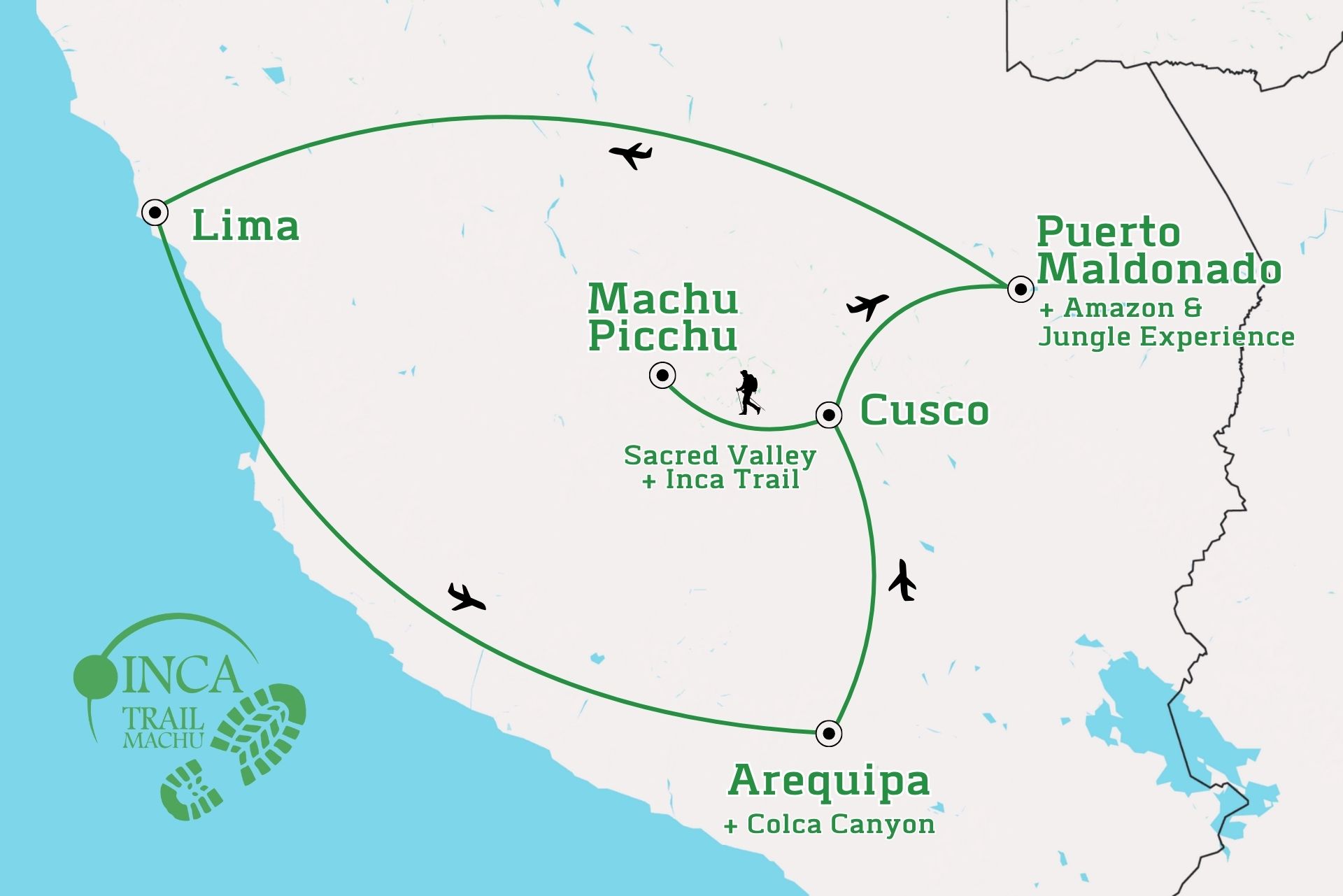
This 15-day journey was designed for travelers who don't want to choose. You'll start in Lima, fly south to Arequipa — the elegant "White City" — and wake up early to watch Andean condors soar above the Colca Canyon, one of the deepest gorges on earth. From there, you head to Cusco, a city where Inca stonework sits beneath Spanish colonial churches and the air hums with centuries of history.
Then comes the part most people never forget: four days on the Inca Trail. No buses, no shortcuts — just you, your guide, cloud forest, mountain passes, and a path that the Incas built stone by stone. On the final morning, you walk through the Sun Gate as Machu Picchu slowly appears below you in the mist. It never gets old, even for those who've seen it before.
After the mountains, the Amazon. A completely different world — dense jungle, river canoes, macaws painting the sky at dawn, and giant river otters gliding through black water lakes. Monkey Island is exactly what it sounds like, and it's wonderful.
Fifteen days. A lifetime of memories.
Sustainable Tourism: At Inca Trail Machu, we promote and practise sustainable tourism by being eco-friendly and supporting local communities.
Staff: Inca Trail Machu representatives and professional tour guides. During the Essential Peru tour, there will be a trekking cook and porters.
Accommodation: Hotel*** (9 nights), campsites (3 nights), lodge (2 nights).
Service level: Friendly travel group and comfortable tourist-class accommodation.
Physical rating: 3 – Moderate – Some low-altitude hiking.
Age requirement: 2+ / All travellers under the age of 18 must be accompanied by an adult.
Inca Trail permits: Included in your hike. During peak season, the trail is fully booked months in advance.
Meals: 12 breakfasts, 7 lunches, 6 dinners, 3 snacks and 3 afternoon teas on the Inca Trail. (Allow 100–150 for meals not included).
Transportation: Flight, van, train and motorboat.
Day 01: Arrival in Lima
Day 02: Flight from Lima to Arequipa
Day 03: Arequipa - Colca Canyon
Day 04: Chivay - Cruz del Condor - Arequipa
Day 05: Flight to Cusco
Day 06: Sacred Valley of the Incas
Day 07-10: Inca Trail to Machu Picchu
Day 11: Cusco Sightseeing
Day 12: Flight to the Amazon
Day 13: Jungle Experience
Day 14: Amazon Jungle & Flight to Lima
Day 15: Departure

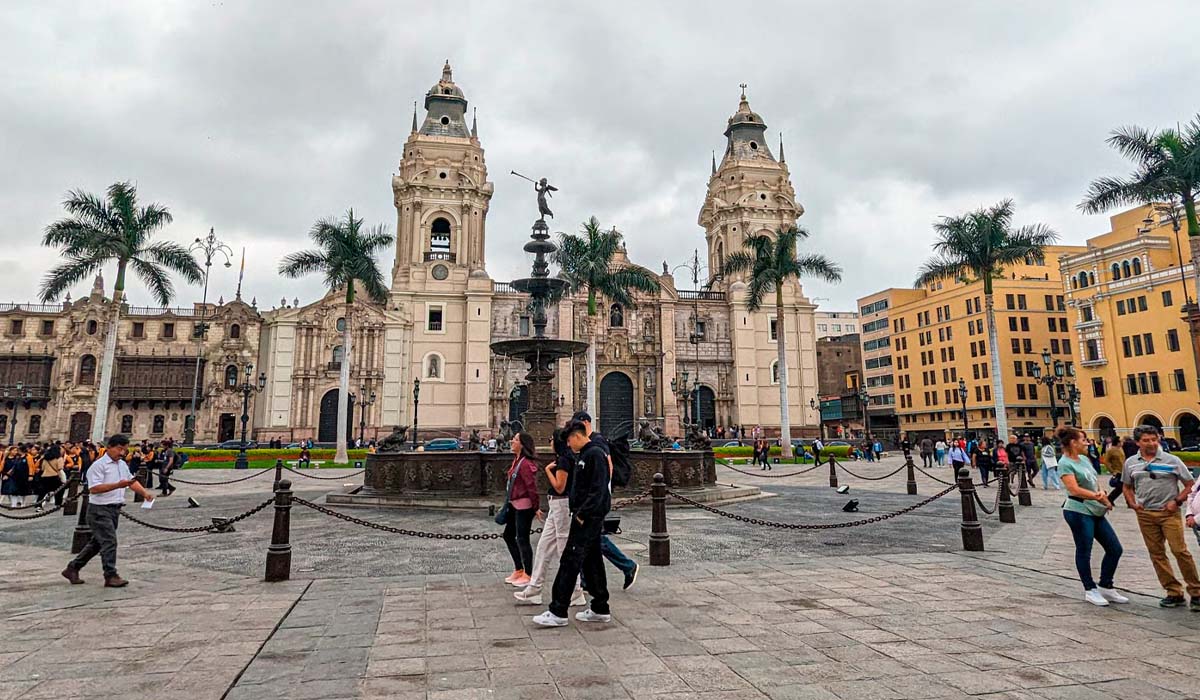
Your trip starts the moment you land at Lima International Airport. One of our team will be there waiting for you — sign in hand — ready to take you straight to your hotel in Miraflores. No figuring out taxis, no dragging luggage through an unfamiliar city. Just a smooth, easy arrival.
Day 1 is yours. There are no scheduled activities, no alarms, no agenda. Land whenever works for you and take the rest of the day at your own pace.
If you feel like getting out, Miraflores is a great place to start. It's one of Lima's safest and most lively neighbourhoods — you can stroll down to Kennedy Park, grab a coffee, or walk along the clifftop boardwalk at Larcomar with the Pacific stretching out in front of you. Not a bad way to begin a trip.
For those who want a bit more, Lima's historic centre is worth the visit: the main square, the cathedral, and the catacombs beneath the San Francisco Convent — genuinely fascinating, and slightly eerie in the best way. Or head a little further to Barranco, the city's bohemian quarter, full of street art, old mansions, and some of the best food in South America.
And Lima's food scene really is that good. Even one meal here is worth writing home about.
If you'd like us to arrange a guided city tour for this first day, just let us know in advance — we're happy to set it up.
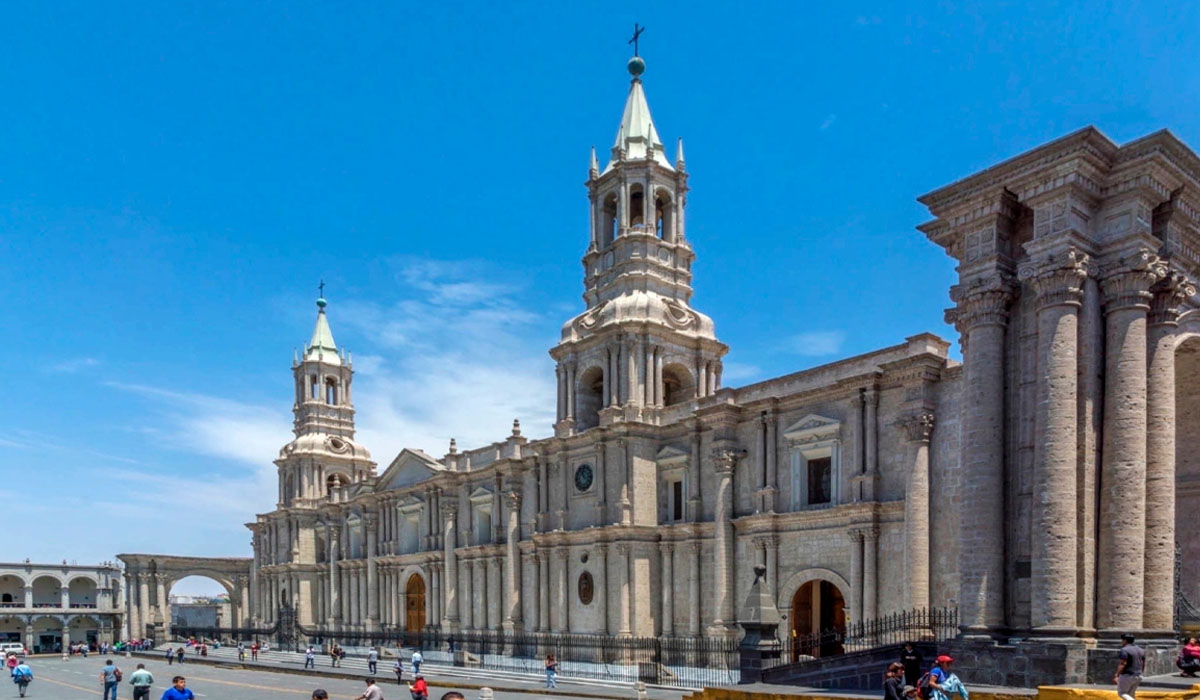
Today the real journey begins. We'll pick you up from your hotel with plenty of time before your flight — just make sure you're ready to go. The hop from Lima to Arequipa takes about an hour and a half, and when you land, one of our team will be waiting to take you straight to your hotel.
The rest of the day is completely free.
Arequipa is a city that rewards slow walking. The main square is stunning — all white volcanic stone glowing in the afternoon sun, which is where the nickname "White City" actually comes from. If you have the energy, the Santa Catalina Convent is one of those places that genuinely surprises you: it's essentially a small city within the city, full of cobblestone lanes, colourful walls, and four centuries of quiet history.
No rush though. Arequipa sits at 2,300 metres, and your body will thank you for taking it easy on the first afternoon. A walk, a good meal, a coffee in the square — that's more than enough for today.
If you'd like us to arrange a guided tour of the city, just let us know beforehand and we'll sort it out.
Your guide will pick you up in the morning and from that moment, the landscape starts doing the talking.
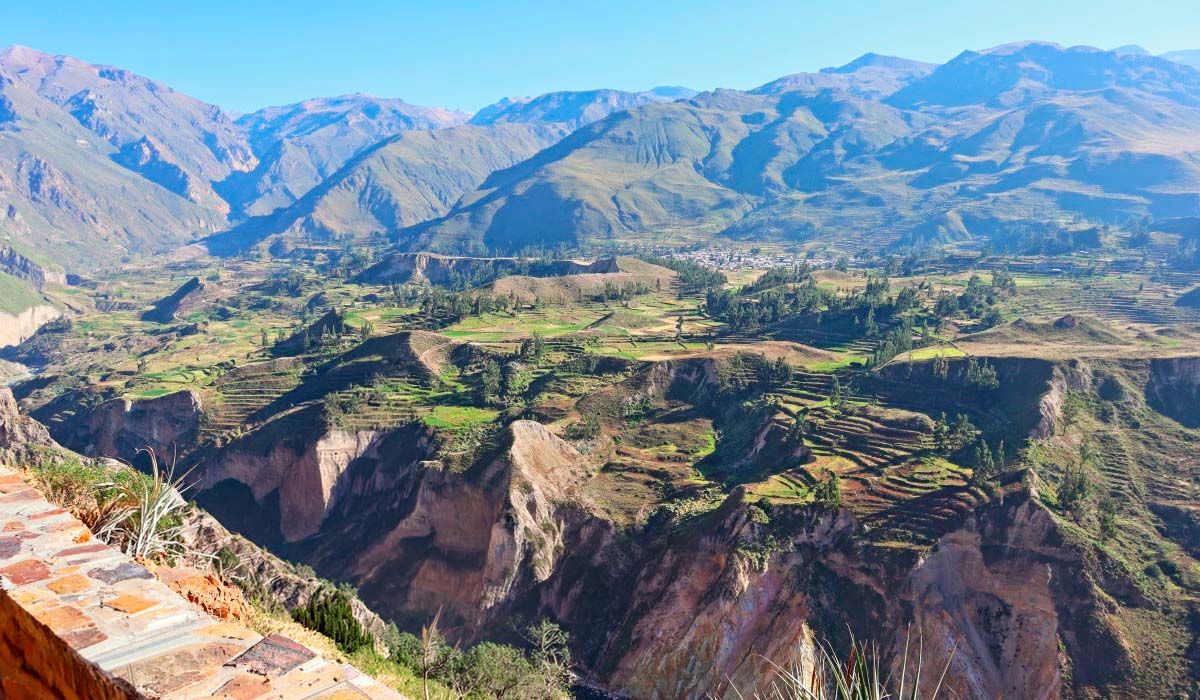
The road to Colca Canyon takes you through scenery that feels almost too dramatic to be real. You'll pass close to the Chachani volcano — snow-capped, silent, enormous — before dropping into the Cañahuas Plain, part of the Salinas and Aguada Blanca National Reserve. This is where you'll likely spot your first vicuñas: slender, elegant, wild. They look like they were designed by someone who wanted to improve on the llama, and they kind of were — their wool is among the finest in the world.
Further along, the route crosses the Tocra wetlands, where Andean flamingos wade through shallow water at altitude. It's one of those sights that doesn't quite fit your expectations of the Andes, and that's exactly what makes it memorable. The path then skirts the crater of the extinct Chucura volcano before reaching Patapampa, at 4,910 metres — the highest point of the day. From here, the Viewpoint of the Volcanoes opens up in front of you: a sweeping panorama of the western Andes that makes the altitude headache completely worth it.
By midday you'll be descending into Chivay, where lunch is waiting. The afternoon is yours — and the best thing you can do with it is find your way to the local hot springs. Mineral-rich water at around 35–38°C, open sky above you, mountains all around. After a morning at nearly 5,000 metres, it's exactly what your body needs.
Breakfast first, then an early start. The Cruz del Condor viewpoint is about an hour from Chivay, and you want to arrive before the thermals pick up — that's when the condors come out.
And when they do, everything stops.
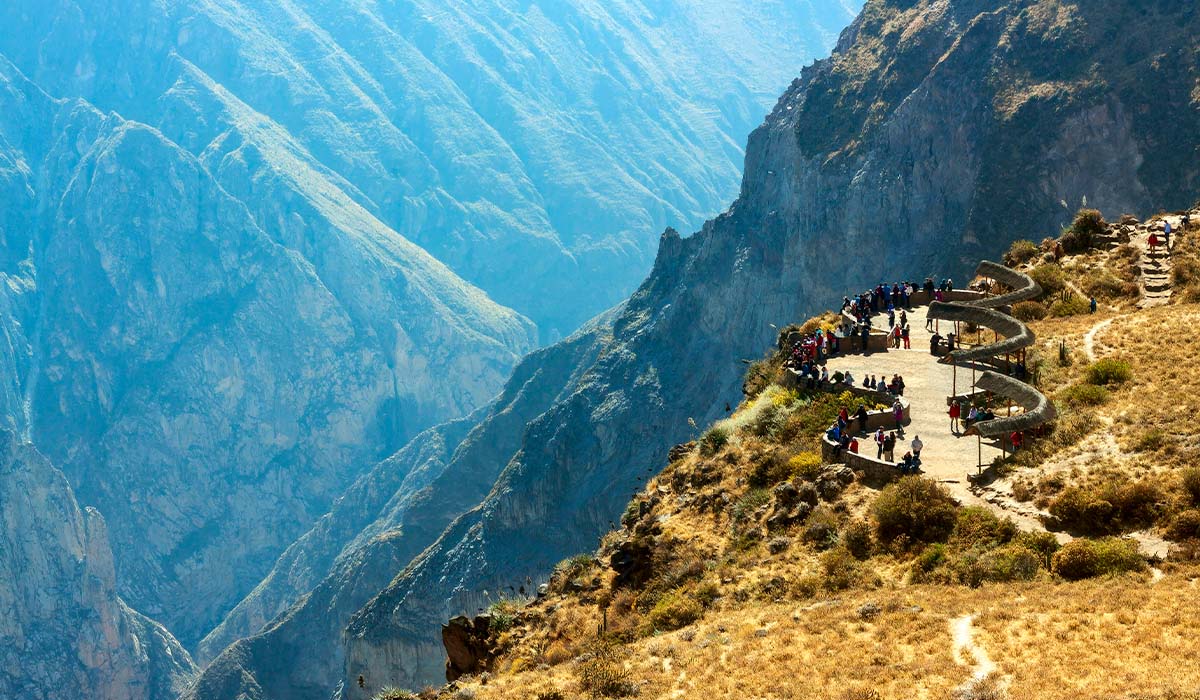
Watching an Andean condor ride the air currents above the canyon — wingspan up to three metres, barely a wingbeat — is one of those moments that reminds you why you travel. You'll have around 45 minutes at the viewpoint, enough time to watch, photograph, and just stand there taking it in. The canyon itself drops over a kilometre below you. It's a lot to process.
On the way back, the drive is worth paying attention to. The hillsides are covered in pre-Inca agricultural terraces — hundreds of them, carved into the slopes by hand long before the Inca Empire existed. We'll stop at a few viewpoints along the route, and also pass through Maca, a quiet Andean village with a beautiful old church and the kind of unhurried atmosphere that feels increasingly rare.
Back in Chivay, there's time for lunch on your own — a good excuse to try some local food — before hitting the road back to Arequipa. It's a few hours' drive, so you'll arrive in the late afternoon with just enough time to settle in, rest, and recover before the next chapter.
Today you fly from Arequipa to Cusco. Your driver will take you to the airport in the morning, and when you land, one of our team will be waiting at the exit to take you straight to your hotel in the historic centre.
Now, a word about Cusco: it sits at over 3,400 metres, and your body will know it the moment you step off the plane. The smartest thing you can do is absolutely nothing for the first couple of hours. Lie down, drink coca tea — the classic Andean remedy, and it genuinely works — and let yourself adjust. There's no rush, and pushing through the altitude on day one never ends well.
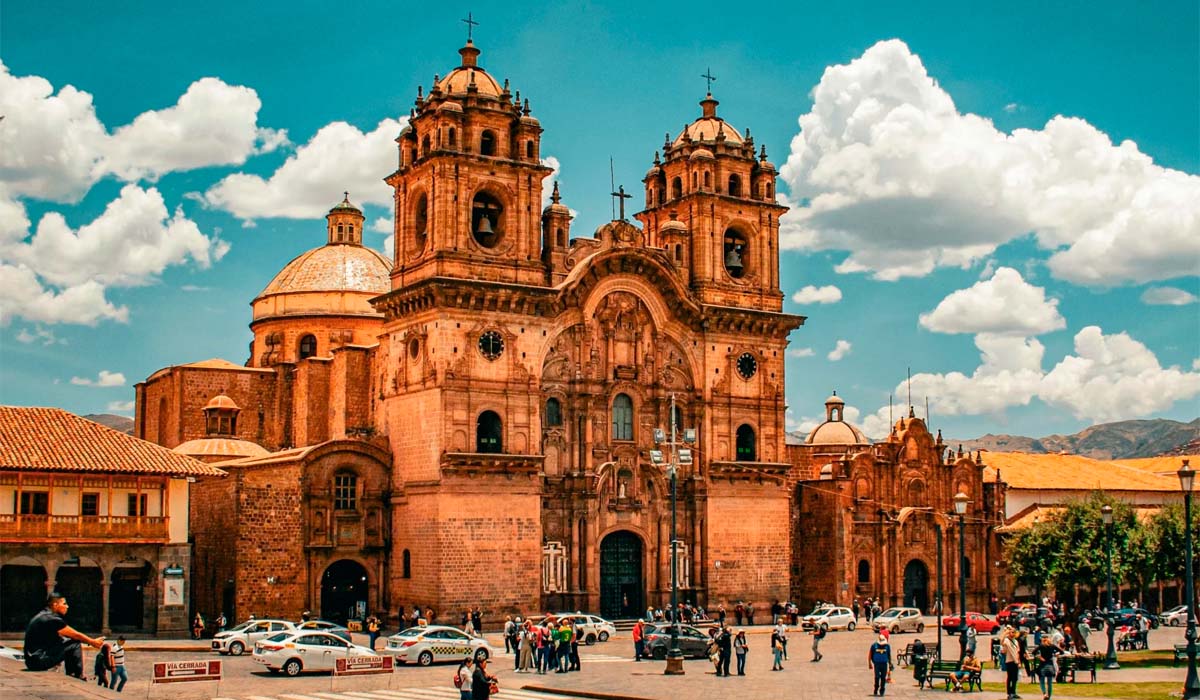
Once you've settled in, the rest of the day is yours to explore at whatever pace feels right. Cusco is a city best enjoyed on foot and without a plan: wander into the Plaza de Armas, duck into the Qorikancha — the ancient Temple of the Sun, still breathtaking after everything it's been through — or lose an hour in the San Pedro Market among colours, smells, and produce you won't find anywhere else. It's the kind of place where getting slightly lost is part of the experience.
If you're feeling good and want to make the most of the afternoon, the optional city tour is worth it. It covers the Cathedral, the Qorikancha, and four impressive archaeological sites just outside the city: Sacsayhuamán, Qenqo, Pukapukara, and Tambomachay. Just let us know in advance and we'll add it to your itinerary.
Your guide picks you up in the morning and from Cusco, you drop down into the Sacred Valley — literally, the altitude falls and the air gets warmer and the whole landscape opens up. The Incas considered this valley sacred, and once you're in it, that's not hard to understand. It was the agricultural heart of the empire: potatoes, corn, quinoa, crops that fed an entire civilisation grown in these fields.
First stop is Pisac, up on the hill. The ruins here are less visited than Machu Picchu but genuinely impressive — terraces cut into steep slopes, ceremonial spaces, and views down the valley that go on forever. After exploring the site, you'll head down into the town itself, where the market is the real thing: local artisans, textiles, ceramics, and food that didn't come from a tourist shop. Worth taking your time.
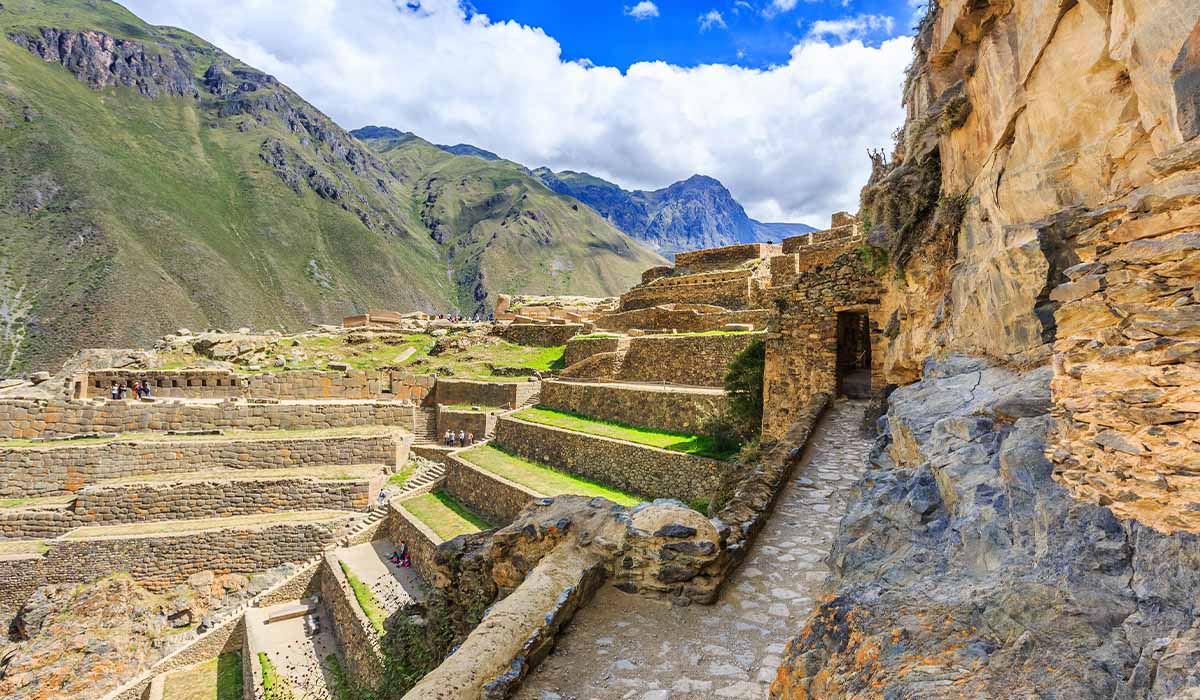
Lunch is in Urubamba — a proper buffet at a good local restaurant, included — before continuing to Ollantaytambo in the afternoon. Ollantaytambo is one of those places that quietly blows your mind. The Incas built it, the Spanish never quite managed to destroy it, and people have lived here continuously ever since. The fortress terraces rise above the town like something from another world, and your guide will help make sense of what you're looking at.
The hotel is right in town. In the evening, take a walk — Ollantaytambo is small, ancient, and worth a slow wander after the crowds thin out.
Get to bed early. Tomorrow the Inca Trail begins.
Four days. Forty-four kilometres. One of the most rewarding walks on earth.
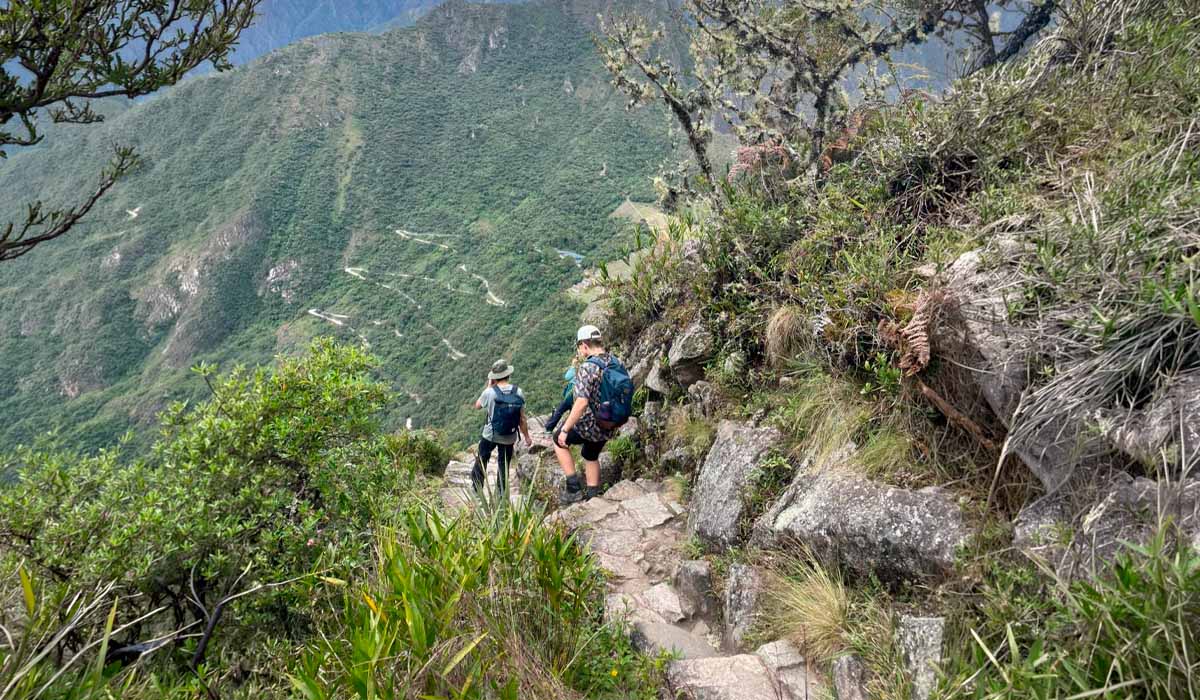
The Inca Trail follows the same mountain paths the Incas built centuries ago to connect Cusco with the rest of their empire. It passes through cloud forest, high alpine grassland, and ancient ruins that most people never see because the only way to reach them is on foot. That's part of what makes it special.
It's a real physical challenge — there are steep climbs, two significant mountain passes, and nights that get genuinely cold. But it's not technical. No climbing, no scrambling, no previous trekking experience required. What it asks for is reasonable fitness, the right layers, and a willingness to take it one step at a time. Thousands of people do it every year, including plenty who had never hiked before.
Our porters carry the heavy stuff — tents, food, cooking equipment — so all you need to manage is a day pack with your water, snacks, camera, and a rain jacket. The cook prepares proper meals at camp, morning and evening. You walk, you eat well, you sleep under the Andes. It's a good system.
Machu Picchu, acclaimed as the "Lost City of the Incas", kept its charm intact because it managed to avoid the gaze of the Spanish conquerors. Likewise, both the sanctuary and the iconic Huayna Picchu remained guarded by the thick jungle vegetation until their revelation to the modern world in July 1911 thanks to the explorer Hiram Bingham.
Upon entering the site, we will start an immersive guided tour of two and a half hours. Where, our guide will tell us the enigmas of this place, leading us through its complex network of farming terraces, veneration temples, noble quarters, and its flawless system of stone-carved aqueducts. Also, to ensure an exceptional experience and strictly respect government conservation rules, the visit prioritizes the following:
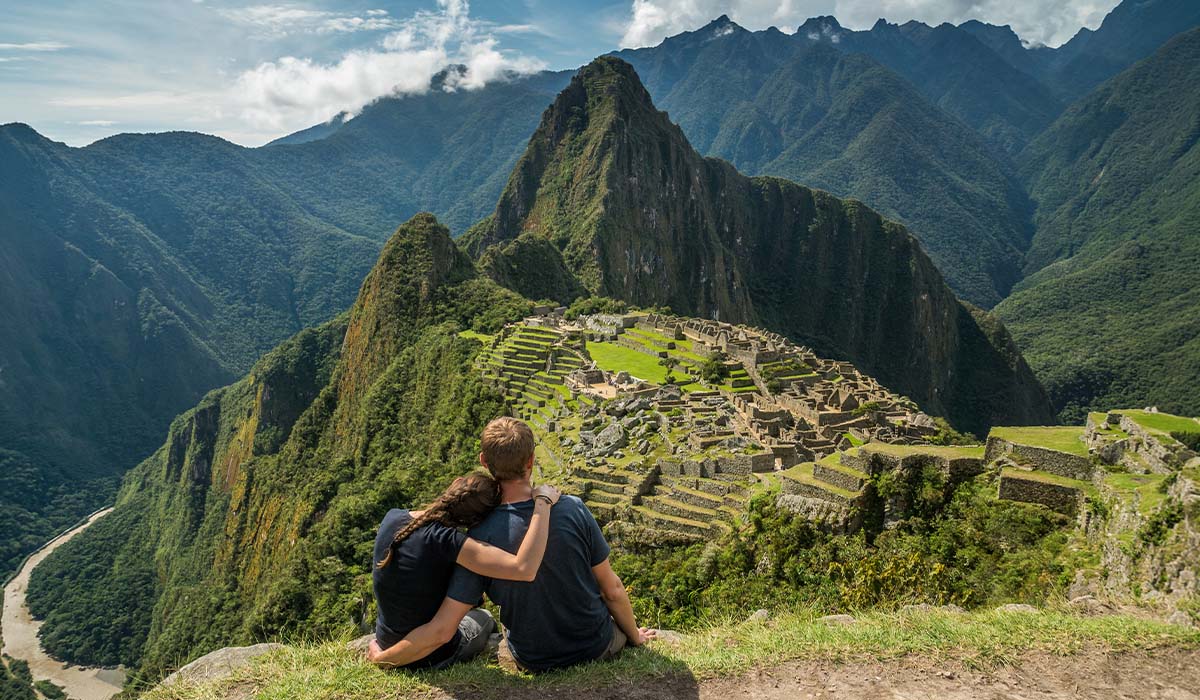
Later, once the regular guided tour is finished, you have the fascinating opportunity to independently climb the surrounding peaks to get a panoramic view of the entire sanctuary. It should be noted that these routes represent an additional cost and require a prior reservation:
After your visit through the citadel, we will start the descent to the town of Aguas Calientes. There, you will have free time to enjoy lunch, rest, or walk through its commercial streets before boarding your tourist train to Ollantaytambo. Finally, this service will end with a ground transfer from the station to your hotel in Cusco, finishing this expedition perfectly.
After four days on the trail, your legs have earned a rest. Today there's no guide, no schedule, no alarm set for 5am. Just Cusco, and however you want to spend it.
Some people sleep in and don't feel remotely guilty about it. Others find that after days in the mountains, the city feels like a reward in itself — the cafés, the markets, the side streets that didn't make it into any guidebook. The San Pedro Market is worth another visit if you want to pick up something to take home, or just watch the city go about its morning.
If you still have energy and want to squeeze in one more thing, we can arrange optional tours in and around Cusco — there's plenty left to see. Just let us know.
Otherwise: eat well, walk slowly, and enjoy your last night in one of the most extraordinary cities in the world.
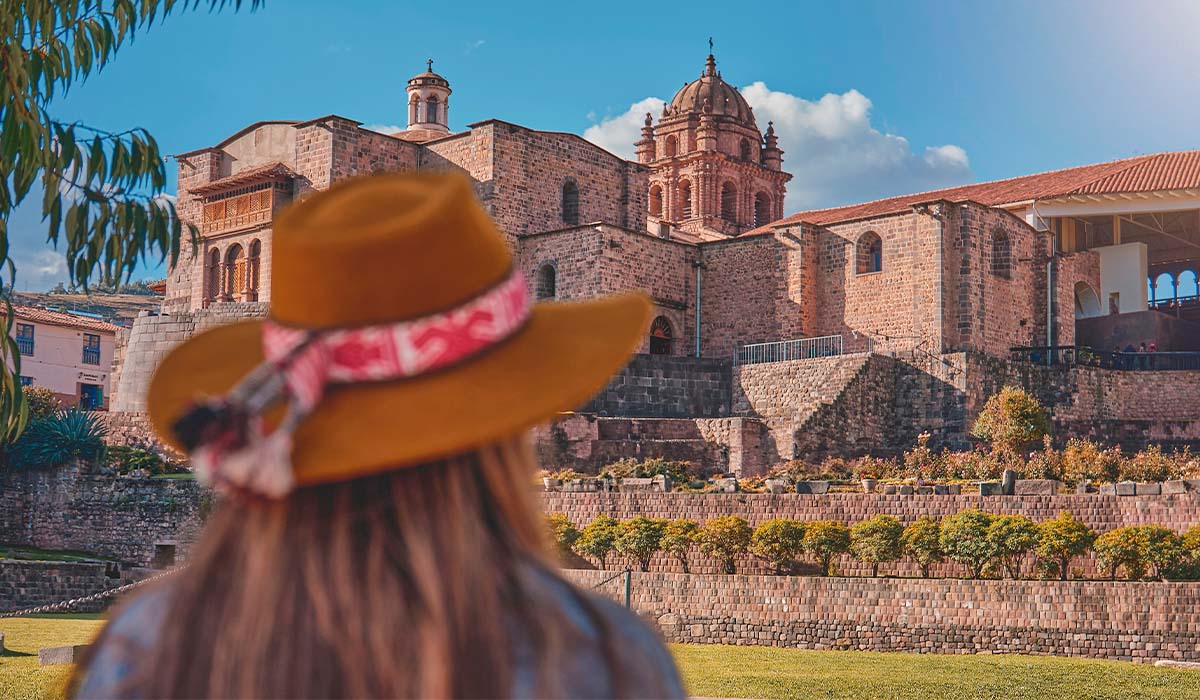
This morning you say goodbye to Cusco. Your driver will take you to the airport for the short flight to Puerto Maldonado — and just like that, the Andes are behind you and the Amazon is ahead.
From the airport it's a quick stop at the river port, then you board a motorised canoe for about an hour on the Madre de Dios river. The transition is striking: the air gets thicker, greener, louder. By the time you reach the lodge, you're deep in it. A fresh fruit drink is waiting for you on arrival, which turns out to be exactly the right welcome.
After lunch, the first excursion: Monkey Island, right across the river from the lodge. It does what it says. Capuchin monkeys and squirrel monkeys move through the trees above you — curious, quick, completely unbothered by your presence. It's an easy introduction to what the jungle actually feels like when you're inside it.
Then dinner, and then something most people don't expect to enjoy quite as much as they do: a night expedition on the river. Torches off, engine low, drifting quietly along the dark banks while your guide scans the water with a flashlight. White caimans rest on the sandbanks, eyes glowing in the beam. Capybaras — the world's largest rodents, the size of a small dog but heavier than most people — wade at the water's edge. The jungle at night sounds completely different from the jungle during the day, and that alone is worth staying up for.
Back at the lodge, sleep comes easily.
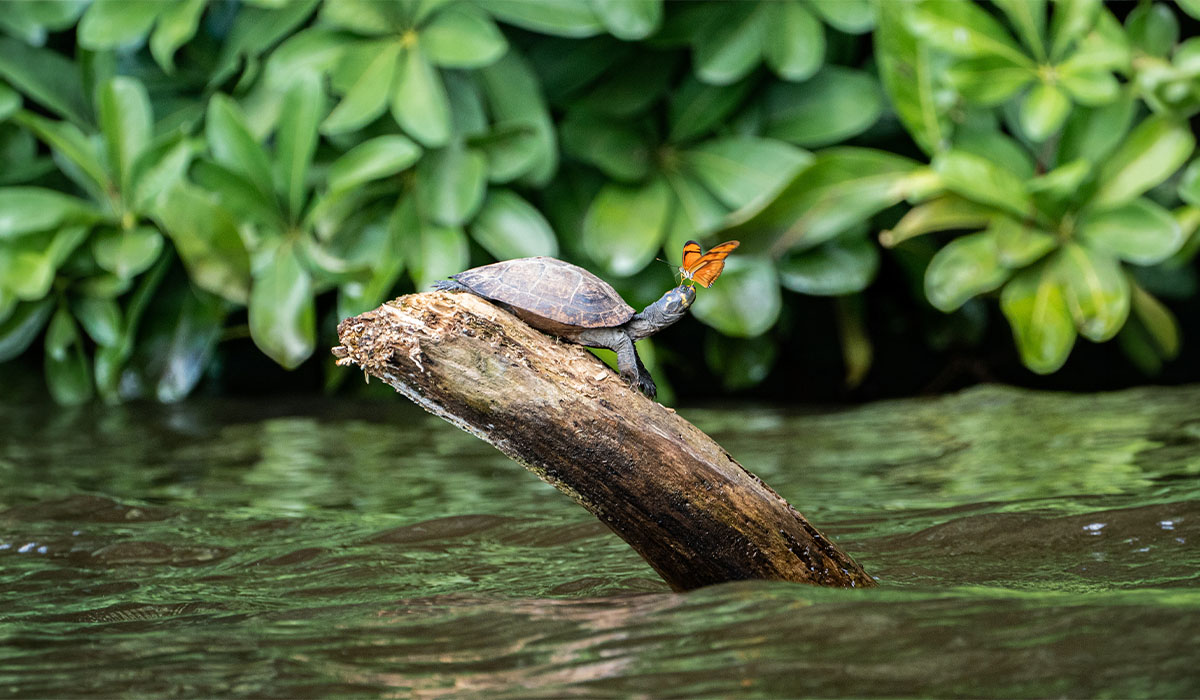
After breakfast, you set off into the jungle on foot — about three kilometres through dense tropical forest until Sandoval Lake opens up in front of you. It's one of the largest lakes in the reserve, and you'll explore it by rowboat, drifting quietly through the calm water while your guide scans the banks and the trees. Hoatzins, cormorants, jacanas, herons, the occasional vulture overhead. And it's always worth looking up slowly — sloths are masters at hiding in plain sight, exactly where you least expect them.
The real prize of the lake, if the day is on your side, is the giant river otters. They're elusive enough that a sighting feels like genuine luck, and memorable enough that people talk about it for years. The lake also shelters some of the largest black caimans recorded in the Amazon — over four metres — though they tend to stay in the darker, quieter corners. You're in a rowboat. You'll be fine.
Lunch back at the lodge, then the afternoon takes you up: the Canopy Walkway, a network of hanging bridges suspended thirty metres above the jungle floor. From up there the scale of the Amazon becomes real — canopy in every direction, the Madre de Dios winding through it somewhere below. Toucans, macaws, tanagers, oropendolas — birds you've only ever seen in photos, now flying more or less at eye level.
As the light fades, one last walk into the jungle. Torch in hand, senses sharp. The forest at night is a completely different place — insects, amphibians, reptiles, things that spend the daylight hours invisible. It's strange and a little otherworldly, and most people come back from it quieter than when they left.
Dinner, and then sleep. You'll have earned it.
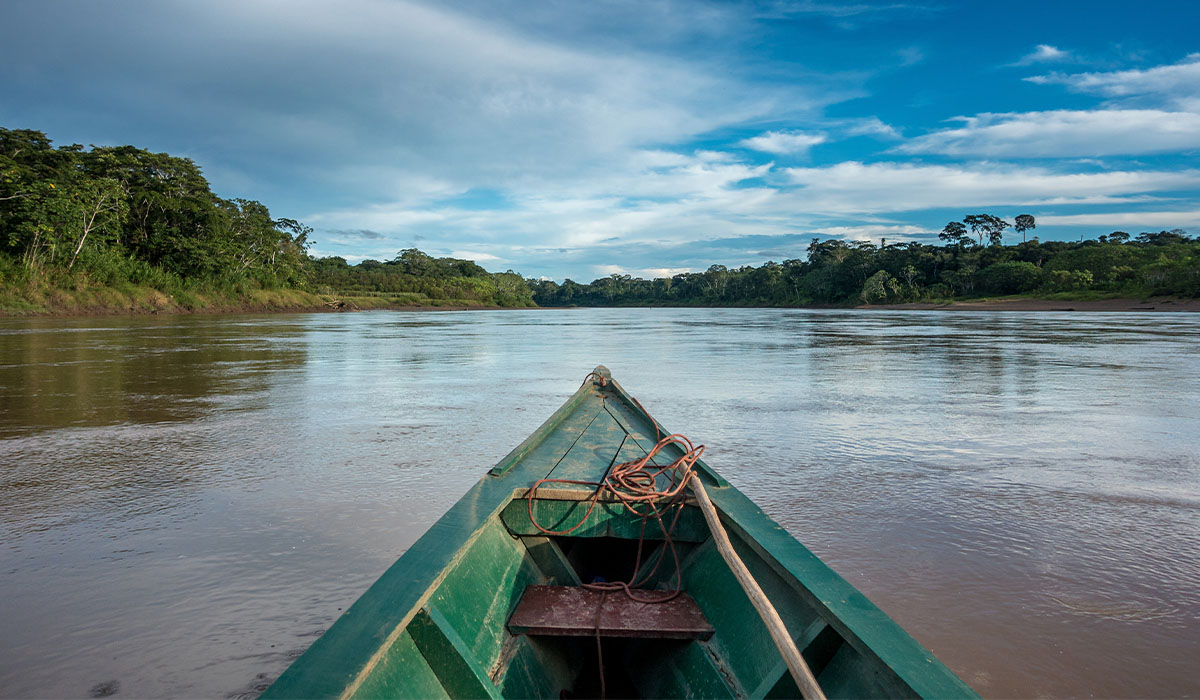
The last morning in the jungle starts before dawn. You board the boat in the dark and head upriver along the Madre de Dios to the parrot clay lick — a clay wall where dozens, sometimes hundreds, of parrots and macaws gather at first light to eat the minerals they need to digest their food. Different species, different colours, all arriving at once. The noise alone is something. It's one of those moments that's genuinely difficult to photograph well, because what makes it special isn't the image — it's being there.
Back at the lodge for a quiet breakfast, then it's time to pack up and say goodbye to the jungle.
The canoe takes you back to Puerto Maldonado, where the transport team will be waiting to take you straight to the airport — no waiting around, no detours. From there, the flight to Lima.
One of our team will meet you on arrival and take you to your hotel in Miraflores. After fourteen days, the neighbourhood's cafés, restaurants, and the long clifftop walk above the Pacific might be exactly what you need — or you might just want to order room service and do absolutely nothing, which is also a completely valid way to end a trip like this.
Either way — thank you. It's been a privilege to share these two weeks with you.
Take a transfer from the hotel to the Lima airport for your flight home.
Meal budget: Please allow USD 150-200 for meals not included in the package.
Single room: Please note that if you have booked the "Single Room" option for this tour, you receive your own single room for all overnights including the Essential Peru Tour.
Local flights: One local flight is included in the cost of your tour unless noted otherwise. It is very important that we have got your passport details at the time of your booking in order to process all air tickets. Internal flight tickets are issued locally and they will be given to you prior to each flight departure!

 +51 84 217 551
 +51 997 434 941
 Av Tupac Amaru PP-10B, Santiago, Cusco, Peru
  info@incatrailmachu.com
 www.incatrailmachu.com


