
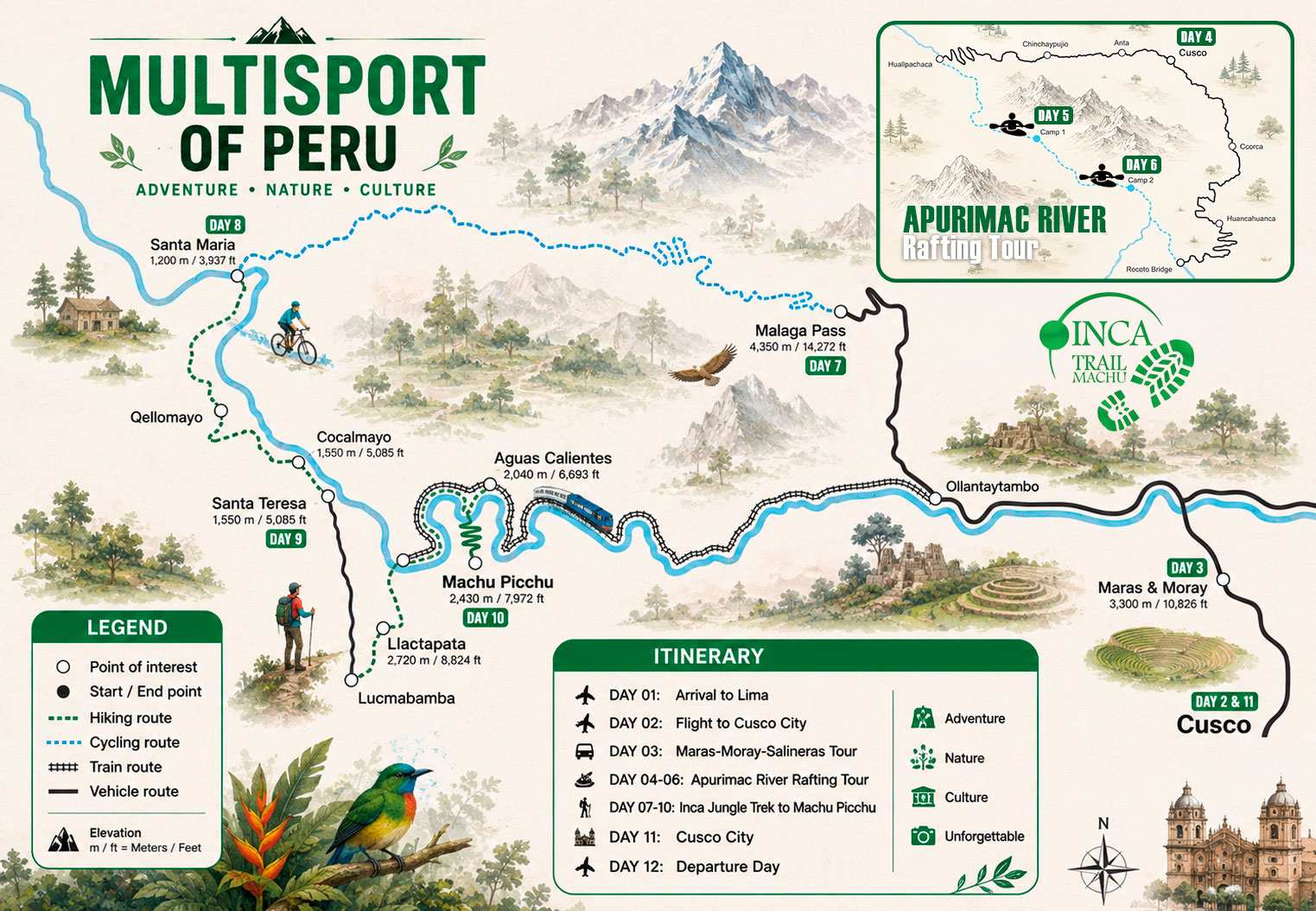
If you are the kind of traveler who gets bored sitting still, this 12-day Peru adventure package was built with you in mind. No single activity, no repetitive days — just a route that moves with purpose, taking you from the roaring depths of the Apurimac River canyon through cloud forest trails and mountain bike descents, until you finally walk through the gates of Machu Picchu having earned every single step.
The journey opens in Lima, where you land, settle in, and get your first real feel for Peru before catching the morning flight to Cusco. The altitude there asks for patience — over 3,400 meters above sea level — so the first day in the city is yours to move at your own pace, eat well, and let your body quietly adjust before the adventure begins in earnest.
Day three takes you into the Sacred Valley for a half-day that surprises most people. The circular terraced platforms of Moray, the thousands of white salt pools cascading down the hillside at Salineras, and the unhurried streets of Maras together tell a story of Inca engineering that no museum could replicate. These are the kinds of places you find yourself thinking about weeks after returning home.
Then the river takes over. For three full days you navigate the Apurimac River — one of the most isolated and spectacular canyons in South America, carved over 3,000 meters deep into Andean rock and widely considered the true source of the Amazon. The rapids build progressively, from class II and III on the first day to class V on the final stretch, always with experienced guides who know every turn of that water. Along the canyon walls, wildlife moves undisturbed: condors riding thermals overhead, river otters working the shallows, torrent ducks and foxes that have never had reason to fear people out here.
After one night back in Cusco to recover, the Peru adventure package shifts into its second act: the Inca Jungle Trek to Machu Picchu, a four-day stretch combining mountain biking, trekking, rafting on the Santa Teresa River, and zip-lining through the Andean cloud forest. The first day alone is worth the trip — a descent from 4,350 meters down into subtropical jungle on two wheels, with the landscape transforming so completely around you that it barely feels like the same country you woke up in. The days that follow bring original sections of the Inca road network, a long soak in the natural hot springs of Santa Teresa, and a final morning walk through bamboo and cloud vegetation that deposits you at the entrance of Machu Picchu just as the mist begins to clear.
Your guide at the citadel has spent years learning to read the site beyond the surface — the two and a half hour visit moves through the agricultural terraces, the ceremonial plazas, and the solar observatory with the kind of context that transforms stone into story. Those with energy left can climb Huayna Picchu or Machu Picchu Mountain for the panoramic perspective that makes the scale of the Lost City finally click. The afternoon train back to Cusco closes the loop, with one last free day in the city before your departure flight.
Twelve days of rafting, biking, trekking, and history across some of the most dramatic terrain on earth. If that sounds like your kind of trip — you already know the answer.
Day 01: Arrival to Lima
Day 02: Flight to Cusco City
Day 03: Maras - Moray - Salineras tour
Day 04-06: Apurimac river rafting tour - The Apurimac canyon
Day 07-10: Inca Jungle Trek to Machu Picchu
Day 11: Cusco City
Day 12: Departure Day
Your Crew Dedicated Inca Trail Machu representatives in both Lima and Cusco, plus a professional certified guide for the full Inca Jungle Trek to Machu Picchu.
Accommodation 6 nights in 3-star hotels · 3 nights in local hostels · 2 nights camping under the Andean sky
Meals 11 breakfasts · 5 lunches · 5 dinners · 3 afternoon teas Budget approximately USD 100–150 for meals not included in the package.
Transportation 1 domestic flight · Private van transfers · River raft · Train to Aguas Calientes (Expedition Class)
Documents
Clothing & Gear
Health & Sun Protection

No alarms, no schedules, no rushing. Your Peru adventure package begins the moment you land in Lima, and this first day belongs entirely to you.
A representative from Inca Trail Machu will be waiting at the airport with your name on a sign, ready to take you straight to the hotel so you can drop your bags and breathe. What you do from that point is up to you.
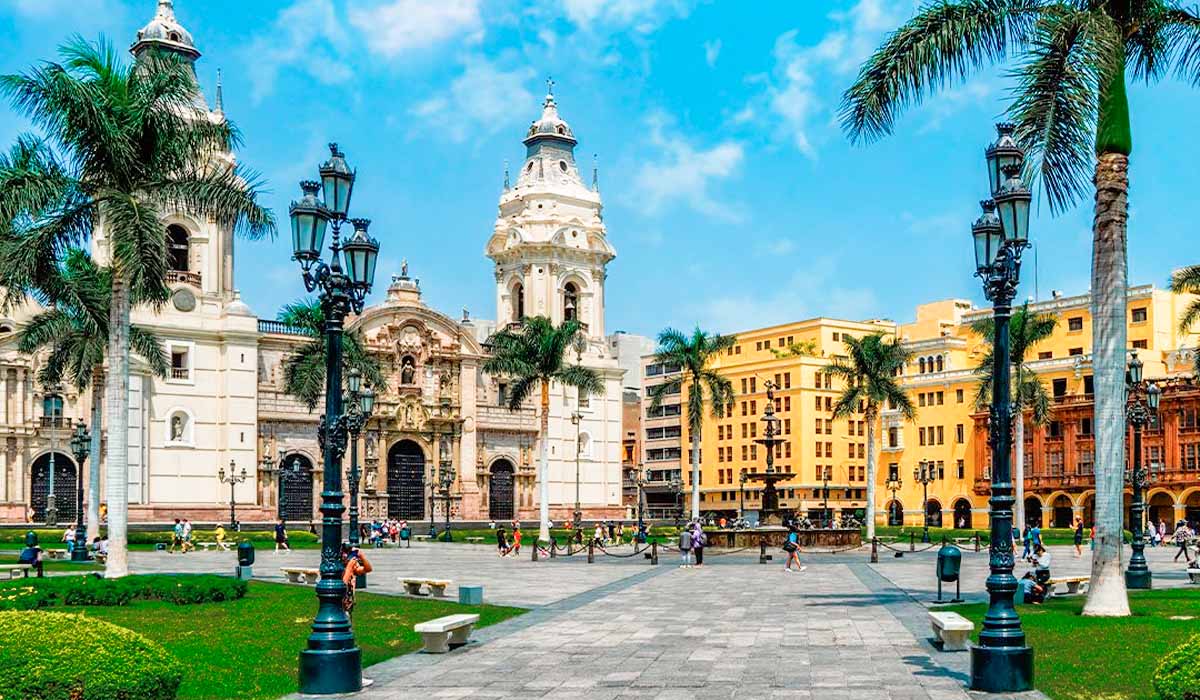
If the journey left you with energy to spare, Lima rewards curiosity from the very first walk. The city was founded by the Spanish conquistador Francisco Pizarro on January 6, 1535 — Kings' Day on the Catholic calendar — and that origin is precisely where its historic nickname comes from: the City of Kings. A title that still feels earned when you wander through its colonial center.
The natural starting point is the Plaza Mayor, the historic heart of Lima. The Cathedral, the Government Palace, and the Archbishop's Palace frame three of its sides, each one carrying centuries of history in its stone and facade. It is the kind of square that makes you slow down without quite knowing why. A good place to find your footing before the real adventure begins tomorrow.
Rest well. The Andes are waiting.
The morning starts early. A transfer will take you from your Lima hotel to the airport in time for your domestic flight to Cusco — a journey of barely an hour that crosses the entire geography of Peru, from the Pacific coast to the high Andes, in a single window view.
A representative from Inca Trail Machu will be waiting at the terminal to take you directly to the hotel. From that point, the day is yours — and the best advice anyone can give you is simple: slow down.
Cusco sits at over 3,400 meters above sea level, and the altitude makes itself known quickly, especially coming from Lima at sea level. A coca tea at the hotel, a quiet lunch, a short walk without a destination — that is the right pace for today. The body needs a full day to begin adjusting, and pushing too hard on day one almost always catches up with you by day three. Let Cusco come to you gradually.
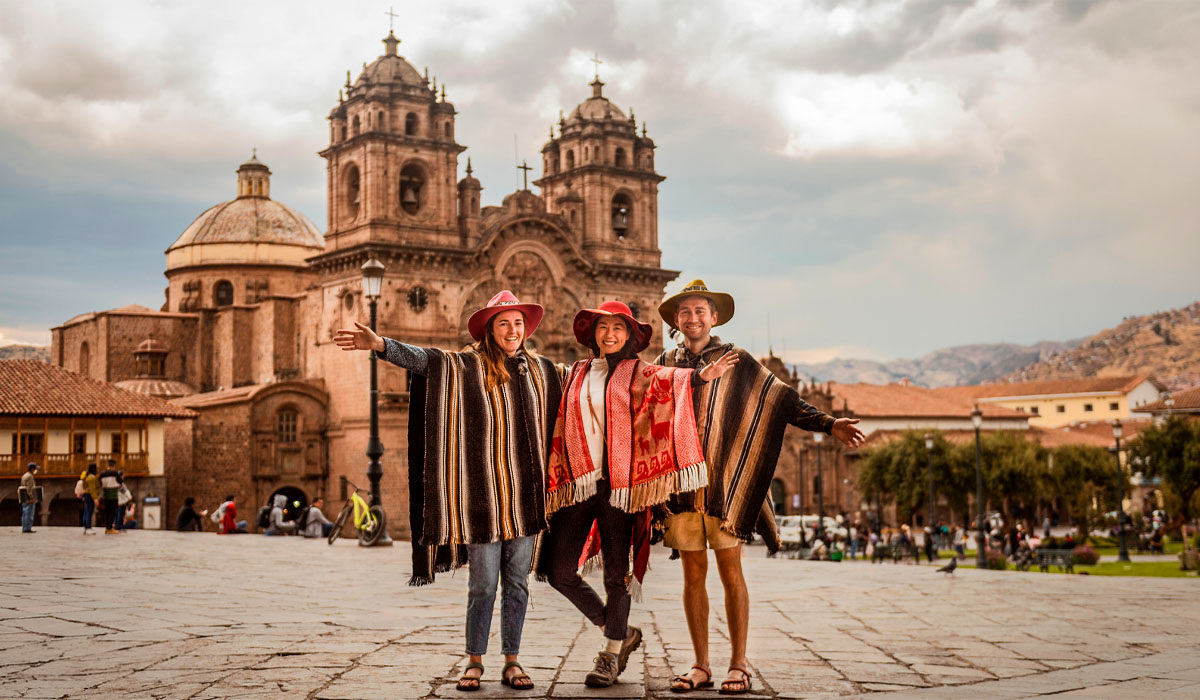
And it will. Because Cusco is the oldest continuously inhabited city in the Americas, and that history is visible at every turn. Inca stone walls line the streets of the city center — precisely fitted granite blocks that have outlasted earthquakes that leveled everything built on top of them. The Spanish recognized what they could not destroy, and so they built their churches and palaces directly over Inca foundations. The result is a city where two civilizations share the same walls, literally, in a way that exists nowhere else on earth.
If the afternoon leaves you with enough energy to explore, two places are worth the effort:
Qorikancha — Temple of the Sun The most sacred site in the entire Inca Empire. At its peak, its walls were reportedly lined with gold sheets and its courtyard filled with life-size golden figures. The Spanish stripped it bare and built the Church of Santo Domingo over its foundations — but the original Inca stonework underneath survived, and what remains is still extraordinary. Standing at the junction of both structures, the contrast between the two civilizations could not be more visible.
Cusco Cathedral — Plaza de Armas Construction began in 1559 and took exactly one hundred years to complete. Inside, the cathedral holds the largest collection of colonial art in the city, a series of paintings from the Cusco School that blend European technique with Andean symbolism in ways that feel entirely unique. The crypt beneath the floor is the resting place of Inca Garcilaso de la Vega, the first mestizo chronicler of the New World. If time allows, the nearby churches of La Compañía, La Merced, and San Francisco round out the afternoon well.
Tonight, sleep early. Tomorrow the real exploration begins.
After breakfast at the hotel, a private transfer takes you out of Cusco and into the Sacred Valley of the Incas — about ninety minutes through open Andean landscape where the mountains grow wider and the valley floor below starts to reveal itself between the hills. It is the kind of drive that makes you forget to look at your phone.
Today covers three sites that most visitors to Cusco skip entirely in favor of the more obvious stops. That is their loss.
The first stop is the small town of Maras, where the tour slows down deliberately. This is not a site with entry tickets or guided explanations — it is simply a colonial village where the stone-carved doorways, the quiet plaza, and the rhythm of daily life give you a few unhurried minutes to walk and look closely. The kind of place that does not make it onto highlight reels but stays in your memory precisely because nothing was trying to impress you.
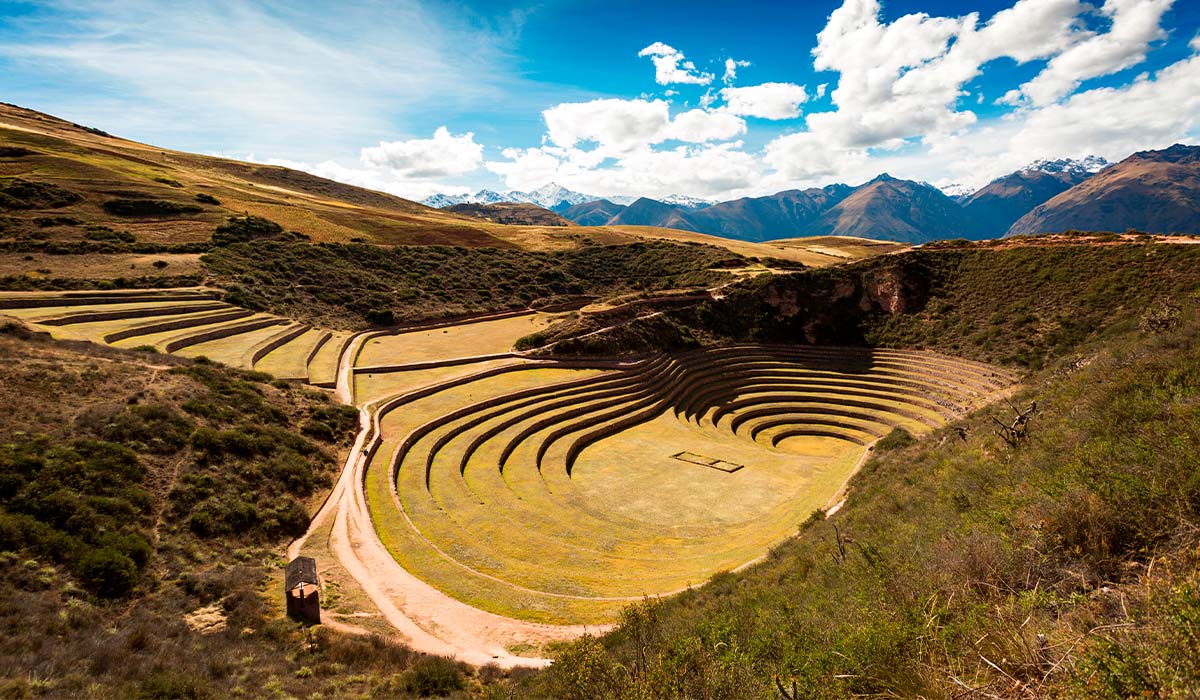
A short drive from Maras brings you to one of the most visually striking and intellectually fascinating sites in the entire Sacred Valley. Moray is not what most people picture when they think of Inca ruins. There are no towers, no temples, no walls. Instead, three sets of enormous circular terraces sink into natural depressions in the earth like giant amphitheaters, each ring descending deeper than the last with a geometric precision that still surprises archaeologists today.
The leading theory — and the one the evidence supports most strongly — is that Moray functioned as an agricultural research center. Each terrace ring creates its own microclimate, with temperature differences of up to 15 degrees Celsius between the outermost and innermost levels. The Incas used those conditions to test how different crops responded to different environments, essentially developing one of the earliest known systems of controlled agricultural experimentation. Standing at the rim and looking down, the engineering reads less like ancient construction and more like deliberate science.
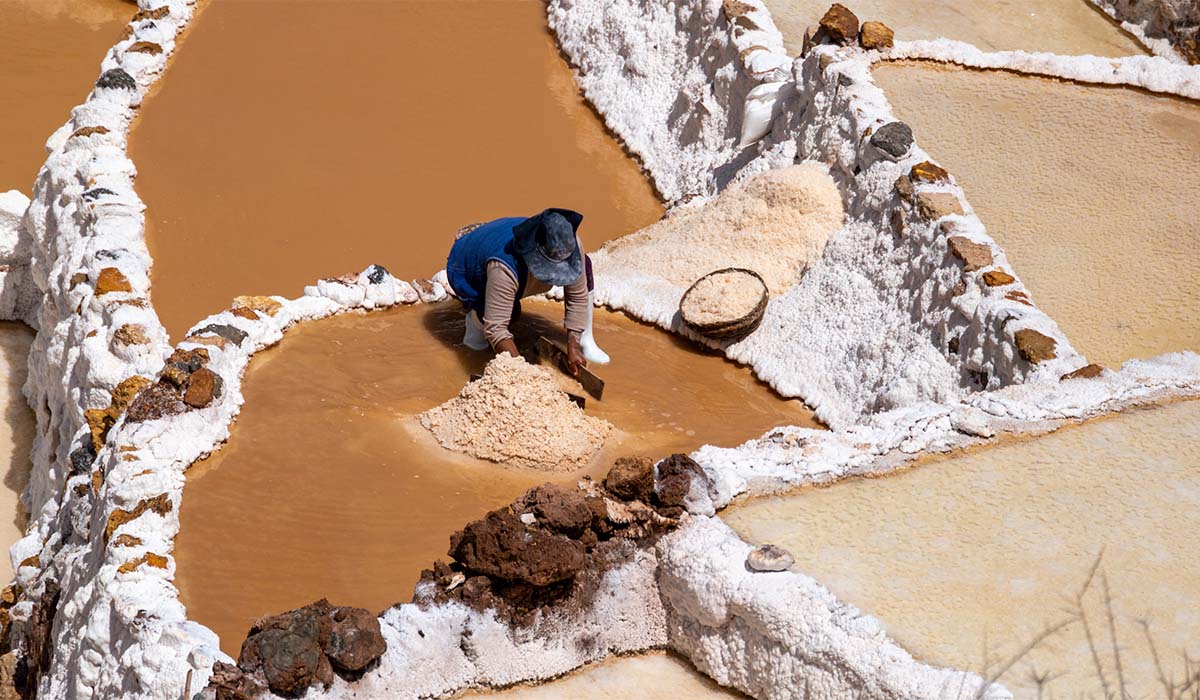
The final stop of the day is the one that tends to stop people mid-sentence when they first see it. The Salineras de Maras are approximately 3,000 individual salt evaporation pools carved into the face of a mountain, fed by a single underground stream of naturally saltwater that has been flowing from inside the hillside for centuries. The pools descend in terraces toward the valley below, and when the afternoon light hits the white salt against the ochre earth and the green of the Sacred Valley, it produces a landscape that photographs consistently fail to do justice to.
Local families still work the pools exactly as their ancestors did — harvesting the salt by hand, maintaining the channels, and selling directly from their individual plots. You can walk among the pools with the guide, buy salt straight from the producers if you want, and take the time to understand that what looks like a dramatic natural feature is actually a living agricultural system that has been in continuous use since before the Spanish arrived.
The private transport back to Cusco departs mid-afternoon, arriving around 3:00 p.m. — enough time to rest before the three days on the Apurimac River that begin tomorrow.
The fourth morning starts before the city wakes up. A four-hour private transfer takes you northwest out of Cusco, crossing the Andean range as the road descends steadily and the landscape shifts from high plateau to something wilder and more vertical. Then the canyon appears — and the scale of it stops conversation.
The Apurimac Canyon drops more than 3,000 meters from rim to river, making it twice as deep as the Grand Canyon in the United States. It is one of the most remote and least visited gorges in South America, and the river running through its floor is no ordinary river. At 690 kilometers long, the Apurimac is the most direct source of the Amazon — the headwater that begins the longest river system on earth. Its name comes from Quechua: apu meaning divinity, rimaq meaning oracle. The River That Speaks to the Gods. Standing at the edge of the canyon before the first descent, that name earns its meaning.
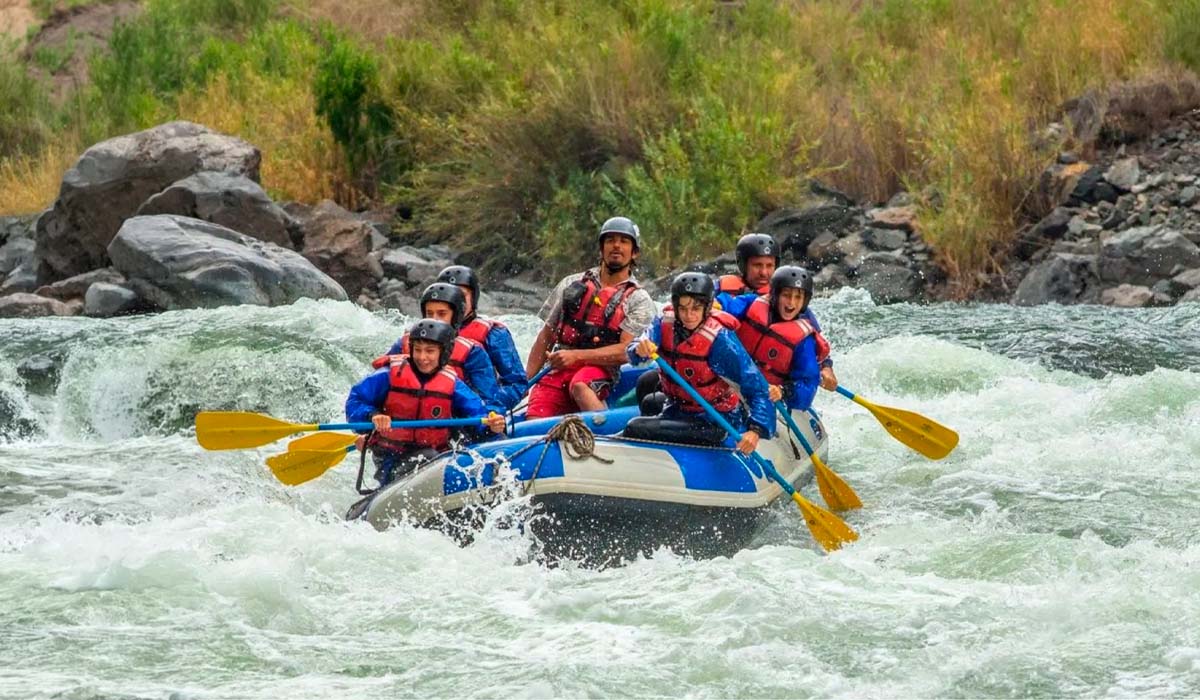
The team arrives at Huallpachaca at around 2,000 meters above sea level, where the guides spend a couple of hours preparing everything methodically: self-bailing rafts, helmets, life jackets, wetsuits, and paddles. Before any water, there is a thorough safety and rescue briefing — unhurried, practical, and worth paying attention to.
After lunch on the riverbank, the navigation begins. The first afternoon runs class II and III rapids — enough to get wet, find your paddling rhythm, and start reading the river without the pressure of more technical water. Two hours downstream, the team sets up base camp in a narrow section of the gorge, with the canyon walls rising on both sides and the river moving quietly below. Dinner is cooked at camp. The sky above, framed by rock on either side, holds more stars than most people have seen in their lives.
An early breakfast and on the water by 9:00 a.m. This is the longest and most physically demanding day of the rafting section — approximately six hours navigating class III and IV rapids that require focus, communication, and genuine teamwork. The river pushes harder here, the canyon narrows in places, and there is at least one section where the gorge squeezes tight enough that the rafts come out and the group walks a short stretch along the bank before re-entering downstream.
By mid-afternoon the second camp appears — a flat sandy beach at the base of the canyon, with the river slowing just enough to feel generous. Dinner beside a campfire, the Andean night closing in around the canyon walls, and a level of quiet that is genuinely difficult to find anywhere else. This is the kind of evening that justifies a twelve-day trip on its own.
The final morning on the Apurimac brings the most technically demanding water of the expedition: class V rapids, the ceiling of recreational whitewater. The guides know every feature of this stretch and will walk you through each significant rapid before you run it. For those who prefer to scout from the bank and watch, that is always an option — but most people get in the raft.
Beyond the rapids, this section of the canyon offers something that no level of difficulty can manufacture: wildlife moving entirely undisturbed. The isolation of the lower Apurimac means that animals here have had little contact with humans. River otters work the shallows between rapids. Andean foxes appear on the canyon ledges with no particular alarm. Torrent ducks navigate the white water with a casual confidence that puts most rafters to shame. Cormorants fish the calmer pools. And on the thermal currents rising off the canyon walls, if the morning is clear and the timing is right, an Andean condor — the largest flying bird in the Western Hemisphere — may circle overhead close enough to see the white collar at the base of its neck.
Three to four hours of navigation brings the expedition to the takeout point, where the team packs the equipment and boards the private transport back to Cusco. Arrival at the hotel is around 5:00 p.m. — enough time for a long shower, a real bed, and one quiet night before the next stage of this Peru adventure package begins.
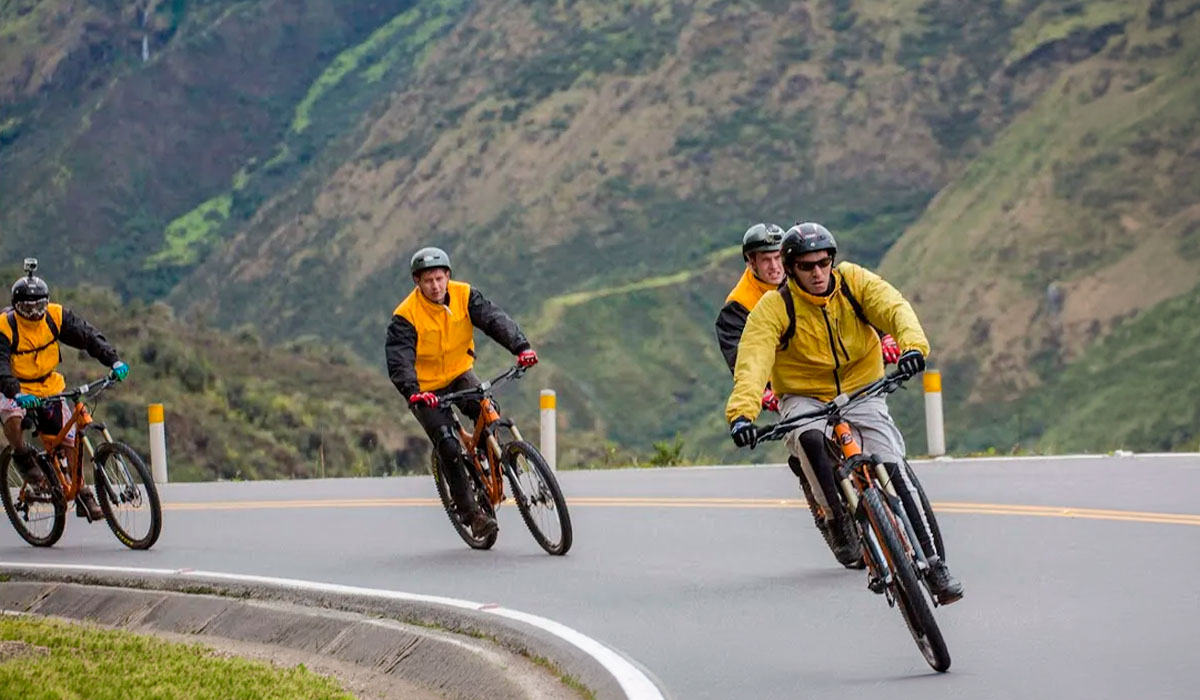
The second great chapter of this Peru adventure package begins on day seven. An early hotel pickup in Cusco starts a four-hour drive through the Sacred Valley, climbing steadily until the road reaches the Málaga Pass at 4,350 meters above sea level — the highest point of the entire route, and the place where the bikes come out.
From here, the descent begins.
Four hours of mountain biking separate the high Andean plateau from the subtropical valley below. The road drops more than 2,400 meters in altitude, and the landscape transforms so completely along the way that it barely feels like the same country. Cloud forest closes in around the road, tropical plantations appear on the hillsides, the air gets thicker and warmer, and Inca archaeological remains emerge between the vegetation at intervals that remind you this path has been used for centuries.
Local families live along these hillsides, and the pace of the descent leaves enough room to notice them — a farmer crossing the road with a loaded mule, children watching the bikes pass from a doorway, small plots of coca and fruit terraced into slopes that seem too steep to farm.
The day ends at a family hostel in Santa Maria, where a hot shower and dinner close an afternoon that most people describe as one of the highlights of the entire trip.
Optional: Afternoon rafting on the Santa Maria River, class III to V rapids. Additional cost: USD 30.
After breakfast, the bikes are left behind and the trekking begins. The trail climbs gradually through increasingly lush vegetation, with the valley opening below and the cloud forest thickening on either side. Halfway through the morning, a lunch break in the middle of the coca plantations — hammocks available, no agenda, the kind of pause that the body genuinely needs before continuing.
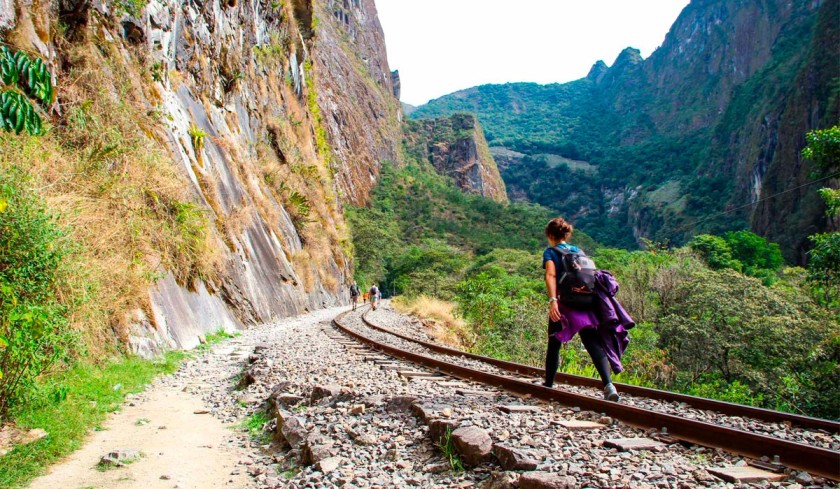
The most significant moment of the day arrives when the trail joins an original section of the Qhapaq Ñan — the Inca road network that once connected the entire empire from Colombia to Argentina. The stone surface underfoot is the same surface Inca messengers, soldiers, and traders used centuries ago. The path runs along the edge of steep gorges and narrow hillside ledges that demand attention and are not recommended for anyone with a serious fear of heights — but for those comfortable with exposure, the combination of history and landscape is extraordinary.
The reward at the end of the day is the Cocalmayo hot springs in Santa Teresa — natural thermal pools where the body finally gets to release everything the day asked of it. One of those simple experiences that lands harder than expected after eight days on the road.
Optional: Zip-lining over the Andean cloud forest canopy first thing in the morning in Santa Teresa. Additional cost: USD 30.

The morning starts with a private transfer to Llucmabamba, timed deliberately to arrive as the sun begins to rise behind the silhouette of Machu Picchu on the horizon. It is one of those views that justifies every early alarm of the trip — the citadel appearing gradually out of the mist, backlit, impossibly positioned on its ridge above the valley.
From there, the trail descends through bamboo forest and cloud vegetation — a completely different ecosystem from anything covered in the previous days. Bird species appear here that are not found at higher elevations, and the pace is slow enough to actually look. In the afternoon, the group reaches the Hidroeléctrica railway station, where the final stretch follows trails running parallel to the river all the way into Aguas Calientes — the town that sits directly below Machu Picchu.
The last night is at a hostel with private rooms and hot water. After nine days on the road, both of those details feel like a genuine luxury.
The final day of the Inca Jungle Trek to Machu Picchu begins before dawn. After breakfast, a two-hour walk up to the citadel gates brings you there in time for the first light of day — the fog still moving through the ruins, the stone slowly warming, the whole site quieter and more atmospheric than it will be at any other point of the day. This is the version of Machu Picchu worth waking up for.
The certified local guide leads a two and a half hour visit through the citadel, covering the agricultural terraces, the ceremonial plazas, the solar observatory, and the engineering logic of a city built at 2,430 meters on a narrow mountain ridge — a location that makes no practical sense until the guide explains exactly why the Incas chose it. The visit follows defined circuits:
Worth knowing: Machu Picchu does not appear in a single Spanish colonial chronicle — which means the conquistadors never found it. The Quechua farming communities in the surrounding valleys always knew it was there, but it was the American explorer Hiram Bingham who brought it to international attention in 1911. Decades of excavation since have answered many questions and opened just as many new ones. Its exact function is still debated.
Optional mountain climbs — both require advance booking and carry an additional cost:
In the afternoon, the descent to Aguas Calientes gives you free time to eat, decompress, and let the citadel settle before boarding the train back toward Cusco — Expedition Class, following the Urubamba River through the canyon as the light fades. Ground transport from Ollantaytambo or Poroy completes the final transfer, arriving in Cusco at night.
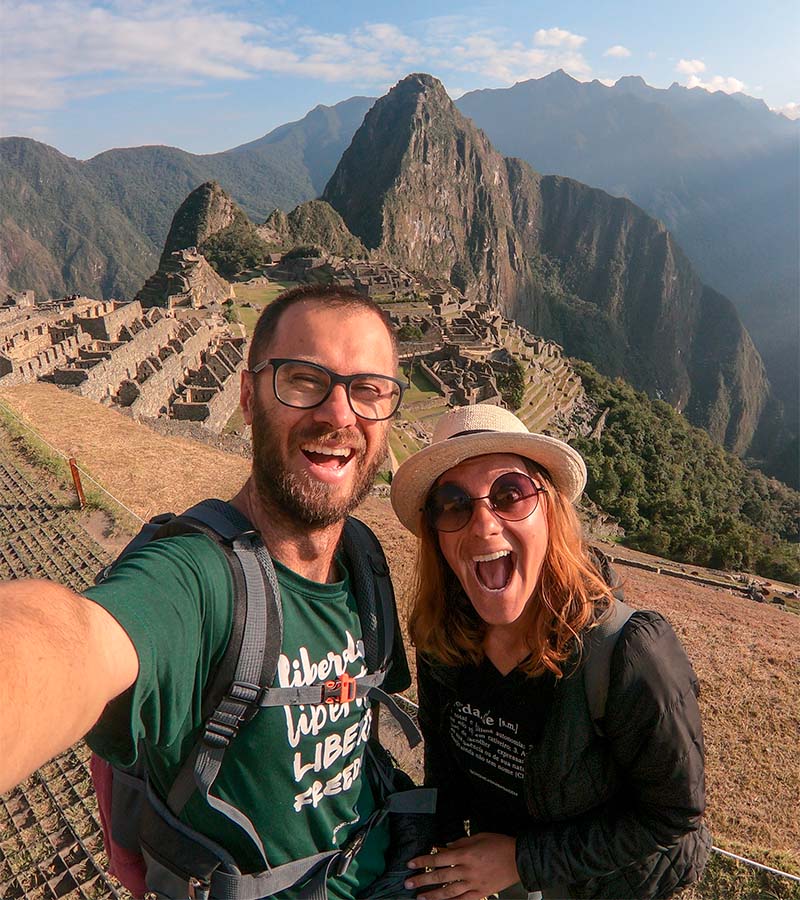
After ten days of early alarms, descents, rapids, and stone pathways, this day has no agenda. No pickup times, no group pace, no itinerary to follow. Cusco is yours to use however you need it — and depending on what your body is asking for, that could mean very different things.
The Plaza de Armas is one of the best places in South America to do absolutely nothing productively. A coffee, a bench, and the cathedral facade in front of you is a legitimate way to spend a morning. The markets around San Pedro offer everything from local textiles and ceramics to fresh fruit and street food that costs almost nothing and tastes considerably better than it has any right to. Cusco at night has its own energy too — the streets around the Plaza fill up after dark, and anyone curious about Andean nightlife will find no shortage of options.
Cusco rewards the curious. The city holds several museums that each preserve a different layer of what the Inca civilization actually was — not the postcard version, but the administrative, spiritual, and scientific reality of an empire that governed twelve million people without a written language:
The Cathedral of the Plaza de Armas deserves a dedicated visit if you skipped it on day two. Construction began in 1559 and took exactly one hundred years to complete — the cathedral itself took longer to build than most modern cities take to plan. Inside, the colonial art collection is the largest in the city, and the crypt at the entrance holds the remains of Inca Garcilaso de la Vega, the first mestizo chronicler of the New World and one of the most important voices in understanding what the Inca Empire was before the Spanish arrived. The nearby churches of La Compañía, La Merced, and San Francisco round out the afternoon for anyone who wants to keep moving through the centuries.
If You Want One More Day of AdventureCusco is an exceptional base for outdoor activity, and a free day is a legitimate reason to use it. Three options worth considering:
A good way to close twelve days that have already given quite a lot — on your own terms, at your own pace, in one of the most layered cities on earth.
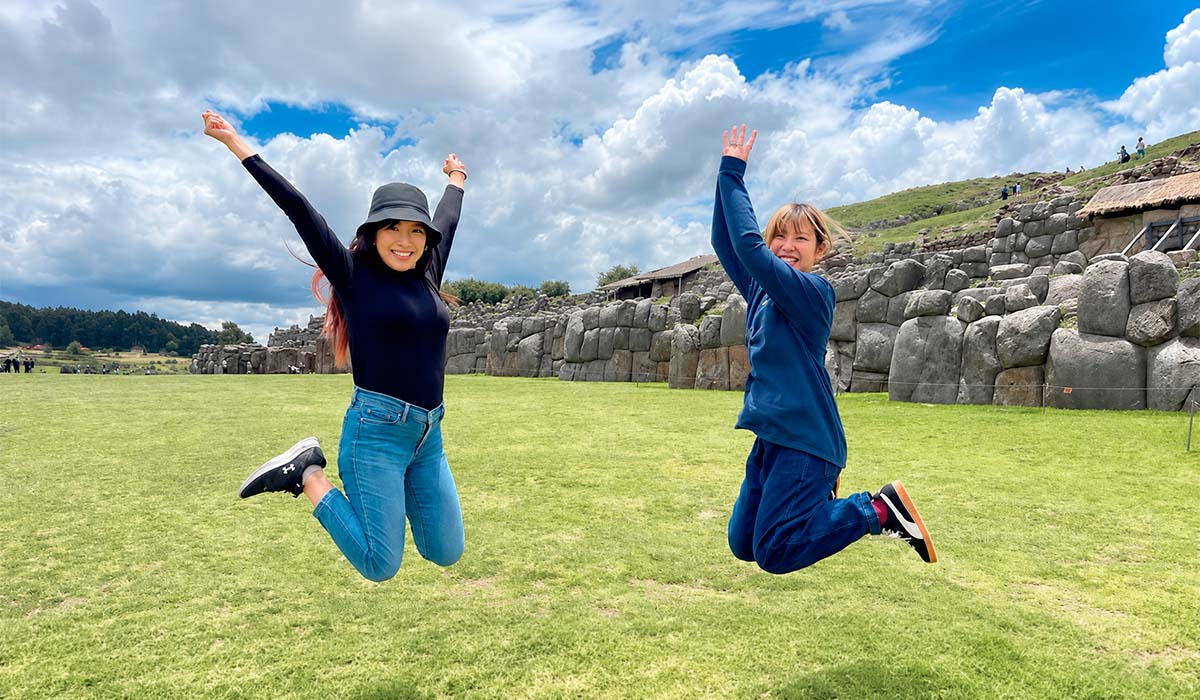
The last morning in Cusco arrives quietly. A private transfer takes you from the hotel to Cusco's airport in time for your departure flight — the final logistics of a trip that started twelve days ago in Lima with a different version of yourself.
If you are flying back to Lima or continuing on to another destination in Peru — the Amazon, Lake Titicaca, Arequipa, the Colca Canyon — let us know in advance and we will arrange everything. Extensions, connecting flights, additional nights: nothing is complicated when you plan it early.
What is worth saying before the flight boards is this: not many trips cover this much ground in twelve days without feeling rushed. The Apurimac canyon, the Inca road network, the descent from 4,350 meters into subtropical jungle, Machu Picchu at first light — these are not highlights from a brochure. They are twelve days of genuinely earned travel through one of the most remarkable landscapes on earth.
Safe travels. And when Peru calls again — and it usually does — you know where to find us.
Everything listed below is covered from the moment you land in Lima to the moment your departure transfer drops you at Cusco airport. No hidden costs, no last-minute surprises.
Arrival & Transfers
Flights & Train
Accommodation
Meals
Entrance Fees
Guides
Equipment — Apurimac River Rafting
Equipment — Inca Jungle Trek
Descent from Machu Picchu
A few things fall outside the package and are worth budgeting for before you travel:
Flights & Taxes
Accommodation
Meals
Extras & Tips
Single Room Option
If you booked the single room upgrade, this covers a private room for every overnight stay throughout the trip — including all hotel and hostel nights along the Inca Jungle Trek — plus a private tent for the two nights camping in the Apurimac River canyon.

 +51 84 217 551
 +51 997 434 941
 Av Tupac Amaru PP-10B, Santiago, Cusco, Peru
  info@incatrailmachu.com
 www.incatrailmachu.com


