
The magnificent trek to Machu Picchu is, without a doubt, one of the best adventure alternatives to reach the enigmatic Inca citadel. Considered one of the most recognized routes in Latin America, it offers the unique opportunity to walk the original paths of an ancient civilization. However, before putting on your boots, the most frequent question among travelers is: How difficult is the Inca Trail to Machu Picchu?
Addressing the Machu Picchu trek difficulty is a subjective exercise, as the level of effort felt depends directly on your physical condition, previous trekking experience, current health status, and, above all, your ability to acclimate to the altitude. What for an experienced hiker is a moderate challenge, for a beginner can become an epic test of endurance.
To guarantee your safety and success on the route, in this blog we will immediately analyze the level of Machu Picchu trek difficulty for the classic 4 day route. Understanding the challenges of the terrain, the weather changes, and the mountain passes is vital so that your experience in this 2026 is unforgettable for the right reasons.
Key difficulty factors
- Altitude: The highest point of the hike to Machu Picchu reaches 4,215 masl. The lack of oxygen is the factor that most influences the feeling of tiredness.
- Terrain: The path is mostly made of original stone steps. The impact on the knees during long descents adds an extra level of technical complexity.
- Changing climate: During the journey, you can go from intense sun to heavy rain or freezing winds in a matter of hours, which requires constant physical and mental preparation.
Suggestion: If you are worried about the difficulty of the hike to Machu Picchu, consider hiring an extra porter. Giving the weight of your personal gear to someone else will allow you to focus on your breathing rhythm and enjoy the landscapes without the extra exhaustion of the load.
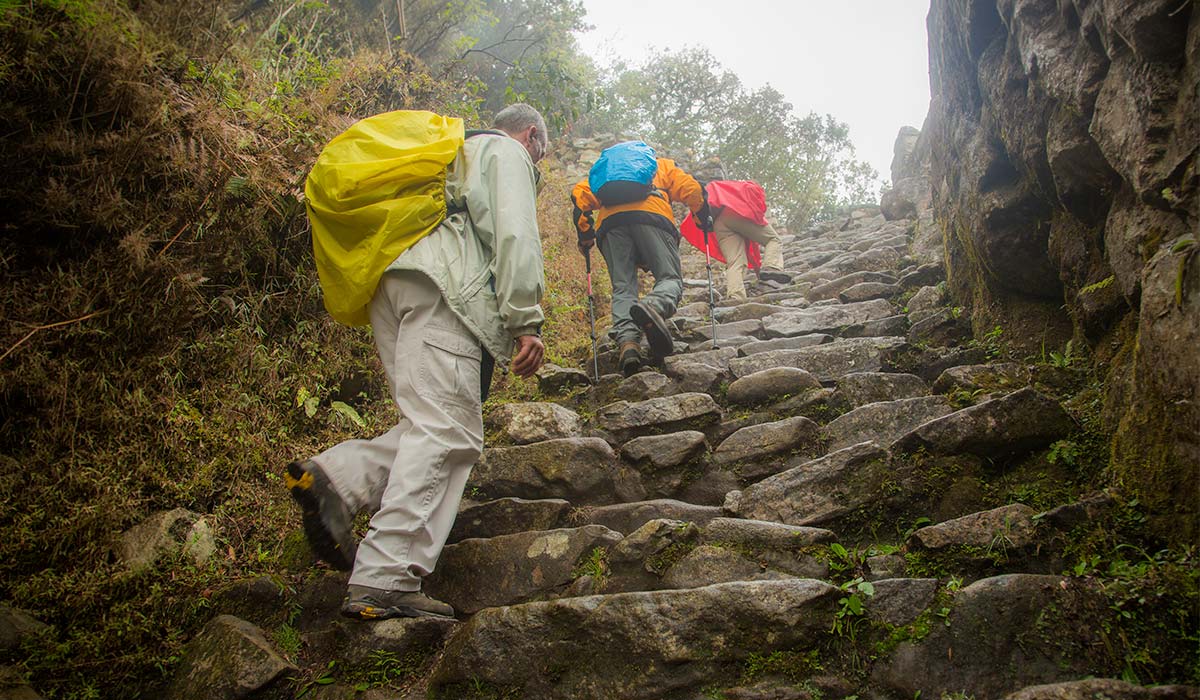
Resistance Analysis: Breakdown of the Inca Trail Difficulty Day by Day
The key to conquering the trek to Machu Picchu is not speed, but energy management. Each day presents a different technical and physical challenge that you must know to prepare your mind and body. So, we will start by analyzing the day-to-day journey of the Inca Trail to Machu Picchu:
Day 1: Cusco - Wayllabamba (13 kilometers)
The first day is often considered a "training" for what will come later. The adventure begins in the City of Cusco where you board a private bus toward Kilometer 82 (Piscacucho), at about 2,720 masl. Although the terrain is relatively flat compared to the following days, you should not be overconfident.
- The Terrain: You will walk along undulating paths with some soft climbs and descents ("Inca flats"). The ground is mostly dirt and loose stone.
- The Challenge: The main obstacle today is the distance. You will cover approximately 12 kilometers to the Wayllabamba campsite. The sun in the Sacred Valley can be intense, which increases the feeling of fatigue if you do not hydrate constantly.
- Physical Impact: It is a day to find your breathing rhythm. You will feel the weight of your backpack and the response of your legs to the first slopes, but it is the ideal day for your muscles to warm up.
Summary of the First Day
- Maximum Altitude: 3,000 masl (Wayllabamba).
- Distance: 12 km.
- Estimated Time: 5 to 6 hours.
- Difficulty Level: Easy - Moderate.
Day 2: Wayllabamba - Pacaymayo (11 kilometers)
If you ask yourself, "How difficult is the Inca Trail to Machu Picchu?", the answer is found on this day. It is the day of greatest physical and mental effort, as you will face the highest point of the entire expedition: the famous Dead Woman's Pass.
- The Terrain: Forget about flat paths. From the moment you leave the Wayllabamba campsite, the trail becomes a continuous and steep climb through stone steps and mountain paths that seem to never end.
- The Challenge: Altitude and oxygen. You will climb from 3,000 masl to 4,215 masl. At this height, every step requires double the effort due to atmospheric pressure; moreover, the wind at the top is usually freezing.
- Physical Impact: Your lungs and heart will work at their maximum. It is common to feel heaviness in the legs and, in some cases, light headaches. The key here is to go slow but steady. Once you reach the top, a steep 2-hour descent to the Pacaymayo campsite awaits you, which will test your quads and knees.
Summary of the Second Day
- Maximum Altitude: 4,215 masl (Warmiwañusca Pass).
- Distance: 11 km.
- Estimated Time: 7 to 8 hours.
- Difficulty Level: Very Difficult.
Note: This is the day to use your coca sweets, chocolates or dried fruits. You need fast-absorbing glucose to keep your energy levels high during the final ascent. And do not forget a windbreaker jacket for when you get to the top!
Day 3: Pacaymayo - Wiñay Huayna (16 kilometers)
This day is visually stunning, but logistically demanding. Although you do not go as high as in Warmiwañusca, it is the day when you will cover the most kilometers, facing very technical terrain of Inca stairs.
- The Terrain: This is the section with the greatest presence of Inca architecture. You will cross tunnels carved in rock and walk on stone paths. The final descent toward the last campsite is famous for its 3,000 steps, which requires maximum concentration.
- The Challenge: You will cover approximately 16 kilometers. The challenge here is not the lack of air, but the joint impact during the long descent. You will pass through two minor mountain passes and visit impressive archaeological sites like Runkurakay, Sayacmarca and Phuyupatamarca.
- Physical Impact: At the end of the day, you will feel the accumulated tiredness from the previous days. Your knees and ankles will feel heavy, so the use of walking poles is, at this point, mandatory to avoid injuries.
Summary of the Third Day
- Maximum Altitude: 3,950 masl (Second Pass).
- Distance: 16 km.
- Estimated Time: 8 to 9 hours.
- Difficulty Level: Moderate / Demanding due to length.
Day 4: Wiñay Huayna - Machu Picchu (3 kilometers)
This is the most expected day. The journey begins very early (around 3:30 a.m. or 4:00 a.m.) to be among the first to reach the last control and see the sunrise over the citadel. It is the perfect close to an epic adventure.
- The Terrain: The path is mostly flat and descending, crossing a dense cloud forest. However, there is one last physical challenge: the famous "Gringo Killer" (Gringo Killer) steps, an almost vertical staircase of 50 steps that will take you directly to Inti Punku.
- The Challenge: Darkness and anticipation. You will walk the first hours with headlamps on a path that can be wet.
- Physical Impact: It is the lightest day for your legs. You will only cover about 5 or 6 kilometers. Once you cross the Sun Gate, the descent toward the citadel is smooth and steady, allowing you to enjoy the most famous view in the world.
Summary of the Fourth Day
- Maximum Altitude: 2,720 masl (Inti Punku).
- Distance: 5 to 6 km.
- Estimated Time: 2 to 3 hours of walking to the citadel.
- Difficulty Level: Easy / Formidable due to the emotion.
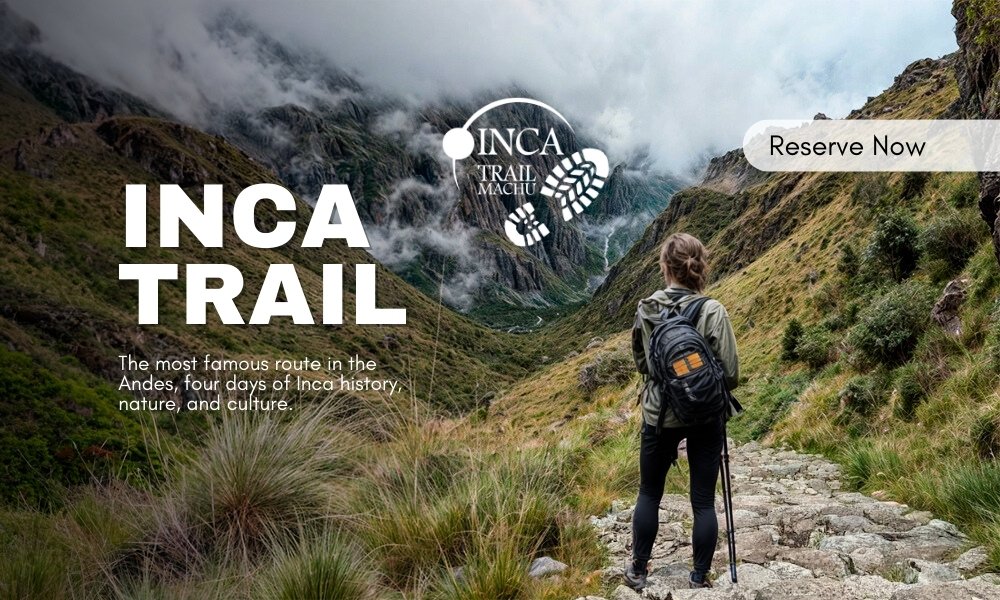
2 Day Hike to Machu Picchu
This famous trek to Machu Picchu has two traditional versions: the epic 4 day trip and the short version, which consists of 2 days of adventure. Below, we explain the specific level of difficulty for the short route, so you are perfectly prepared before starting your journey.
The 2 day Machu Picchu trek starts at Km 104 of the railway. In terms of effort, the level of difficulty is equivalent to an intensified combination of the last day of the traditional path, but with a more active start.
- The Route: You will start with a moderate climb toward the impressive archaeological site of Wiñay Wayna. Then, the path becomes more stable with a slight final climb toward the Inti Punku (Sun Gate), the perfect spot to see the sunset over the citadel.
- The Descent: After admiring the wonder from above, you will go down toward the entrance of the citadel. Here you have two options to reach Aguas Calientes:
- By bus: The recommended option to take care of your joints. o Walking: A stretch of approximately 45 minutes that has a difficult level of difficulty, due to the small, irregular, and steep steps that can be tiring after the previous walk.
Summary of the 2-day Hike
- Distance: 12 km approximately (only the first day).
- Walking time: 6 to 7 hours.
- Maximum Altitude: 2,720 masl.
- Difficulty of the hike to Machu Picchu: Moderate / Easy.

 +51 84 217 551
 +51 997 434 941
 Av Tupac Amaru PP-10B, Santiago, Cusco, Peru
  info@incatrailmachu.com
 www.incatrailmachu.com


