
Porters are the essential people dedicated to leading and carrying the luggage, food, tents, and kitchen equipment needed for the Classic Inca Trail expeditions. Without their effort and dedication, finishing this four day route would be an almost impossible task for most travelers, as they make sure all logistics are ready at each camp before the tourists arrive.
Did you know..? Doing a Peruvian Highland trek along paths that go over 4,200 meters above sea level demands extraordinary physical strength. The porters, mostly coming from local high Andean communities, are the true heroes of Peru Treks & Adventure, carrying on their backs the vital support of the expedition while walking the same stone paths as the ancient Incas.
Their work is not only logistical, but also cultural. When interacting with them, you will have the opportunity to closely know the traditions and the strength of the people from the highlands. Also, various regulations protect their work, controlling the maximum weight they can carry and ensuring they receive dignified treatment and fair pay for their contribution.
The Inca Trail porters are the most important people on the Inca Trail to Machu Picchu route and, often, the least understood by both visitors and some operating companies. Their work goes beyond simple transport; they are the logistical engine that allows a high-mountain expedition to work in an environment where the use of pack animals is not allowed, in order to protect the historical ground.
Gifted with impressive physical strength, Inca Trail porters carry up to 20 kg of equipment on their backs, including tents, food and kitchen tools. A special part of their job is that they are the last to leave each campsite, as they must carefully take down and pack all structures. However, thanks to their speed and knowledge of the terrain, they are always the first to arrive at the next rest point.
By the time the traveler finishes their day of hiking on the Inca Trail, almost everything is ready: the kitchen tent is running, the dining area is set up, and the sleeping tents are built. This efficiency allows the tourist to focus only on enjoying the landscape, while this "steel army" guarantees their comfort and food in the middle of the Andes.
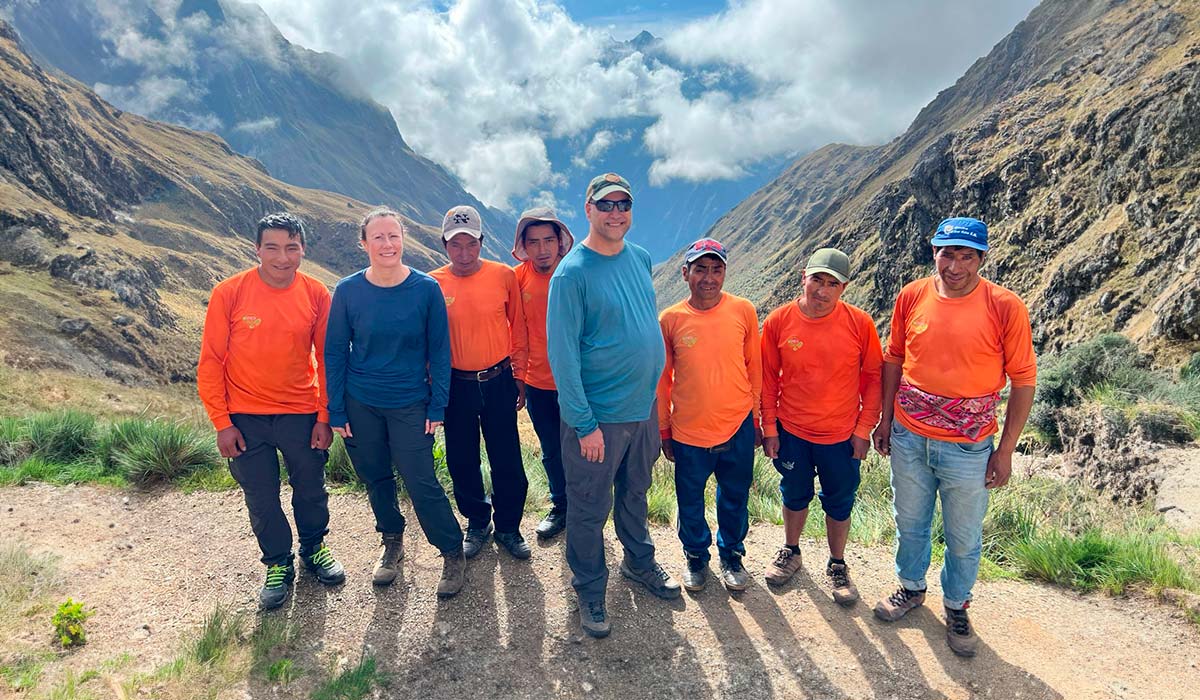
Beyond their amazing ability to jog along steep paths, the situation of the Inca Trail porters reveals the ethical challenges of adventure tourism. Although their physical strength is impressive, it is vital that hikers are aware of the conditions in which they operate.
Sadly, not all companies that operate the Inca Trail to Machu Picchu meet welfare standards. On the route, it is still possible to identify operators that do not provide proper technical clothing, overload the allowed weight, or provide poor food; these practices directly affect the health and spirit of the workers. For this reason, the Government of Peru has passed the Porter Law to force agencies to offer decent conditions; however, checking these rules remains a constant challenge to ensure that every expedition is responsible.
So, supporting Inca Trail porters means choosing operators that show clear ethical treatment. During the hike to Machu Picchu, one of the most direct ways to positively impact their quality of life is through tips. This extra income is not just a gesture of thanks, but an important resource, as many of them use it only for the food and education of their families in the high Andean communities.
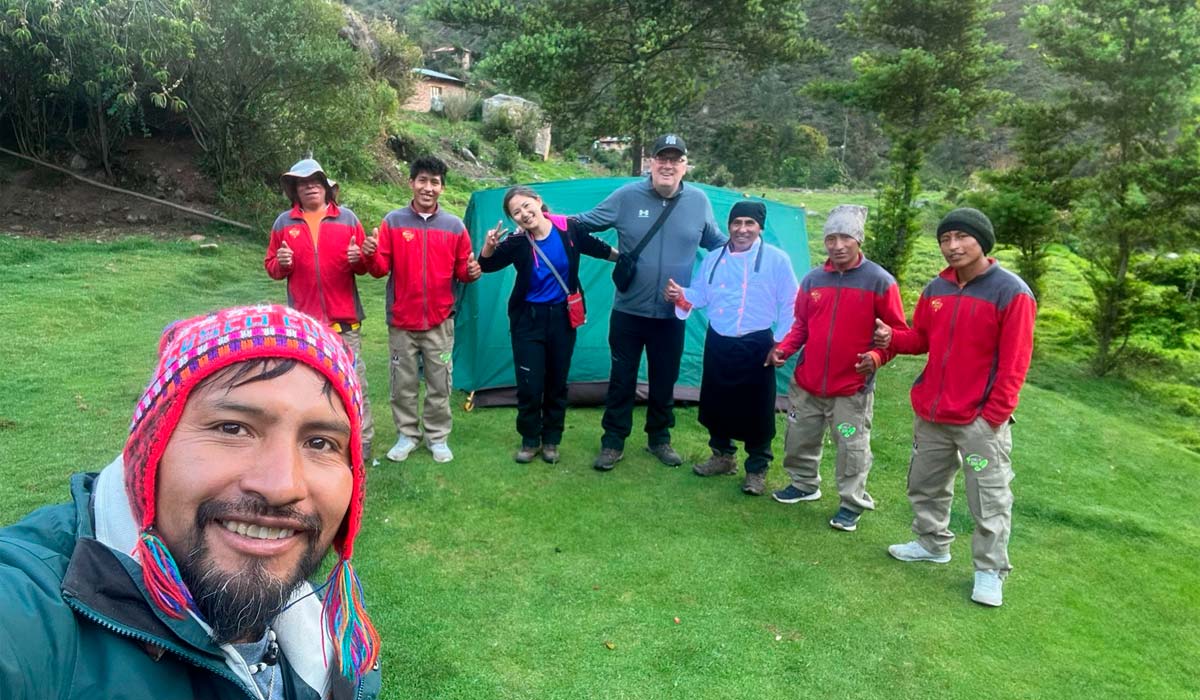
We must point out that the "Porteador" is the most important worker of the entire team of professionals, who will accompany you during your walk along the Inca Trail, this support staff is responsible for setting up the camp that has to be ready upon arrival. of the group; however, they leave at the same time as the tour group and carry more weight (20 kg).
During the walk the porters go at a brisk pace, they pass the groups, even some sections do it running, in this way they manage to get ahead and fulfill their work in a timely manner.
The current regulations, established after the implementation of Law No. 31614 (Porter Worker Law), set a much stricter protection framework for those who work on the Inca Trail. This law requires that the salary for a 24 hour workday must not be less than 1.25% of a Tax Unit (UIT), which has raised the payment for a full four-day trip to approximately 175 USD to 185 USD (depending on the current UIT value).
In addition to the economic payment, trekking and adventure operators in Peru are required to provide the following social benefits:
Under the framework of current Peruvian law, Inca Trail porters must receive a structured payment that guarantees fair treatment. The daily amount is calculated based on the UIT of the current year, ensuring that their salary stays updated against inflation. Here is a reference chart regarding the payment that porters receive:
| Trekking Chef | Per Trip | Per Month |
Kitchen team: 8 hours + AFP (Pension Fund) | S/ 717.60 | S/2152.80 |
| Health Insurance | S/193.75 | |
| Life Insurance | S/ 55.00 | |
| Work risk insurance | S/ 60.00 | |
| Total: | S/2461.55 | |
Total in U$ 703.30 per Trekking Cook
| Porters | Per Trip | Per Month |
| Porters Job: 8 hours + AFP (Pension Fund) | S/ 552 | S/ 1656 |
| Health Insurance | S/149 | |
| Life Insurance | S/ 55 | |
| Work risk insurance | S/ 60 | |
| Total: | S/1915 | |
Total in U$ 547.14 per porter
The tourist use of the Inca Trail, intensified in the 80s, at this time, the first porters began to work in a time, in which, there was no regulation of use of the Inca Trail and therefore, there was also an abuse of Inca Trail porters, who were exploited, carrying a lot of weight (40 kg. in extreme cases), were not given adequate footwear, or adequate clothing for the temperature changes typical of the area and did not eat like the passengers. And as if that were not enough, they were very poorly paid.
In 2002, GERCETUR - Regional Directorate of Foreign Trade and Tourism, INRENA - National Institute of Natural Resources and other institutions, issued the "Tourist Use Regulations of the Inca Trail network of the Historic Sanctuary of Machu Picchu". In said regulation, they considered the porters as Support Personnel, they regulated their employment situation and decent working conditions.
Among other aspects, the regulation considers the following points.
The maximum weight that a porter can carry on the Inca Trail to Machu Picchu has been limited to 20kg, this includes your personal items of 5kg. Each porter is weighed at the beginning of the tour and again in Wayllabamba at the beginning of the second day.
This rule has been strictly applied since it took effect. Companies that break it receive fines and run the risk of losing their licenses. However, as it usually happens with most rules, many companies do everything possible to break them.
The biggest difference between a responsible society and an irresponsible one is how to take care of its carriers on the journey. Many porters are given very little to eat on the way. They have to wait to see how much the tourists have eaten according to how the leftovers are divided among them. Remaining many Inca Trail porters at the end of the road tired and hungry. Generally, the porters sleep together in the group dining room and kitchen tents.
The Quechua race has a history of being oppressed, first by the Incas, then by the Spanish, and then by landowners. Only in the relatively recent reforms have the Quechua people began to own their own land. Due to their long history of being dominated by many others, they have low self-esteem. It is important on the Inca Trail to try to get involved with the porters in your group. Grab some coca leaves to share with them and try to learn a couple of basic Quechua words (the guide will be happy to help you). Many of the porters have incredible stories to tell about the traditions and life in their villages. At the end of the walk don't forget to show them that you appreciate their work and value their contribution to the walk by verbally thanking them and giving them a tip.
Without a doubt, for many visitors to our country Peru, after having reached the great archaeological center of Machu Picchu and above all having made the Inca Trail is the highlight of their trip. For others it is the realization of a dream of always. No matter what your religious beliefs, social, economic status, the Inca Trail is really a special excursion that passes through spectacular mountain landscapes, beautiful cloud forests, orchids and hummingbirds. Dotted with Inca archaeological centers, until finally reaching the mysterious and magical city of Machu Picchu at dawn through the INTI PUNKU or Puerta del Sol. Visitors cannot help but feel deep inner satisfaction and a sense of personal fulfillment in completing this journey. Some people say that this feeling is enhanced by the spiritual energy derived from the sacred stones of Machu Picchu.
However, and this is true, that this positive feeling is much greater knowing that you have not contributed to the EXPLOITATION of the porters who helped you reach your goal by carrying all the equipment of the excursion.
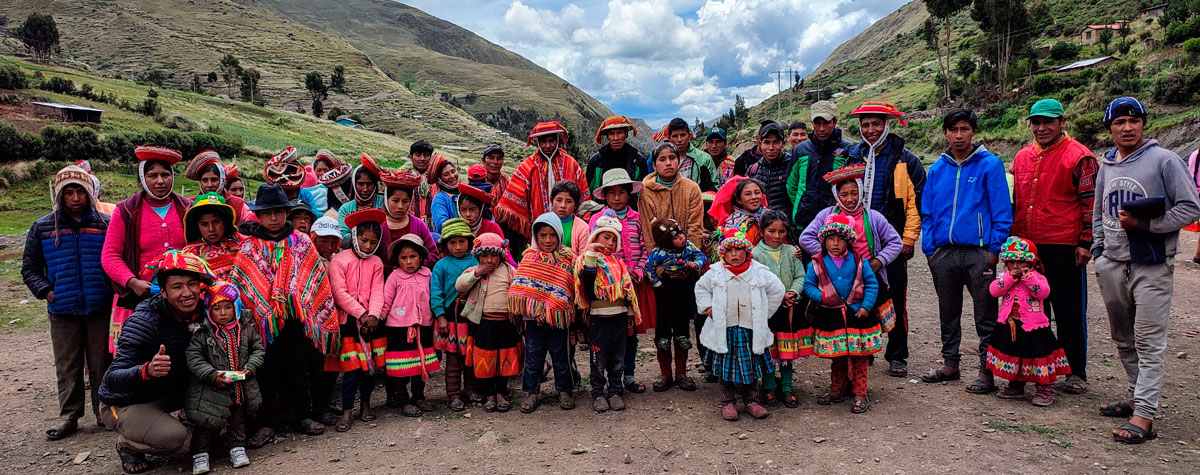
Most of the Inca Trail porters are from the countryside, simple farmers who supplement their income by working on the Inca Trail. Their mother tongue is Quechua, the official language of the Incas, although many speak Spanish. In fact, most of these people are still Quechua thoroughbreds, the people who were ruled by the Incas almost 500 years ago. Many of their traditions and beliefs have not changed since long before the arrival of the Spanish. However, most know that these people have remained a quiet and humble people, being easily manipulated by governments and tour operators who have found them (due to their need) in objects of exploitation at least in the Inca Trail network.
To collaborate with the Inca Trail porters and watch over their work. We must take into account the following recommendations:
Although it is not mandatory, tipping is a traditional recognition of the extreme physical effort made during the Inca Trail to Machu Picchu. While the amount for the guide and the cook depends entirely on your perception of the service quality, the tip for the Inca Trail porters is considered a pillar of support for their families.
Even in the hypothetical case that other parts of the tour do not meet your expectations, the porters are the ones who do the hardest work, carrying the camping equipment under any weather condition. For this reason, it is recommended to consider the following:
Tipping usually takes place during the last dinner on the third day, as the porters must leave very early on the fourth day for the train station, before the tourists start the final stretch toward the Sun Gate.
Personal porters are optional and can carry your belongings. Since they are also included in the limit of 500 people per day, it is strongly recommended to add them at the time of booking. Your role is simple: carry your belongings, whatever they may be, during the 4 days of the trek. In general, they carry their personal effects, the sleeping bag (rented or not), the insulating mattress (included in the price). Like the content, the shape and the amount of luggage is not important. For example, you can give them 1 backpack, or 2 cloth bags, or 3 sacks. There is only one restriction for porters: the maximum weight they can carry is 20 kg.
It should be noted that the porters do not walk together with the rest of the group during the trek. They leave in the morning when the camp is up and walk faster, to arrive before lunch. The same applies to the afternoon. That is why you should not entrust the porters with the belongings that you need during the walk itself, such as water, cereal bars, hat, camera, etc.
The number of contracted personal carriers is unlimited. For example, if you are 3 hikers, you can choose to take 1, 2, 3, 4 porters. Carriers can also be "shared" by dividing the load of the carrier among several; this is done, for example, for children or adolescents when only one carrier is shared among several.
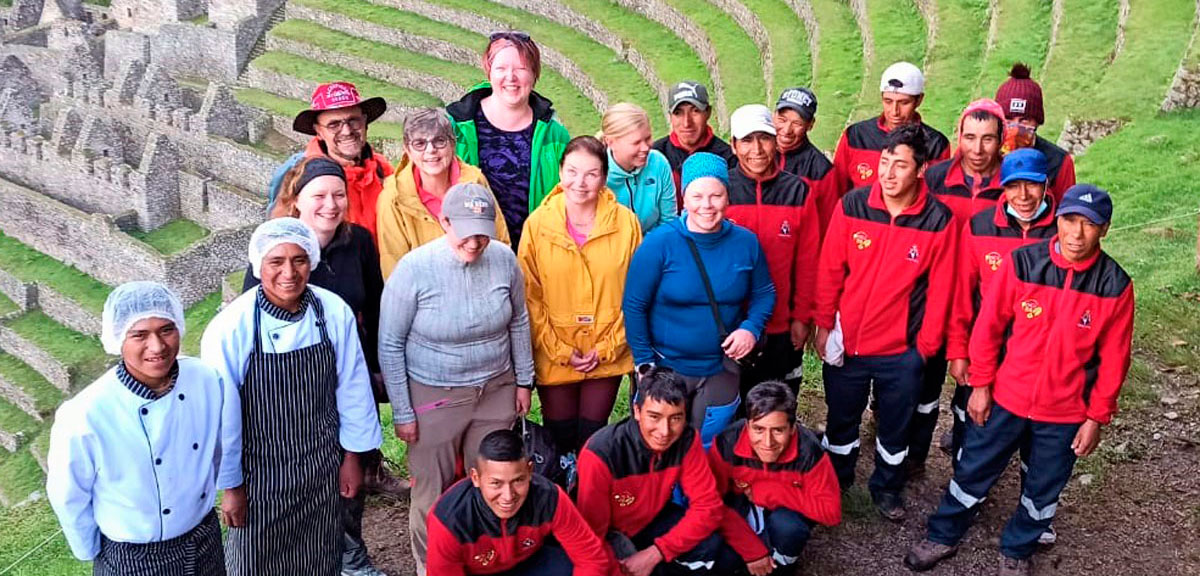
As mentioned above, the porters are part of the maximum limit of 500 people per day for the trek. Since places sell out quickly, we recommend that you choose the porters when you make your reservation online. If you decide to add a personal porter after your reservation, there must be spaces available. However, if you are lucky, you can sometimes "get back" the group carrier from another trekker who has canceled their trip, as our Agency would release the carrier assigned to that person.
Lastly, please note that since the porters are booked, assigned and paid immediately after your reservation, it is not possible to cancel them afterwards.
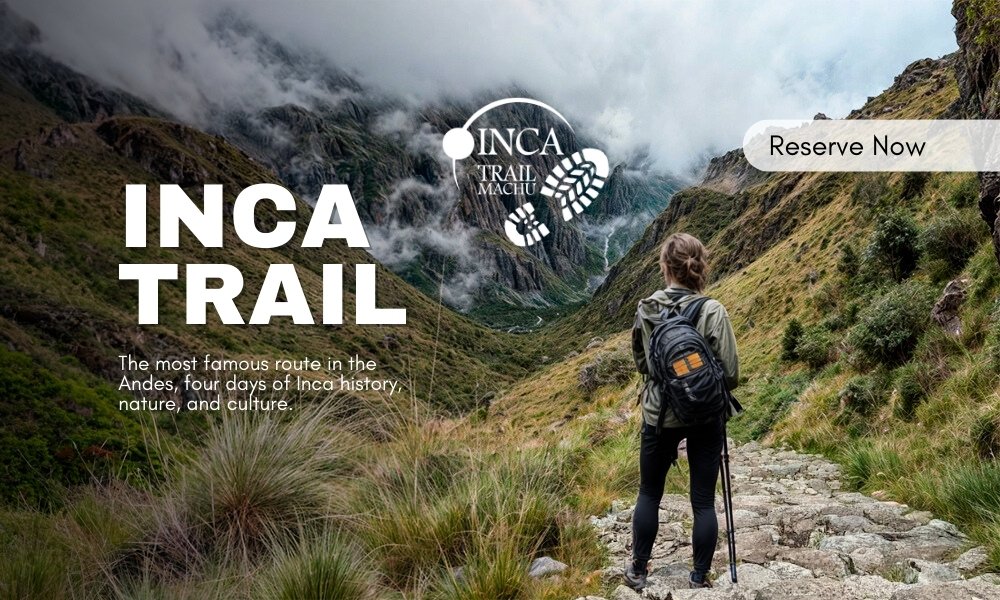
Entrance tickets to the Inca Trail must be reserved with a minimum of 5 or 6 months before. However, if you plan to visit during May, June or July; You must make your Inca Trail book 2027 at least 7 or 8 months in advance.
2 day Inca Trail tickets are not that hard to get. It is recommended to make the reservation weeks in advance. In the months of May, June or July; try to reserve a month before.
How to book the Inca Trail 2027
Peru offers fascinating experiences that reveal natural landscapes, historical monuments, and living cultures, captivating those who seek adventure and discovery in every corner of its territory. Get to know the most outstanding tours:
Other trips in Peru
If you want to visit Machu Picchu, we recommend you to book your Machu Picchu Entrance Tickets in advance, so you will enjoy your Vacation in Machu Picchu without any problem.

 +51 84 217 551
 +51 997 434 941
 Av Tupac Amaru PP-10B, Santiago, Cusco, Peru
  info@incatrailmachu.com
 www.incatrailmachu.com


