
The question about the cost of traveling to Peru is one of the traveler's first concerns. The answer is that the country does not have a fixed price; the final budget depends entirely on the logistics decisions and the style of experience you are looking for. The country offers a diversity that covers everything from the high Andean mountains to the Pacific coast, which are, without a doubt, Peru Highlights.
The cost of the trip is determined by three main variables. First, transport, where internal flights contrast with long-distance buses. Second, the quality of lodging, which varies from low-cost hostels to luxury hotels. And third, access to key sites, such as Inca Trail permits or entrance tickets to Machu Picchu, whose prices are regulated and must be managed in advance, which impacts time planning.
This complete guide is designed to learn about the travel costs and time in Peru for 2027. Below, we will inquire about transport, lodging, and tour fares, and we will provide practical advice to optimize travel time and experience peruvian highlights according to your budget.
The budget for a trip to Peru begins with the fixed and necessary expenses. Knowing these base prices allows one to plan the structural part of your trip with accuracy. So, to start, you should know that the official currency of Peru is the Sol (plural: soles, ISO code: PEN). Likewise, the exchange rate with respect to the dollar is floating and changes according to market fluctuations.
For planning purposes in 2027, the general reference is 1 US dollar (USD) equivalent to approximately 3.80 Peruvian soles (S/). It should be noted that it is crucial to verify the current exchange rate at the time of your trip.
ATM Fees & Limits: Not all ATMs charge the same. BCP (Banco de Crédito del Perú), the country's largest network, typically posts a lower foreign-card fee (around S/15-20) and allows higher per-transaction withdrawals (up to S/700), which means fewer transactions and fewer fees overall. Interbank and similar banks charge closer to S/20-25 with a S/400 cap.
Accommodation options in Peru vary greatly, which offers flexibility to your budget. From low-cost hostels to luxury hotels, the quality and price are directly related to the area and how far in advance you book.
| Traveler Category | Price Range per Night (S/) | Price Range per Night (USD) | Type of Accommodation |
Backpacker / Economy: | |||
| Standard / Mid-Range: | |||
| Luxury / High-End: |

The cost of the trip is largely determined by the choice of transport. Peru offers options for almost any budget and time need.
While Peru offers a wide range of free or low-cost activities, access to the most important archaeological and natural sites requires a significant investment that must be planned in advance. The major part of the tour budget goes to the visit of Machu Picchu, due to the complex logistics and the entry fee.
The total cost to visit the citadel is made up of three main elements:
Entry Ticket (Base Fare): The main entry to the citadel (valid for a specific circuit: 1, 2, or 3) has a fixed cost of S/ 152 (approx. $40 USD) for foreign visitors. The cost is regulated by the government and does not include transport.
Combined Ticket (Mountains): Optional climbs to Huayna Picchu or Machu Picchu Mountain require a special ticket, whose cost is higher (approx. S/ 200 or $53 USD).
Logistics (Train and Bus): The transport costs (Ollantaytambo-Aguas Calientes train and the Aguas Calientes to the citadel bus) are variable and, together, represent the largest part of the total expenditure of the excursion.
Transport is a considerable fixed cost, as it is necessary to reach Aguas Calientes (Machu Picchu Pueblo), the town closest to the citadel. Therefore, this is the route you will follow to reach the Inca citadel:
Train to Aguas Calientes: The main route is Ollantaytambo-Aguas Calientes. The companies PeruRail and Inca Rail offer services with different levels of luxury. A round-trip ticket can range between S/ 200 and S/ 800 ($53 - $210 USD) or more, depending on the service class and how far in advance you buy it.
Bus from Aguas Calientes to Machu Picchu: Once in the town, the bus ride up to the citadel (25 min journey) costs approximately $24 USD (round trip) for foreigners. Many choose to walk up (approximately 1.5 hours) to save money.
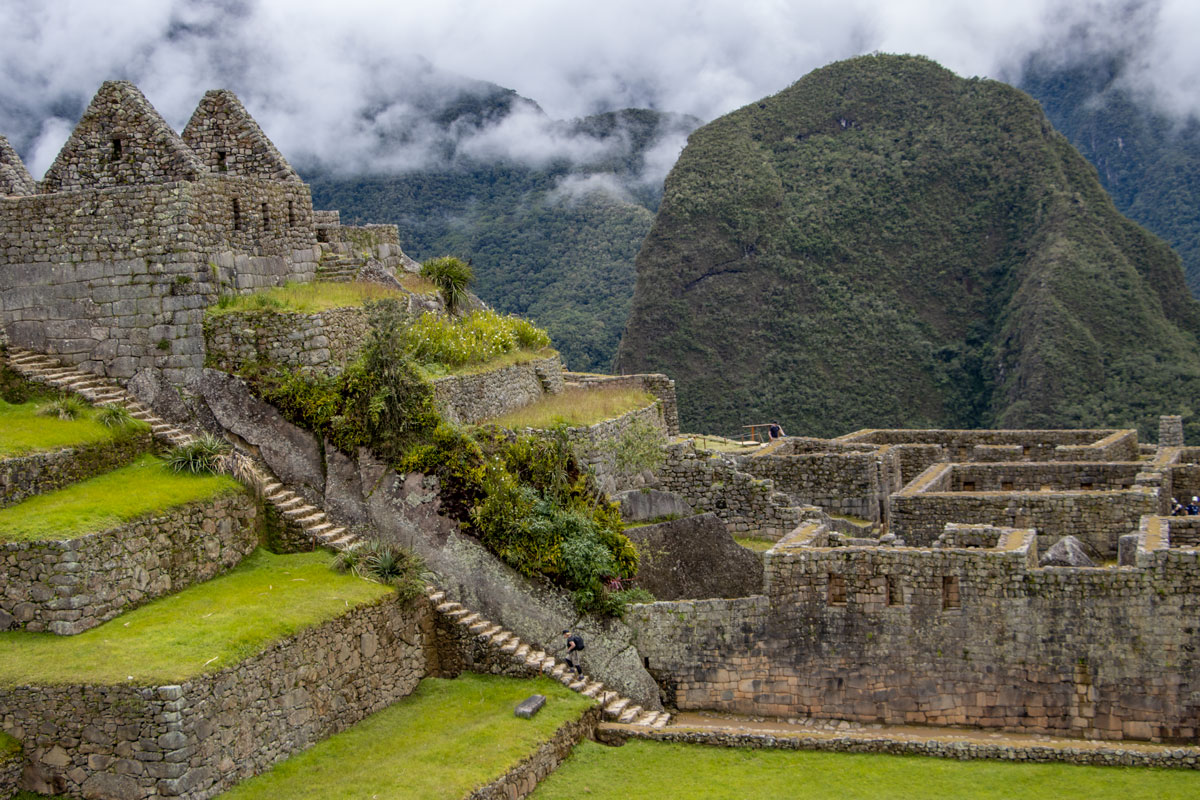
If you prefer to walk, there are routes that lead directly to the citadel, although they usually involve logistical costs:
Beyond Machu Picchu, Peru offers less traveled, but equally spectacular, destinations. The investment here is usually lower for entrance fees, but may require more for transport to remote areas.
| Destination | Main Location | Typical Investment | Cost Detail |
Cusco & Sacred Valley | |||
| Colca Canyon | |||
| Nazca Lines | |||
| Lagoon 69 | |||
| Thermal Baths |
Access to culture in Peru is generally affordable and offers a deep look into its history.
A significant part of the variable budget is set aside for food and shopping. Fortunately, Peru, a very well-known destination for its cuisine, offers exceptional opportunities to save without sacrificing the quality of the experience.
Lima is world-famous for its food, but Peruvian culinary diversity extends throughout the whole country. Is it expensive to eat there? It depends. There are internationally renowned restaurants where the experience can be costly, but there are also countless options to enjoy delicious and authentic food at a good price.
| Food Option | Average Price (S/) | Average Price (USD) | Detail and Savings |
Menu of the Day (Lunch) | |||
| Local Typical Dish | |||
| Tourist/Gourmet Restaurant |
Trying an authentic ceviche in Piura, a delicious rocoto relleno in Arequipa, or a traditional pachamanca in the Mantaro Valley will let you save money and enjoy flavors that carry regional authenticity. Eating in local markets is much cheaper than in restaurants designed only for tourists. A key tip: if the restaurant is full of local people, it is a sign of good food and a better price.
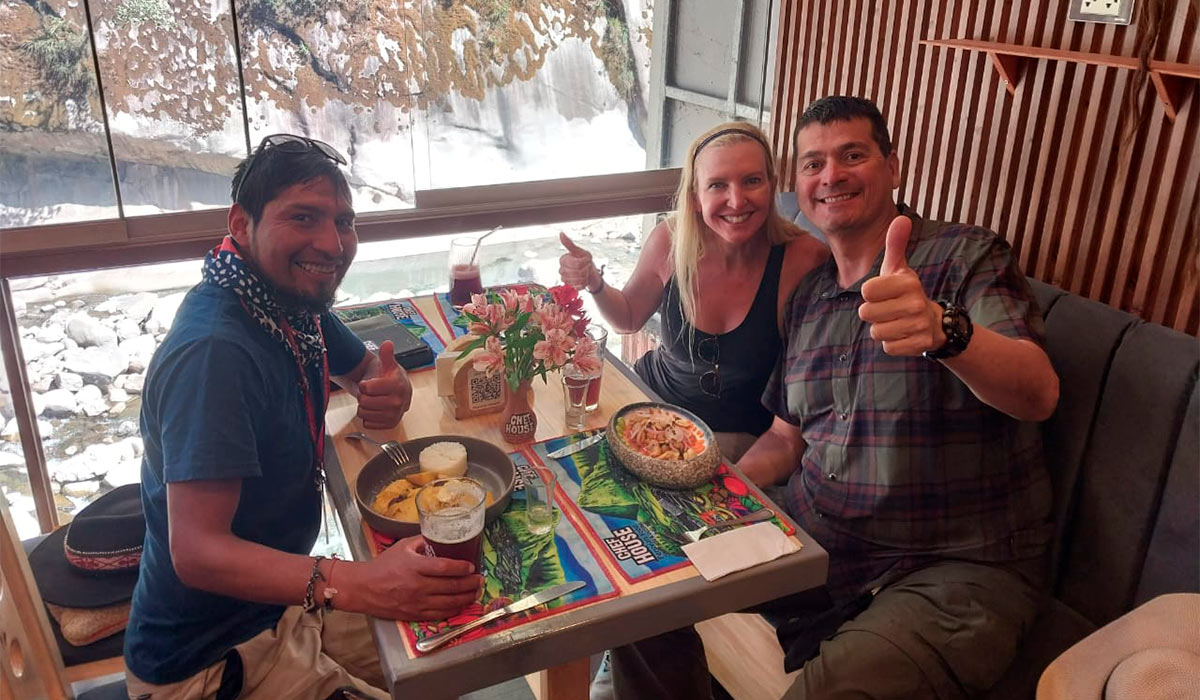
On any trip, taking a souvenir is almost a requirement. Shopping in Peru is a mix of Andean art and contemporary fashion, with a wide range of prices. Exploration is mainly divided between the Andean markets (Cusco/Sacred Valley) and design boutiques (Lima).
Alpaca fiber is one of the most representative products of the country. Its quality is highly valued for being hypoallergenic, light, and thermal; furthermore, baby alpaca fiber (the first and finest shearing) is the softest and most expensive.
Peru has a long tradition in gold and silver work, inherited from pre-Columbian cultures. Silver jewelry with Inca designs, often inlaid with semi-precious stones, is a very popular souvenir.
Two expenses are easy to overlook when budgeting for Peru, but both are worth planning before departure.
Getting a local SIM card is simple and inexpensive. The main carriers, Claro, Movistar and Entel, sell tourist SIM cards at airports, malls, and authorized stores in Lima and Cusco, and coverage is reliable in most tourist areas, though it becomes limited on remote sections of multi-day treks. Travelers who prefer to arrive already connected can activate an eSIM (Holafly, Airalo) before landing, which skips the need to find a store or swap a physical chip.
| Option | Price Range | Coverage |
|---|---|---|
| Local SIM card | S/20 - S/40 | Good in cities, limited on remote trek routes |
| eSIM (10-15 days) | $15 - $30 USD | Activates before arrival, no physical SIM needed |
Travel insurance is not just a precaution in Peru, it's often a requirement. Many tour operators, including for the Inca Trail permit, ask for proof of insurance that covers trekking at high altitude before confirming a booking. Beyond the paperwork, altitude sickness, trekking injuries, and trip interruptions are common enough that the coverage tends to pay for itself.
Basic plans usually run between $1 - $3 USD per day, so a two-week trip typically costs between $40 and $90 USD depending on the provider and coverage level. When comparing policies, check specifically that high-altitude trekking is included, since some standard plans exclude it.

 +51 84 217 551
 +51 997 434 941
 Av Tupac Amaru PP-10B, Santiago, Cusco, Peru
  info@incatrailmachu.com
 www.incatrailmachu.com


