
The city of Cusco is known worldwide for holding large historical and archaeological circuits, such as the Machu Picchu sanctuary and the Ollantaytambo ruins, as well as highly popular geological destinations like the Rainbow mountain Cusco or the Palcoyo Mountain. However, the high Andean region has natural circuits recently opened to tourism that offer a different landscape thanks to the mineral makeup of its ground; these are the Red Valley and the Red River.
These two attractions are located in the Vilcanota mountain range. Being exploration routes that have recently been added to tourist itineraries, they operate with a much lower number of visitors. This practical feature allows travelers to walk the trails more smoothly and observe the unique colors of the geographic environment without the crowds of people that regular destinations usually present.
So, if these two tourist destinations have sparked your interest, we invite you to check this travel blog, where you will discover what they are like, how to get there, and what to see in each of them.
About the Red Valley of Cusco
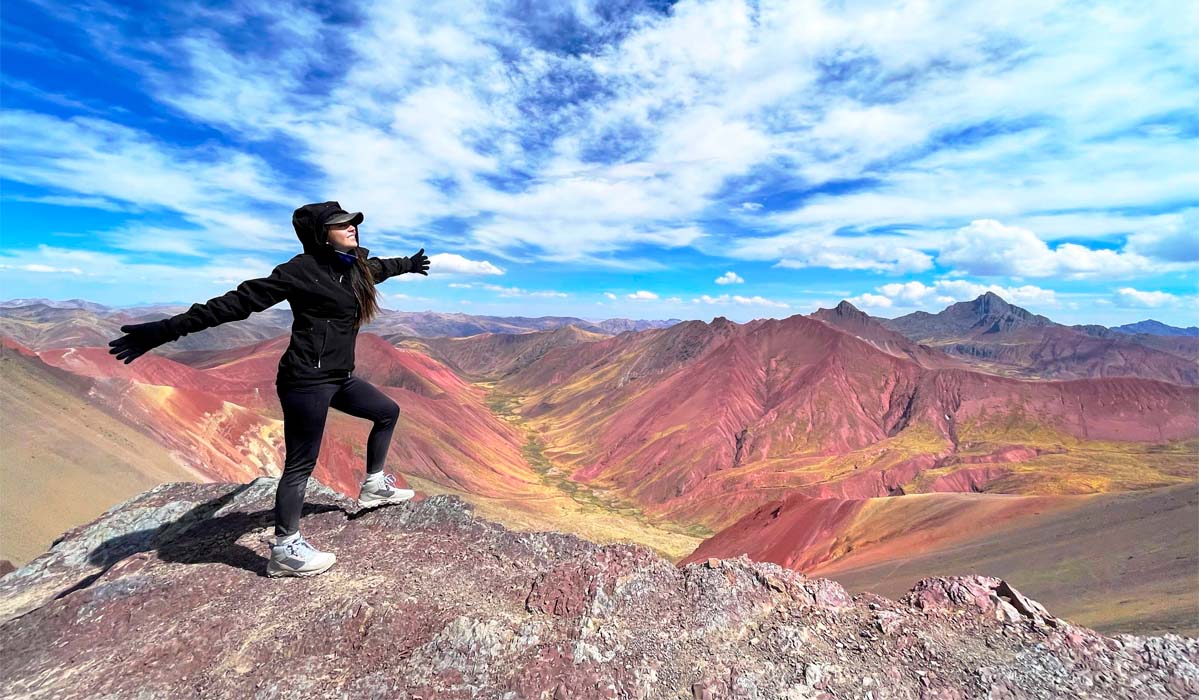
The Red Valley is a natural attraction located in the district of Pitumarca, Canchis province. The area is made up of a large chain of mountains and ravines that stand out for their intense and even reddish color. The access route is just a few minutes from the 7 Colors Mountain (Vinicunca), sharing a high mountain geographic environment that is flanked and protected by the imposing Ausangate mountain.
To properly plan the visit to this area, it is necessary to consider the following technical aspects:
- The origin of its color: The tone of the soil is the direct result of the mineral composition of the land. The abundant presence of iron and various oxidized clays give the whole ravine its characteristic red color.
- Altitude and physical demand: The route through this area exceeds 5,200 meters above sea level (masl). Because of this extreme elevation, the amount of oxygen in the air is lower, which increases the physical demand of the hike. It is strictly necessary that visitors do an acclimatization process of at least one day in the city of Cusco before starting the trip.
- Climate and seasons: The weather in the Red Valley has two very marked seasons throughout the year, which determine the conditions of the landscape:
→ Dry season (April to October): It is characterized by days with stable weather, mostly clear skies, and an almost total lack of rain. It is the ideal period to get clear views of the Andean landscape and the Ausangate mountain.
→ Rainy season (November to March): During these months, cloudiness increases a lot and rains are frequent in the area. It should be remembered that it is exactly in this time of rainfall when the phenomenon of the Red River is activated nearby.
Location of the Red Valley
Located in the Vilcanota mountain range, the Red Valley is a vast mountain chain next to the routes of the colored mountains (both Vinicunca and Palccoyo). As you explore this area, you will notice its unique geology, which is known for a very high concentration of iron oxide and different clays laid down during the upper tertiary period. Over millions of years, the exposure of these minerals to the weather and their later oxidation have given the land a deep and even red color, creating an amazing visual contrast with the puna ecosystem that surrounds it.
Discovering the incredible Red River
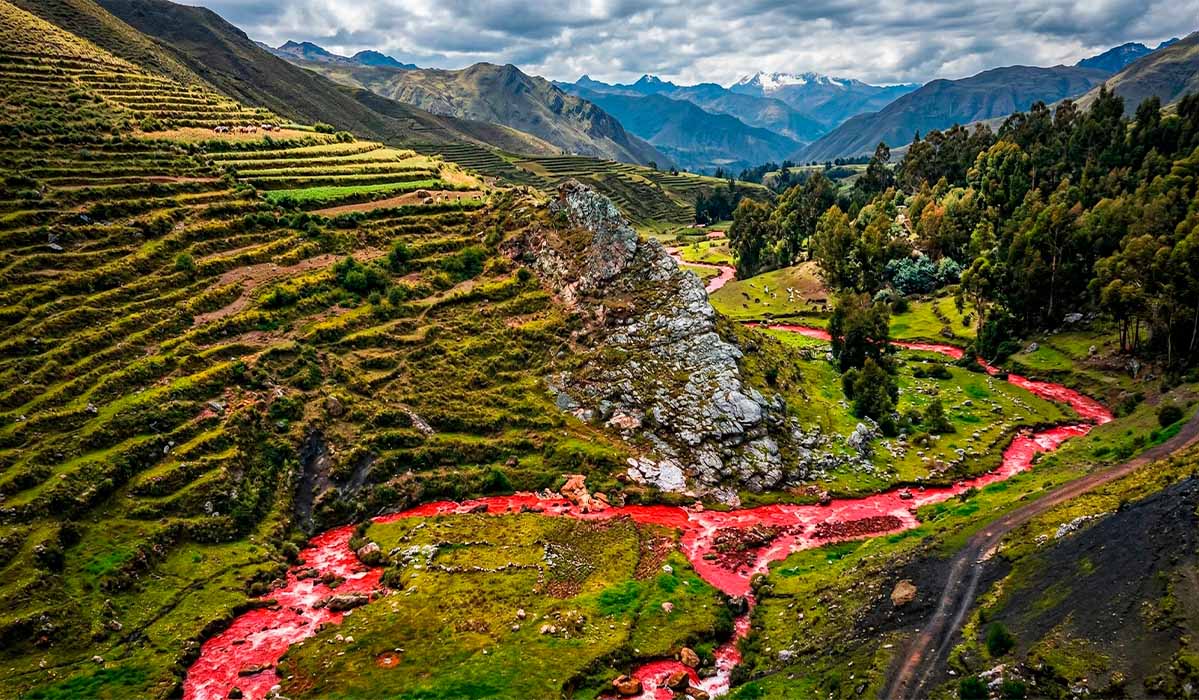
Moving forward on our journey, the Red River is a water attraction that became famous in tourist routes starting in 2019. It is located very close to the Palccoyo colored mountain. Thrill-seekers often choose to connect the hike from the Red Valley Cusco to this river, completing the circuit known as the "Red Route". However, because of the travel times and walking distances, not all guides include it in their standard plans.
To plan your adventure to this destination, it is very important to keep in mind the following details:
- Altitude and climate: The riverbed and its surrounding mountains are over 4,800 meters above sea level (masl). At this high altitude, the mountain climate brings freezing temperatures during the early morning hours, followed by strong sunlight starting at noon. Because of this, it is essential to get used to the altitude in the city of Cusco at least one day before your excursion.
- The origin of the color: Furthermore, the color of the water is not permanent. This river starts in the highest parts of the Vilcanota mountain range. The heavy rains wash and slide the iron-rich clay dirt from the hillsides into the riverbed, naturally dyeing the water flow with the floating particles.
- Seasonality (Time to visit): Finally, the magic of the Red River is strictly seasonal. The red tone is only visible during the rainy season in the Peruvian highlands, which runs from the month of November to the first weeks of March. Once this rainy period is over, the washing of minerals stops and the waters get back their usual clear tone.
How to do the Red Route?
The exploration of the Red Route has as its starting point the Red Valley, in the district of Pitumarca (province of Canchis). Practically, due to its closeness, most travelers choose to add this geographic detour to their main itinerary to the Mountain of the 7 Colors.
For those who plan to do this tour on their own from the city of Cusco, the transport logistics are divided into the following stages:
- First stretch (Cusco - Checacupe): Public transport is boarded at the Huayruropata Avenue stop heading south. This trip on a paved road takes about two hours to the town of Checacupe.
- Connection (Checacupe - Pitumarca): From this point, you must take a local collective transport for a short 15-minute trip until you reach the town of Pitumarca.
- Trekking route: Upon reaching Pitumarca and getting close to the access controls, the climbing hike begins. This stretch on foot requires between two and three hours of continuous physical effort until reaching the valley viewpoints. Along the path, the traveler will pass through traditional local settlements and will be able to observe the wildlife and plants adapted to the ecosystem of the Ausangate mountain.
Note: By passing 5,200 meters above sea level during the hike, we repeat the strict rule of having at least one full day of rest and previous acclimatization in Cusco to avoid altitude sickness.
Equipment recommendations: What to carry in your backpack?
Due to the extreme altitude and changing weather conditions of the Vilcanota mountain range, it is essential to do this hike with the right equipment. For this one-day trip, it is recommended to carry a light backpack (daypack) that includes the following:
- Clothing in layers: The temperature changes sharply from the freezing cold of the early morning to the strong heat of noon. Use a breathable base shirt, a warm middle layer (fleece), and a windproof and waterproof outer jacket.
- Technical footwear: It is essential to use trekking shoes or boots with non-slip soles and ankle support. The ground is uneven, steep, and can have loose dirt, mud, or ice depending on the season.
- Extreme sun protection: At more than 5,000 meters of altitude, UV radiation is severe. It is mandatory to use a wide-brimmed hat, sunglasses with UV protection, and high-factor sunscreen.
- Hydration and energy: Carry a minimum of 1.5 to 2 liters of water per person. To replace the energy used by physical effort and altitude, include quick-calorie snacks like nuts, energy bars, coca leaves, or chocolates.
- Weather protection: Include thermal gloves, a hat or "chullo" for the coldest hours, and a waterproof poncho (essential if you travel between the months of November to March).
- Cash: Make sure to carry Peruvian soles in small bills and coins. They will be needed to pay for entrance tickets to the communities, the use of basic restrooms on the route, or buying water from local people.
Best Tours in Peru
If you want to visit Machu Picchu, we recommend you to book your Machu Picchu Entrance Tickets in advance, so you will enjoy your Vacation in Machu Picchu without any problem.

 +51 84 217 551
 +51 997 434 941
 Av Tupac Amaru PP-10B, Santiago, Cusco, Peru
  info@incatrailmachu.com
 www.incatrailmachu.com


