
Tambomachay, also known as Tampumachay in historical texts, is one of the most well-preserved archaeological sites in Cusco.
This site is located a few kilometres from the city of Cusco and forms part of the Sacsayhuaman archaeological park network, alongside neighbouring complexes such as Puka Pukara and Qenqo. Due to its location on the road network, it is typically the final stop on the standard Cusco city tour itinerary.
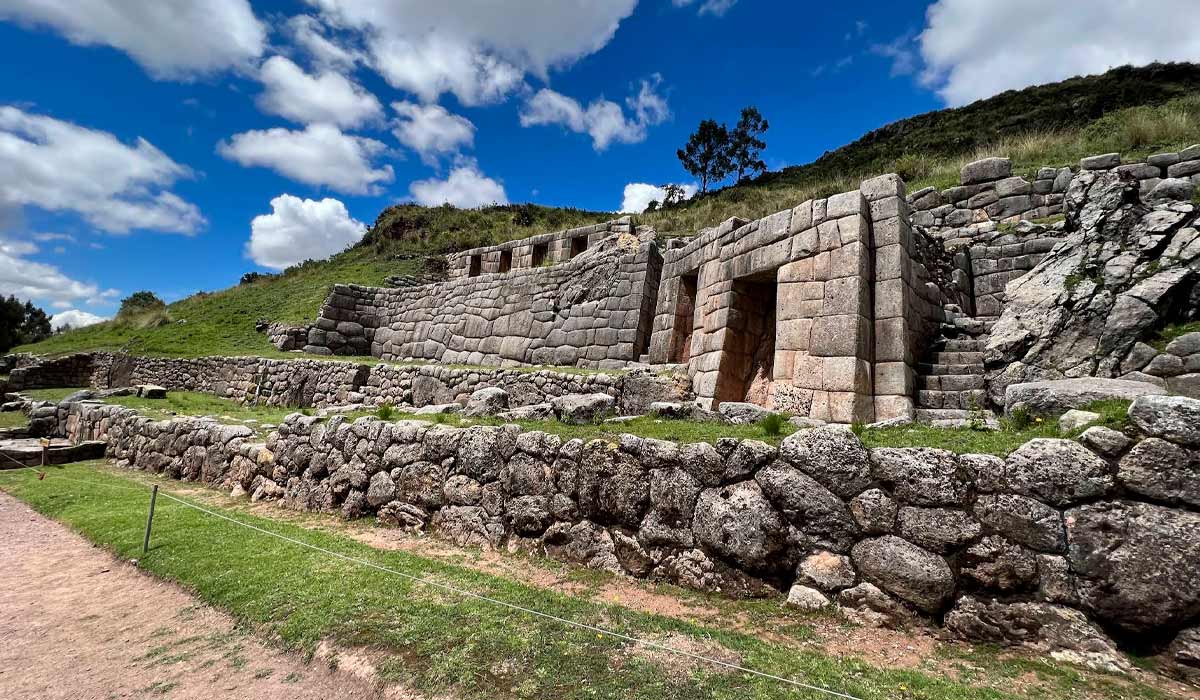
This complex's architecture stands out for its system of terraces, fountains and finely carved stone channels, which still distribute a constant flow of water today. This water infrastructure, which is adapted to the shape of the land, demonstrates the site's ceremonial, military and water control functions during the Inca period.
We have provided the technical, historical and logistical information you need to plan your tour of this area below.
The archaeological complex is located seven kilometres northeast of the historic centre of Cusco city, at an altitude of 3,700 metres above sea level. Geographically, it sits on the side of the paved road that leads to the Sacsayhuaman Archaeological Park, directly opposite the Puka Pukara site.
Furthermore, this place is of great technical importance due to its complex water engineering. The structure demonstrates the ability of the Inca builders to collect, direct and distribute underground water sources through a system of waterfalls and channels carved directly into the rock.
Archaeological studies have determined that Tambomachay played multiple logistical, religious and resource control roles at the height of the Tahuantinsuyo empire. Its main functions can be divided into the following categories:
The Tambomachay archaeological complex comprises a network of aqueducts and underground channels, the source of which has not yet been identified. This network feeds three main fountains. The flow of water from the upper fountain is divided into two streams, both of which pour an identical volume of water at the same time, demonstrating the technical mastery of Inca water engineering.
Six niches carved into the rock above the main fountain confirm its architectural function as a ceremonial centre for the worship of water. The stonework comprises precisely fitted polygonal limestone blocks, a hallmark of Inca architecture.
In front of the fountain is the foundation of a tower. This structure served as a logistics and security checkpoint for the ruling elite along the route to Antisuyo. Historical records, including anthropologist Tom Zuidema's studies of the ceque system, also confirm that this space functioned as a main sanctuary and purification zone, as well as a natural reserve area. Native plants such as queñuas, molles and cantutas have been preserved here to this day.
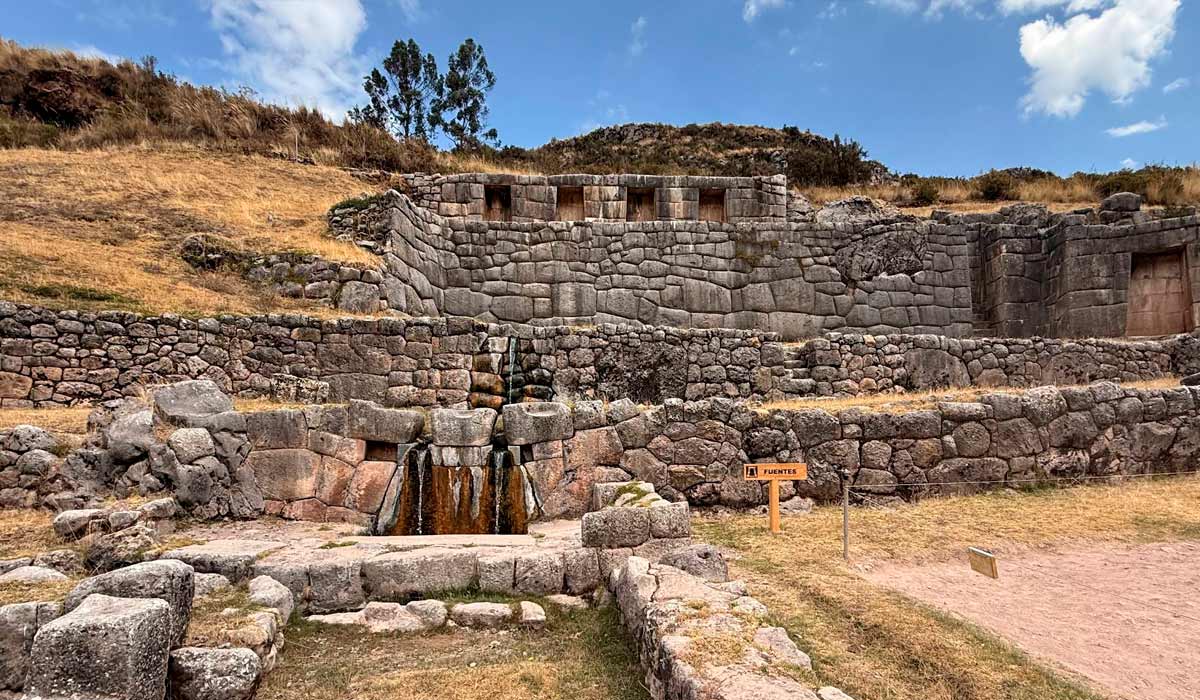
The Tambomachay archaeological site was built around a river and springs. According to historians, the Incas designed the channels so that the water flowed without colliding.
It is still not known exactly where the water flowing through its channels comes from. Undoubtedly, this is another testament to the Incas' extensive knowledge; these constructions continue to flow with water after more than 600 years.
This was one of the most important Inca customs. The archaeological site of Tambomachay boasts an extraordinary hydraulic system. Underground channels carved into the rock transport a constant flow of clean water throughout the year.
The unique shape of the space in which Tambomachay was built gives it an atmosphere of tranquillity. It is also one of the best examples of the Inca architects' ability to preserve harmony between buildings and landscape. A network of channels filtered water into a platform at the bottom, where the Incas worshipped water.
The archaeological site of Tambomachay features carved stone water channels that lead to two slopes. Crystal-clear water flows through these channels all year round. There is also a platform that probably served as a liturgical source and as baths for the Incas.
There are three transport options for accessing this archaeological complex from the city centre:
To visit the Tambomachay archaeological centre, you must purchase a tourist ticket for Cusco, either a partial or an integral one. Remember that there is no independent entrance.
This archaeological centre is open from 07:00 to 18:00, Monday to Sunday, with no exceptions.

 +51 84 217 551
 +51 997 434 941
 Av Tupac Amaru PP-10B, Santiago, Cusco, Peru
  info@incatrailmachu.com
 www.incatrailmachu.com


