
The Lares Trek to Machu Picchu follows one of the most authentic Inca paths still walked today. The route cuts through the heart of the Lares Valley, where snow-capped peaks rise above glacial lagoons and the landscape feels genuinely untouched. Along the way, you'll cross paths with local Andean farmers and weavers whose communities have lived and worked in these highlands for over 500 years — the same techniques, the same textiles, the same unhurried pace. You can stop to watch them work, pick up something handmade, or simply take in a way of life that has no interest in changing. Llamas and mules walk alongside the group as the trail climbs higher. It's one of the best Inca Trail alternatives precisely because it trades crowds for something more real. The trek ends with a fully guided visit to Machu Picchu, with free time afterward to explore the citadel at your own pace.
The journey also takes you through Cusco, the ancient capital the Incas called the Navel of the World, and into the Sacred Valley — a stretch of archaeological sites and working farmland that has been feeding the region since long before the Spanish arrived.
The third chapter of this trip heads deep into the Amazon Rainforest, one of the most biodiverse places on the planet. The forest here is old — trees that have been standing for 500 years, plants that exist nowhere else on Earth. Wildlife is everywhere: capybaras resting on riverbanks, giant river otters, caimans, jaguars, tapirs, anteaters, over a dozen species of monkeys, ten species of toucans, and more birds than most people see in a lifetime. A naturalist guide leads every outing, which makes all the difference between walking through a forest and actually understanding what you're looking at.
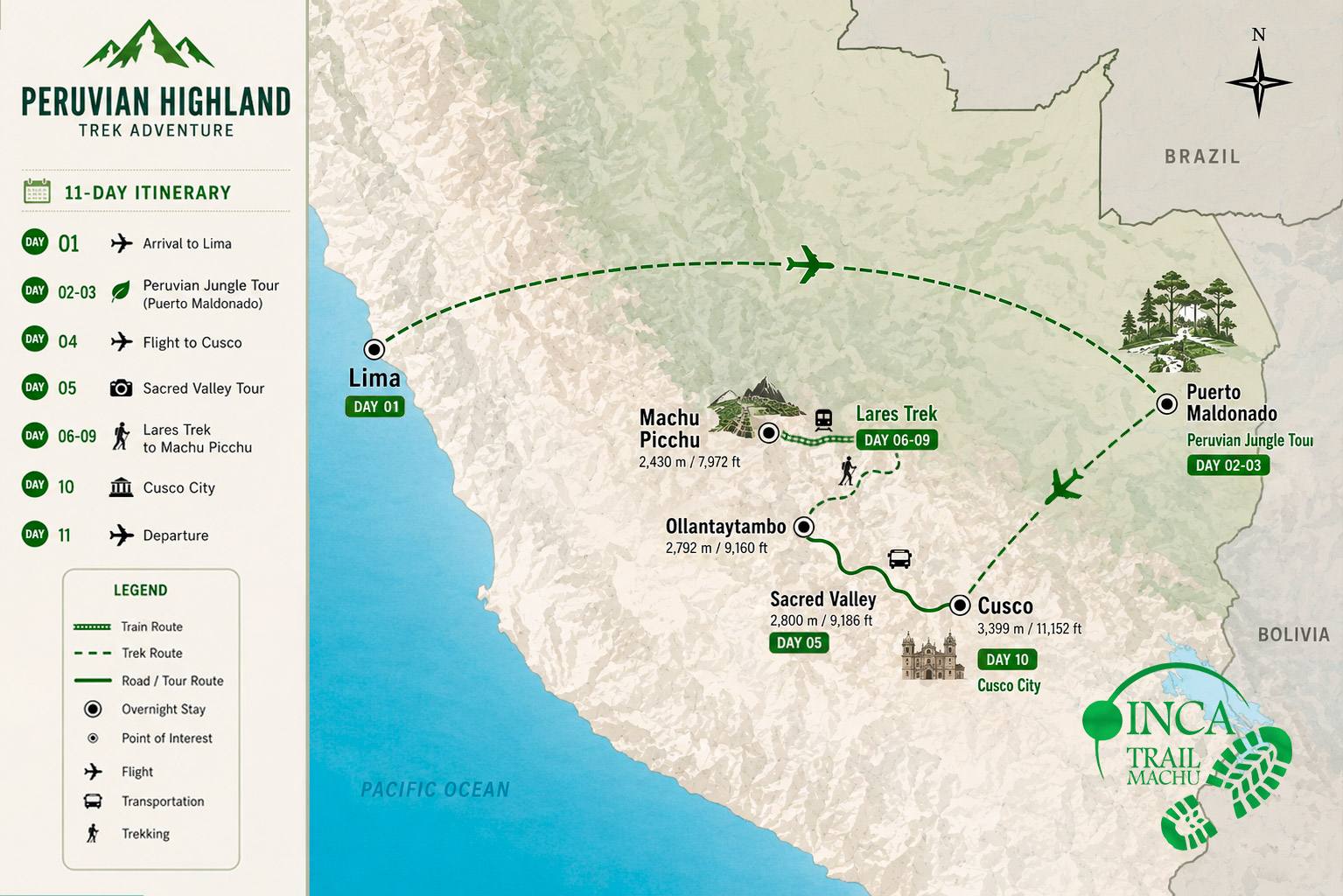
Day 01: Arrival to Lima
Day 02-04: Peruvian Jungle Tour/Cusco
Day 05: Sacred Valley Tour
Day 06-09: Lares Trek to Machu Picchu
Day 10: Cusco City
Day 11: Departure Day


Your adventure begins the moment you land at Jorge Chavez International Airport. An Inca Trail Machu representative will be waiting for you at arrivals — look for the sign with your name — and will take you directly to your hotel. The rest of the day is completely free: no schedules, no early starts, just time to settle in, unpack, and recover from the flight. You can arrive on any flight, at any hour.
If you find yourself with energy after resting, Lima rewards the curious traveler from day one. Founded by Francisco Pizarro in 1535, the city spent centuries as the seat of Spanish colonial power in South America — a history that shaped everything from its architecture to its food. That legacy is most visible in the Historic Centre of Lima, a UNESCO World Heritage Site worth exploring at a relaxed pace.
The natural starting point is Plaza Mayor, the beating heart of old Lima. Standing here, you are surrounded on three sides by the city's most iconic buildings: the Lima Cathedral, begun in the same year the city was founded; the Government Palace, the official residence of Peru's president; and the Archbishop's Palace, with its carved wooden balconies that have become one of the most photographed facades in the country. Together they tell the story of a city that was, for 200 years, the most powerful in the Americas. A perfect first impression before the real journey begins tomorrow.

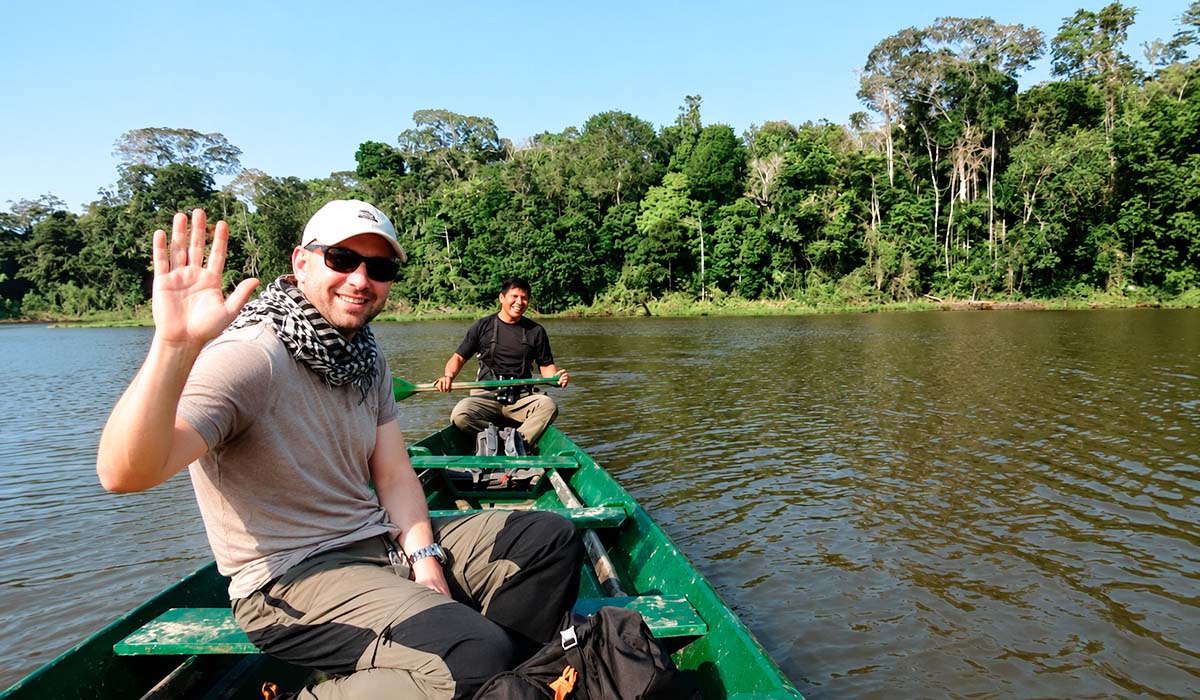
The day starts early with a transfer to Jorge Chavez International Airport for your flight to Puerto Maldonado, the gateway to one of the most pristine stretches of the Peruvian Amazon. The change is immediate — the moment you step off the plane, the heat and humidity tell you exactly where you are.
From the river port, the group boards a motorboat for the journey along the Madre de Dios River to the lodge. This stretch of river is already worth paying attention to: black skimmers grazing the water's surface, herons standing motionless on the banks, kingfishers, hawks and tyrant flycatchers moving through the canopy. The Amazon doesn't wait until you're ready for it.
The lodge is built from local materials — no electricity, no hot water, kerosene lamps, and mosquito nets in every room. It is not a luxury hotel, and that is precisely the point. What it offers is a genuine connection to the forest and a staff drawn almost entirely from surrounding communities. The naturalist guides who lead the outings grew up in this jungle, and that difference shows in every walk.
A full day inside the Tambopata National Reserve, one of the most biodiverse protected areas on the planet. The reserve spans an ecological range from Andean cloud forest down to lowland Amazon jungle, sheltering over 10,000 plant species, 600 bird species (among them 10% of the world's entire parrot population), 200 mammal species, 90 frog species, and 1,200 types of butterfly — all under legal protection and in a state of conservation that few places on Earth can match.
Guided walks take you through this world with someone who knows how to read it. Watch for the harpy eagle overhead, the hoatzin perched along the riverbank — a bird so ancient it looks like it belongs in the fossil record — tapirs, peccaries, and ocelots moving through the undergrowth. Giant river otters are often spotted in the oxbow lakes. The jaguar lives here too, though it keeps its distance. Your guide knows exactly where to look and what to listen for, and that knowledge transforms what you see.
Morning transfer to Puerto Maldonado Airport for the flight to Cusco. Few transitions on this trip are as striking as this one — in under two hours you move from the heat and density of the Amazon basin to over 3,400 meters above sea level. The body notices.
An Inca Trail Machu representative will be at the airport to take you to your hotel. The rest of the day is yours, and the advice is simple: take the altitude seriously. Cusco hits differently when you've just come from sea level, let alone from the jungle floor. Rest, drink coca tea, and if you do go out, do it slowly. The city has enough to reward a gentle afternoon walk — and everything else can wait until tomorrow.

Sitting about 600 meters below Cusco, the Sacred Valley of the Incas has a noticeably warmer climate than the city — and a history that goes far deeper than its pleasant weather. This was the agricultural heartland of the Tahuantinsuyo, the Inca Empire, and the fields lining both banks of the Urubamba River have been producing food for this region for over five centuries. A day here puts everything else on the trip into better context.
The first stop is Pisac, where you have the option to hike up to the Inca ruins — roughly two hours and five kilometers of walking that earns you views over the valley that are hard to forget. The terraces, temples, and ceremonial spaces at the top are among the best-preserved in the region. On the way back down, the town's craft market is one of the most authentic in the Sacred Valley — a good place to take your time, browse without pressure, and pick up something made locally.
From Pisac, the route continues to Urubamba for a buffet lunch featuring traditional Andean dishes (not included in the tour price). A good opportunity to try some of the regional cooking before the more demanding days ahead.
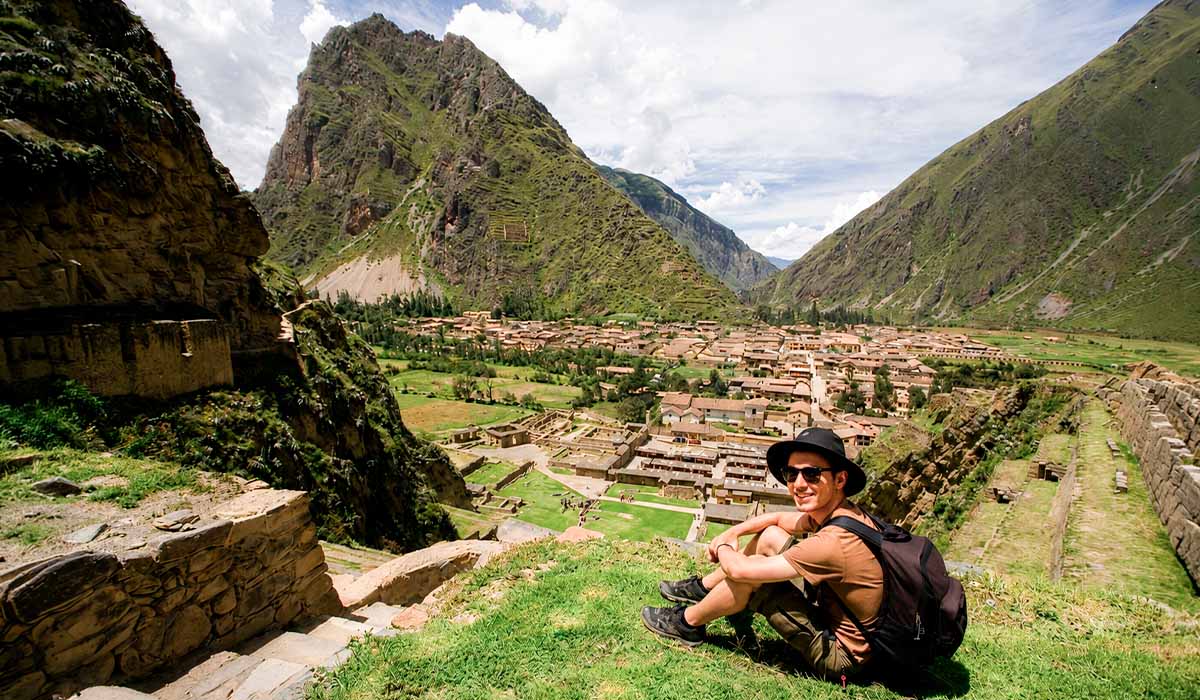
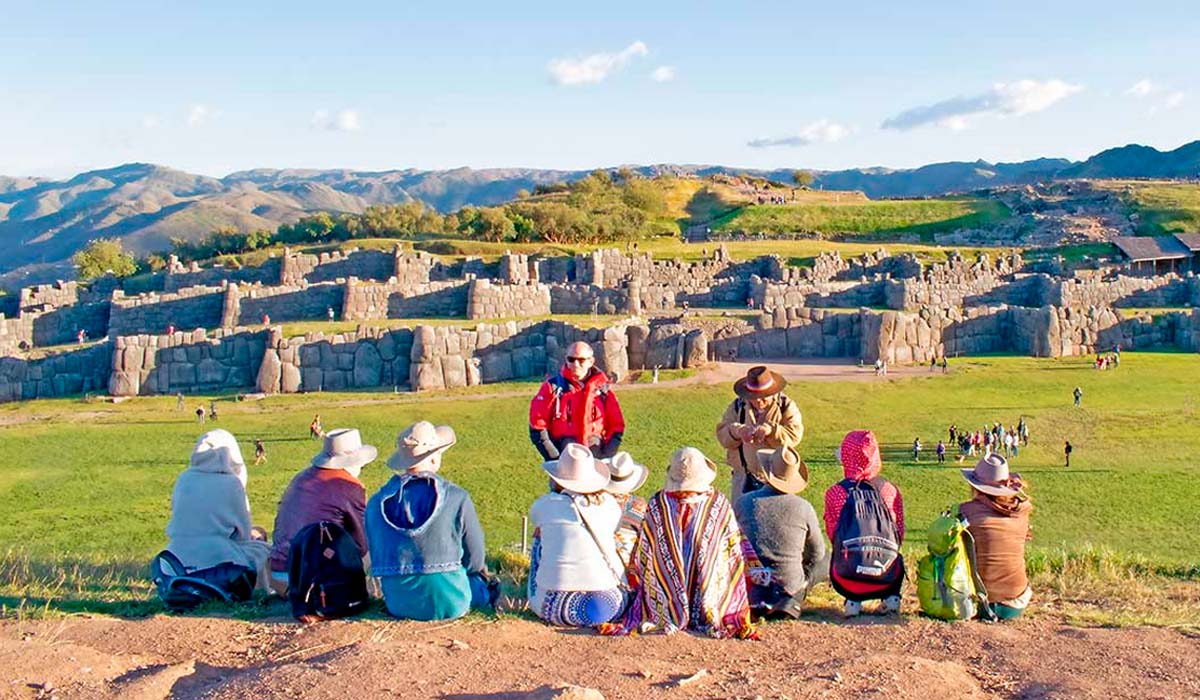
The day ends in Ollantaytambo — and it saves the best for last. This is widely considered the finest surviving example of Inca urban planning anywhere in the world. The streets, water channels, and building blocks have been in continuous use for more than 500 years. It is not a reconstruction or a museum piece — people live here, in a town that has barely changed since the Inca built it. The fortress above the town is something else entirely: massive, precise, and genuinely imposing when you stand at its base and look up. Tonight you stay in Ollantaytambo, rested and ready for the first day of the Lares Trek tomorrow morning.

The group leaves Ollantaytambo early, travelling by bus through the Sacred Valley until reaching the town of Lares. Before the walking begins, there is time to soak in the local hot springs — at this altitude, with three days of trekking ahead, it is exactly the kind of start the legs need.
In the afternoon, the Lares Trek begins in earnest. The path enters the valley gradually, leading to Wacawasi, an indigenous highland community where the group camps for the first night. There are no tourist facilities here, no staged experiences — just a genuine encounter with Andean life as it has been lived for generations. These are the moments that stay with you long after the trip ends.
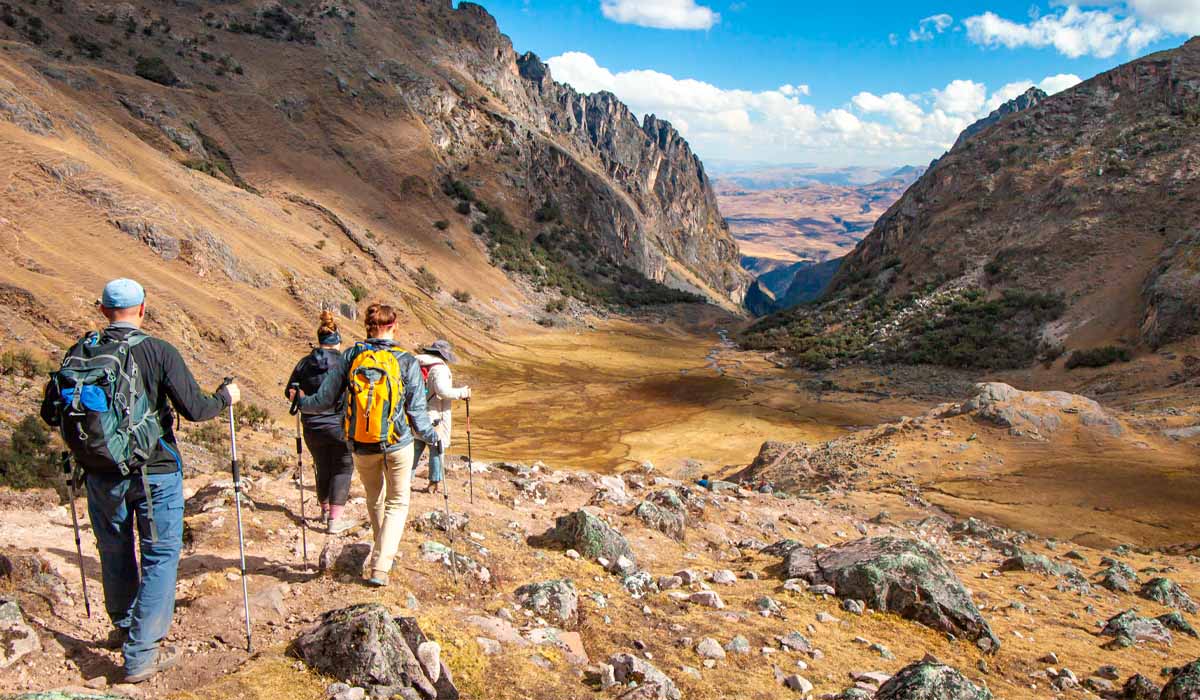
This is the most physically demanding day of the trek. The trail climbs steadily to Condor Pass at 4,100 meters above sea level — a high mountain crossing that requires a steady pace and good acclimatization. The effort is real, and so is the reward: from the pass, the views stretch across the Andean range to Mount Veronica (5,750 m), one of the most dramatic peaks in the Cusco region.
The descent leads to Lake Ipsaycocha, where camp is set up for the night. Falling asleep beside a glacial lake at altitude, with nothing above you but the Andean sky, is one of those experiences that no itinerary can fully prepare you for — and one that very few travelers ever get to have.
The final day of walking follows descending trails through the Willoc area, with wide views over the valley as the altitude gradually drops. By the time the group returns to Ollantaytambo, the hardest part of the journey is behind you.
From here, the tents are left behind. The group boards the night train to Aguas Calientes — the small town tucked between steep forested mountains at the base of Machu Picchu. Upon arrival, a hotel bed replaces the campsite. Rest well: tomorrow starts before sunrise.
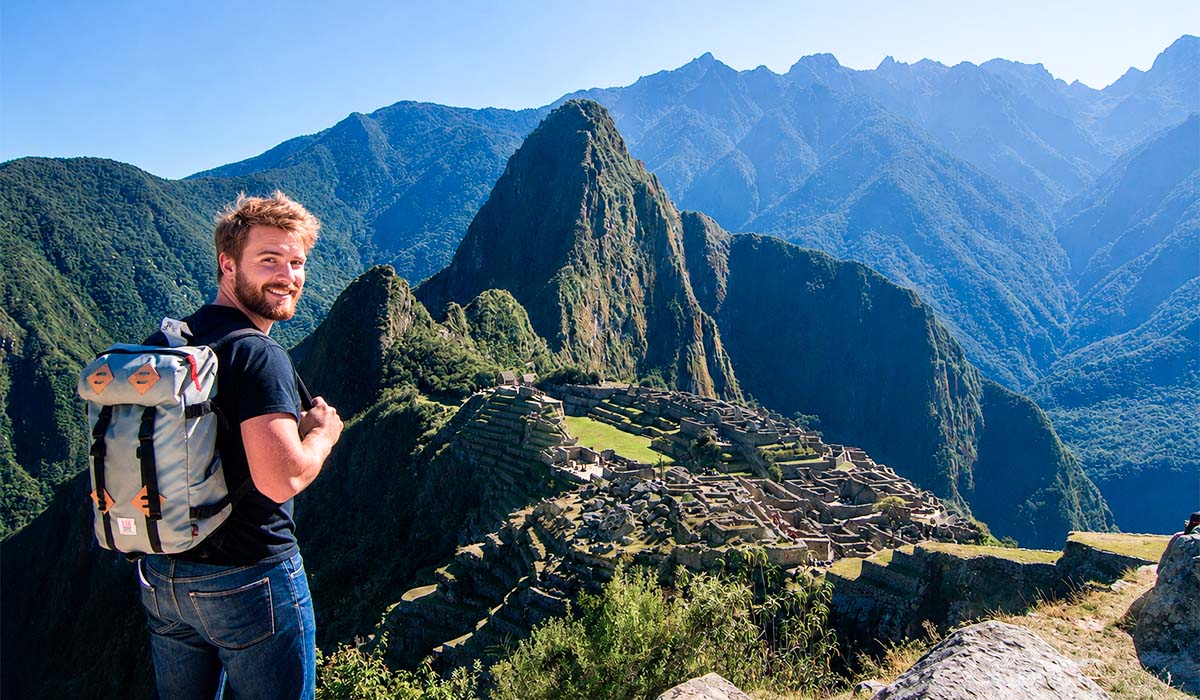
The alarm goes early. A two-hour walk before dawn brings you to the main entrance of Machu Picchu as the mist is still lifting off the ruins — one of the most striking ways to arrive at any archaeological site in the world. A two-and-a-half-hour guided tour covers the citadel in full, following a structured route designed to protect the site while making the most of your time inside.
Entrance circuits — what to know before you book:
Optional mountain climbs (extra cost, advance booking required):
After the guided tour, the afternoon is free in Aguas Calientes — time for lunch, a walk through town, and a last look at the mountains before boarding the return train to Ollantaytambo or Poroy. A private van transfer brings the group back to Cusco, arriving in the evening.

After nine days of flights, jungle walks, mountain passes, and early starts, today belongs entirely to you. No transfers, no group timings, no alarm set for before dawn — just Cusco, one of the most historically layered cities in the Americas, and a full day to explore it however you like.
Cusco's museums are genuinely worth the time, and each one covers different ground. The Inca Museum, the Qorikancha Museum, the Archaeological Museum, the Regional Historical Museum, and the Museum of Religious Art together form one of the most complete pictures of Andean civilization available anywhere. Pick two or three and take them slowly.
The Cathedral of Plaza Mayor is non-negotiable. Construction began in 1559 and took a full century to complete — and what was built in that time is extraordinary. Inside, it holds the largest collection of colonial art in the entire region. At the entrance, the crypt contains the remains of Inca Garcilaso de la Vega, the first great chronicler of Peruvian history. Worth every minute. Also worth adding to the route: La Compañía de Jesús, La Merced, and San Francisco — three churches that between them cover the full range of colonial religious architecture in the city.
Cusco is also an excellent base for outdoor activities, and today is a good day to use it that way:
And if none of the above appeals after ten days on the road — if what you actually want is to find a good café on the square, browse the San Pedro market, and sit with a pisco sour watching the city go by — that is a completely reasonable way to spend the last full day of the expedition.
The final morning begins with a transfer to Alejandro Velasco Astete International Airport in Cusco for your flight back to Lima. From there, your international connections home — or wherever the next trip takes you.
This is where the Inca Trail Machu service ends, but it doesn't have to be where Peru ends. Lima is a city that rewards an extra day or two: world-class food, a coastline, neighborhoods like Miraflores and Barranco that feel nothing like the Andes. If you'd like to extend your stay in Lima before flying home, we can arrange it — just let us know when booking.
Meal budget For meals not included in the itinerary, we recommend budgeting between USD 150 and 200 for the full trip. This covers lunches and dinners in Cusco, Lima, and Aguas Calientes comfortably, with room for a good restaurant or two along the way.
Single room option Guests who have booked the single room supplement will have a private room for every hotel and hostel night throughout the tour, plus a single tent during the Lares Trek. No shared spaces at any point.
Domestic flights Two domestic flights are included in the tour price: Lima → Puerto Maldonado and Puerto Maldonado → Cusco. The return flight Cusco → Lima is not included and can be arranged separately on request.
To issue your internal flight tickets, we need your full passport details at the time of booking — name exactly as it appears on your passport, nationality, passport number, and expiry date. Tickets are issued locally and will be handed to you before each departure.

 +51 84 217 551
 +51 997 434 941
 Av Tupac Amaru PP-10B, Santiago, Cusco, Peru
  info@incatrailmachu.com
 www.incatrailmachu.com


