
Peru is much more than a land of history and ancient civilizations; it is one of the most biodiverse countries in the world, housing an unmatched paradise for those looking for the best adventures in Peru. Likewise, its surprising geographic contrasts range from the dry coasts and the snowy peaks of the Andes to the lush Amazon jungle, where powerful rivers are born and shape the territory as they pass. Therefore, over millions of years of constant erosion, these powerful water currents have carved some of the most mythical, remote, and deepest natural landscapes on the planet, creating settings for exploration and adventure.
Going into the depths of this rough geography reveals the existence of imposing rock formations. This guide is an invitation to discover these grand landscapes, highlighting wonders like the famous Colca Canyon, where the majestic condors fly through the skies acting as the absolute masters of the wind. Also, we will discover other hidden abysses like the mysterious Canyon of the Lost, hidden in the middle of the dry desert, showing that every crack in the national territory tells a unique geological story.
Iconic Canyons
Colca Canyon
Canyon of the Lost
Cotahuasi Canyon
Duck Canyon
Apurimac Canyon
Suggested Activities
Hiking & Condor Watching
Walking & Geological Exploration
Hiking & Waterfall Visits
Cycling & Scenic Photography
Rafting & Adventure Trekking
Location
Arequipa
Ica
Arequipa
Ancash
Apurimac / Cusco

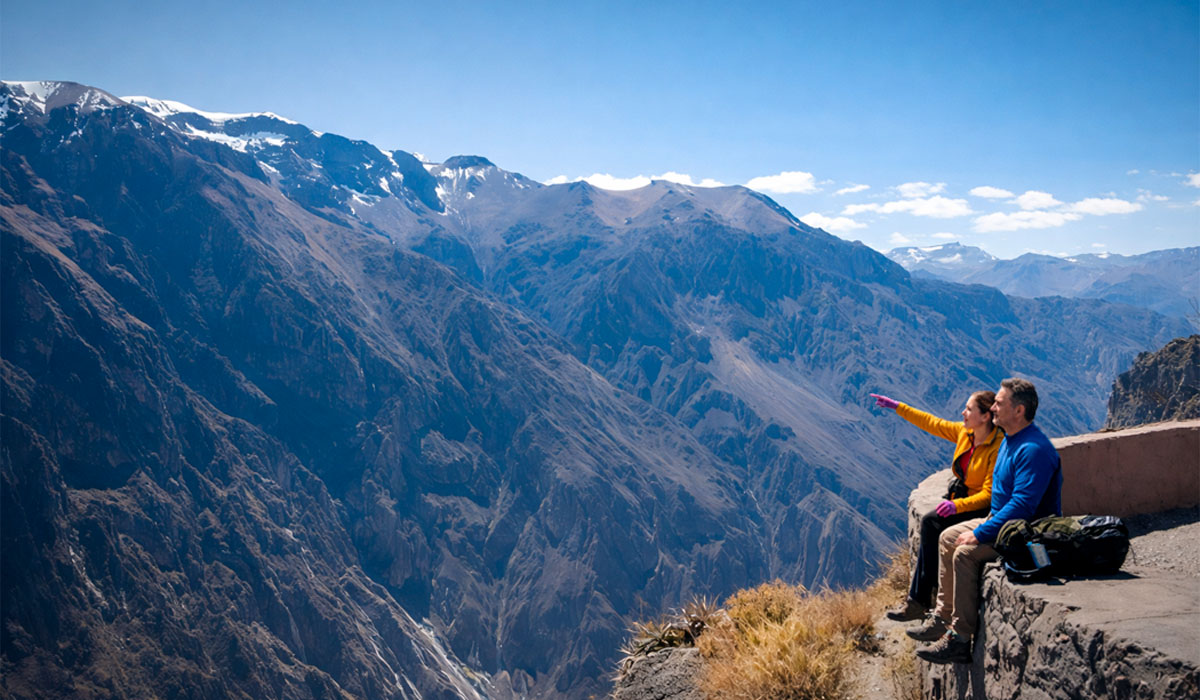
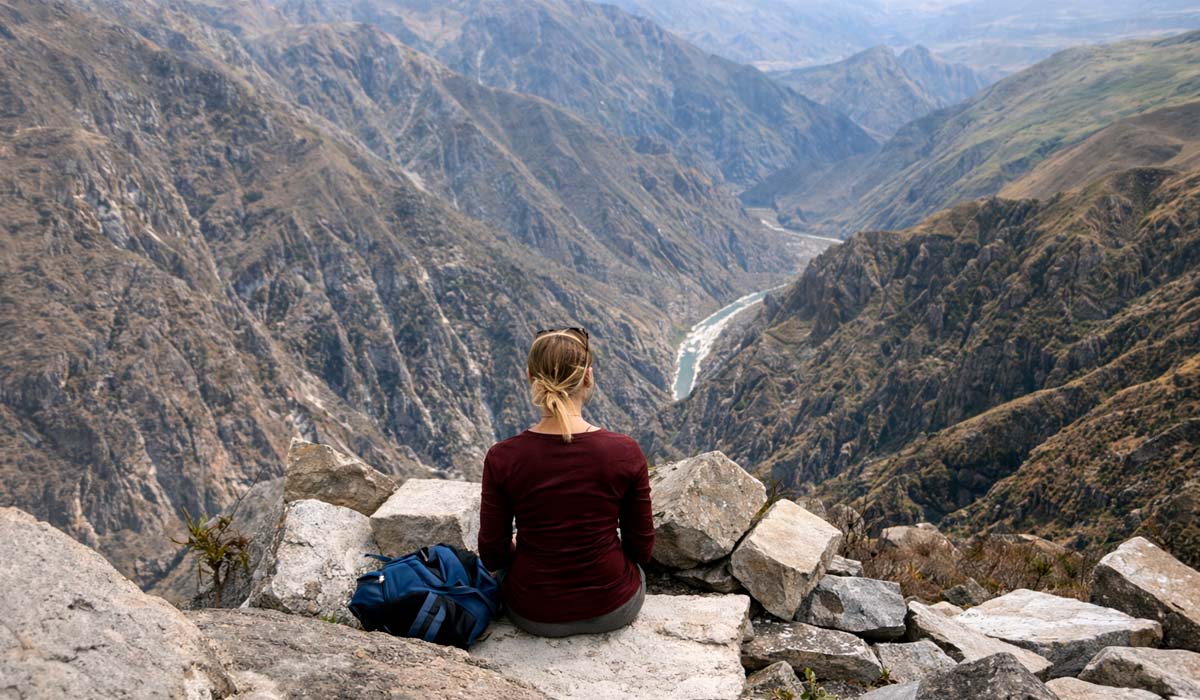
Located to the north-east of the Arequipa region at about 3 600 m s.n.m., very close to the Ampato and Sabancaya volcanoes, is the Colca Canyon, considered one of the deepest in the world, reaching approximately 4,160 meters depth. With an Andean vegetation privileged by its climate, this impressive valley belongs to the province of Caylloma.
From the Mirador de la Cruz del Condor, visitors can enjoy the flight of this majestic bird in danger of extinction that inhabits the canyon. Its varied fauna will make the traveler can also enjoy the presence of animals such as alpaca, vicuña, vizcachas, foxes, pumas, eagles, hawks, owls, among others. In addition, the biodiversity of Arequipa is so extensive that it allows us to see the field poppy, the ichu, the tolar, the yareta, the quiñoa and other herbs.
In the Colca Canyon, tourists will have the opportunity to practice extreme sports such as canoeing, mountaineering, mountain climbing, fishing, trekking, among others. This canyon belongs to the Colca Valley, a large agricultural site that has viewpoints to enjoy the landscape and still maintains its ancestral customs for the Collaguas people, former inhabitants of the area.
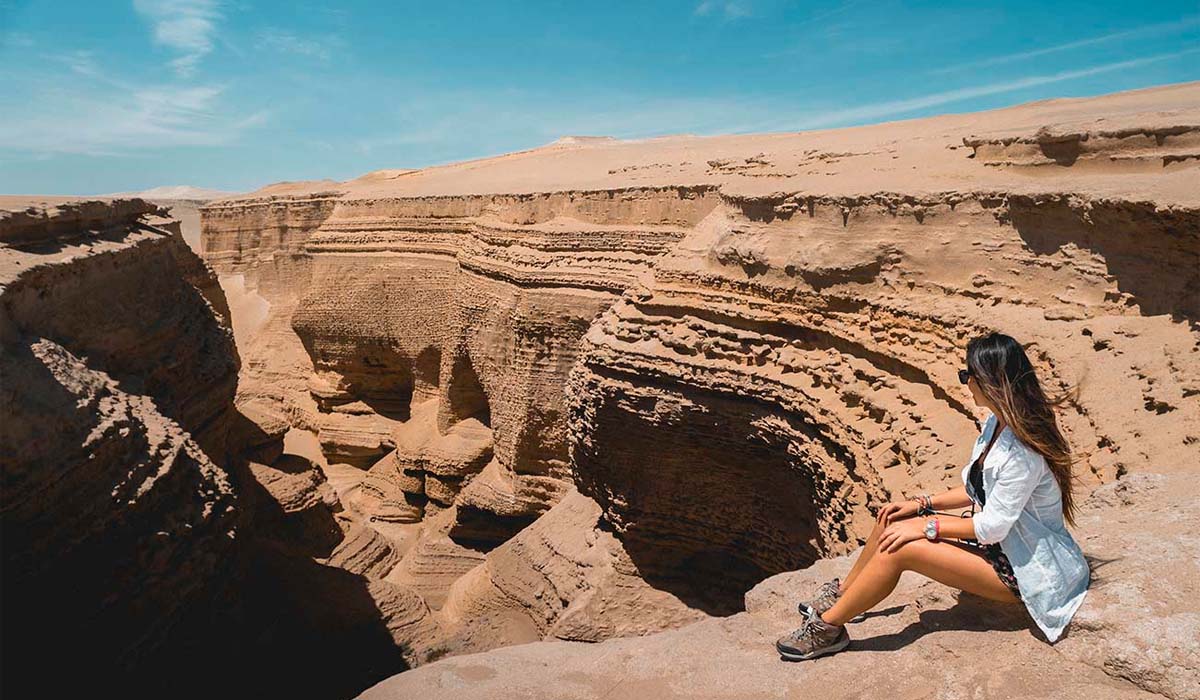
Hidden in the vast and dry extensions of the coastal desert, the Canyon of the Lost has become one of the most fascinating and newest geological formations on the national tourist map. This impressive cut in the earth, carved patiently over millions of years by the runoff of the Seco River, offers a unique landscape with layered clay walls that reach up to 200 meters deep.
Also, its unique name refers to the mystery of the first modern expeditions that got lost trying to find this hidden landscape among the huge dunes of the south. Therefore, venturing from the city of Ica to enter its winding and hot paths has become an essential experience for travelers looking to challenge the desert and explore routes off the beaten path.
The site not only amazes because of its strange rock formations eroded by wind and water, but also for holding priceless fossil remains of whales, sharks, and seabirds dating back to the time when these sands were completely underwater. Additionally, the exploration circuit allows you to go down into its depths to discover natural squares, high viewpoints, and a seasonal oasis at its deepest base.
The gorge, which has a length of approximately 5 kilometers, is topographically divided into several exploration levels:
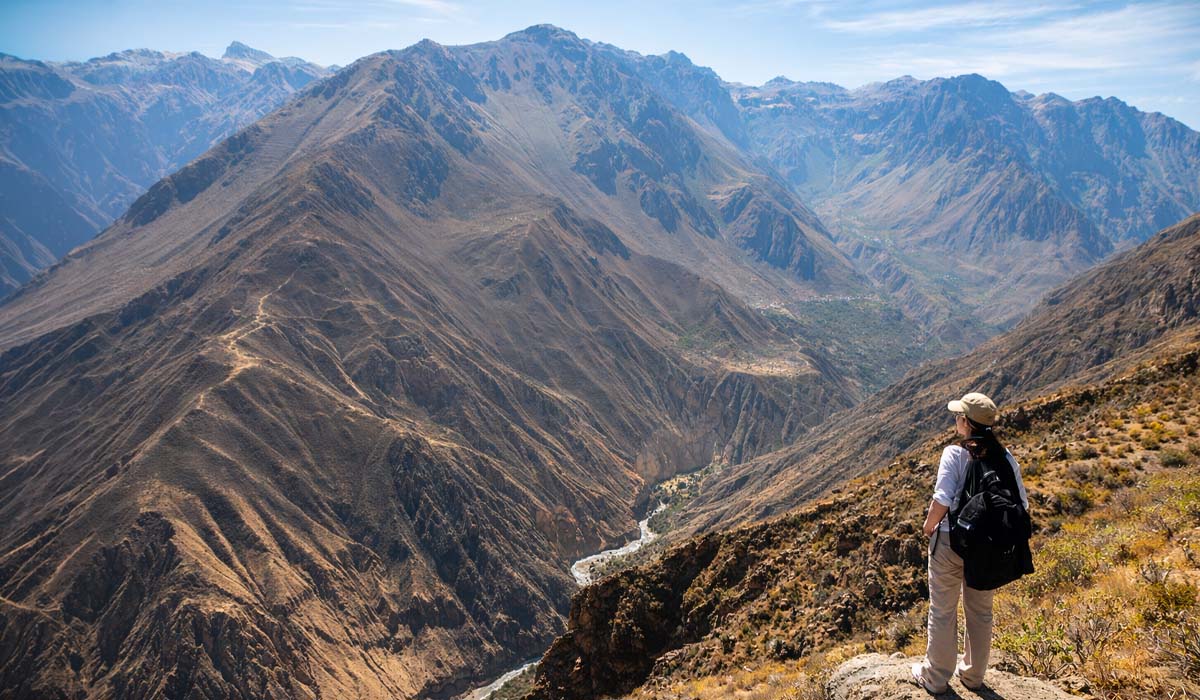
The Cotahuasi Sub-basin Landscape Reserve (RPSCC) is located in the province of La Union, 9 hours and 30 minutes by car from Arequipa, the valley allows you to visit traditional villages and enjoy hot springs, the Sipia waterfall and the geological faults of the canon. With 3,562 meters of depth, it is one of the largest in the world.
The Cotahuasi Sub-basin is a representative sample of the Tropical Andes of southern Peru, which, due to its location in the Southern Andes and the upper reaches of the Ocoña River, has unique geographical conditions that result in biological diversity of global importance in each of its twelve zones of life, the same that are distributed in a space that goes from the 950 msnm and it rises by the canyon until snowed superiors to the 6,100 msnm.
In the surroundings of the canyon, temples and archaeological zones have been identified with extensive and ancient platforms that reflect the ingenuity of the native peoples in adapting to their environment, conserving the ecosystem in a harmonious way. It has impressive landscapes surrounded by the Coropuna and Solimana snowcapped mountains and with the Sipia Waterfall, which has a free fall of 150 meters and forms a permanent rainbow to the delight of visitors. It is a perfect setting for adventure sports such as trekking, canoeing, paragliding, hang gliding, mountain biking, rock climbing, fishing and horseback riding.
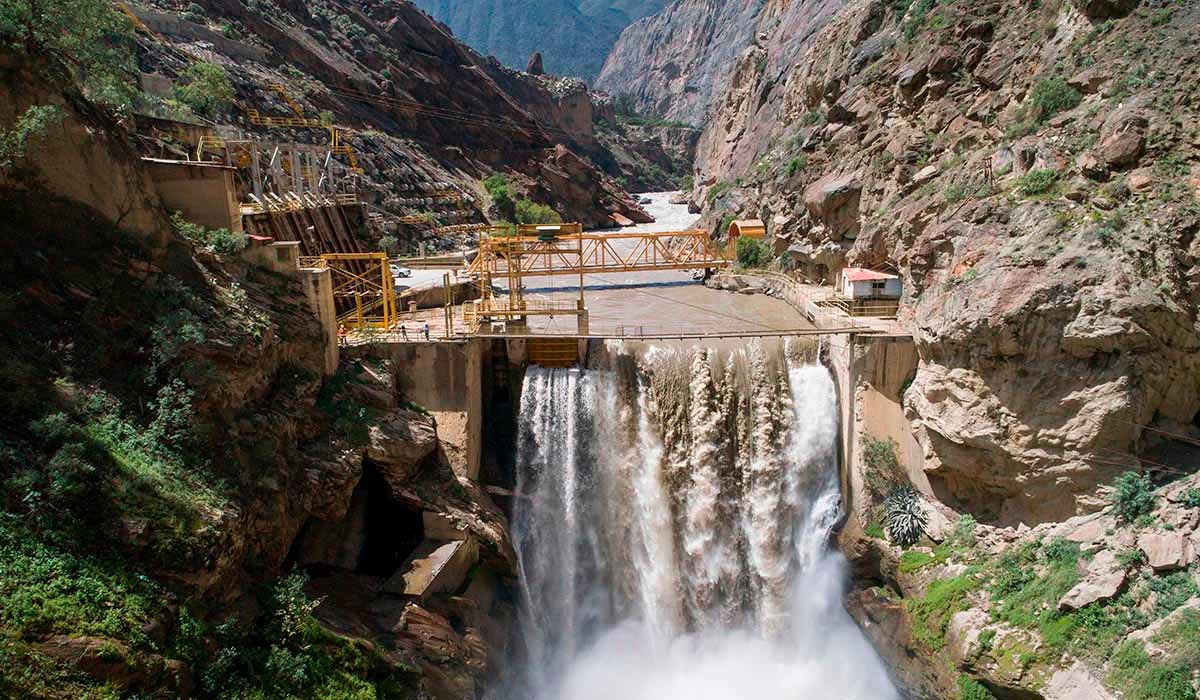
Located just 25 kilometers north of the city of Caraz, the imposing Duck Canyon is one of the most fascinating and dizzying geological formations in the department of Ancash. This natural wonder has been shaped for millennia by the constant force of the powerful Santa River as it passes through the famous Huaylas Valley, marking the exact point where the majestic White and Black mountain ranges meet at their closest and most dramatic proximity.
Traveling through this gorge of solid rock is an overwhelming visual experience, as its towering walls reach a depth of almost 1,000 meters while the width of the pass narrows to barely 15 meters in its most critical sections.
The amazing narrowness and the immense force of the water flow at this specific point not only offer a breathtaking landscape, but also represent a vital resource for the country's development. Additionally, taking advantage of the fury of this waterfall, the Duck Canyon Hydroelectric Plant was built in this deep abyss; this monumental underground infrastructure is responsible for generating and supplying electricity to almost the entire central-northern area of the national territory.
Located as an imposing natural border between the departments of Apurímac and Cusco, this deep canyon stands as a setting of unique beauty and geography. This majestic valley, whose main access is about two hours from the city of Abancay, reaches altitudes around 3,600 meters above sea level, offering one of the most rugged and fascinating topographies in the country.
Exploring the depths and edges of this Andean abyss reveals a network of hidden treasures that go far beyond simple landscape observation. Additionally, this demanding circuit has established itself as a true paradise for hiking expeditions and water sports lovers. Also, the route jealously guards important remains of pre-Columbian history and sources of natural healing. Below, we present some of the activities you can do in this place:

 +51 84 217 551
 +51 997 434 941
 Av Tupac Amaru PP-10B, Santiago, Cusco, Peru
  info@incatrailmachu.com
 www.incatrailmachu.com


