
Machu Picchu is an Inca city surrounded by temples, platforms and water channels, built on top of a mountain. Its construction was built with large blocks of stone joined together, without the use of amalgam. At the moment it is considered cultural patrimony of the humanity when being recognized like important political center, religious and administrative of the Incaic time.
It is located northwest of Cusco, 129 kilometers above the Urubamba River (hence the name of the Vilcanota River), in the mountains of Vilcabamba. Its altitude is about 2380 m.s.n.m. The citadel of Machu Picchu is one of the most important archaeological sites in the world and is the main destination of Peru. Few works done by man show as much harmony with nature as the citadel of Machu Picchu shows us and the 33 archaeological groups that are united by the Inca Trail.
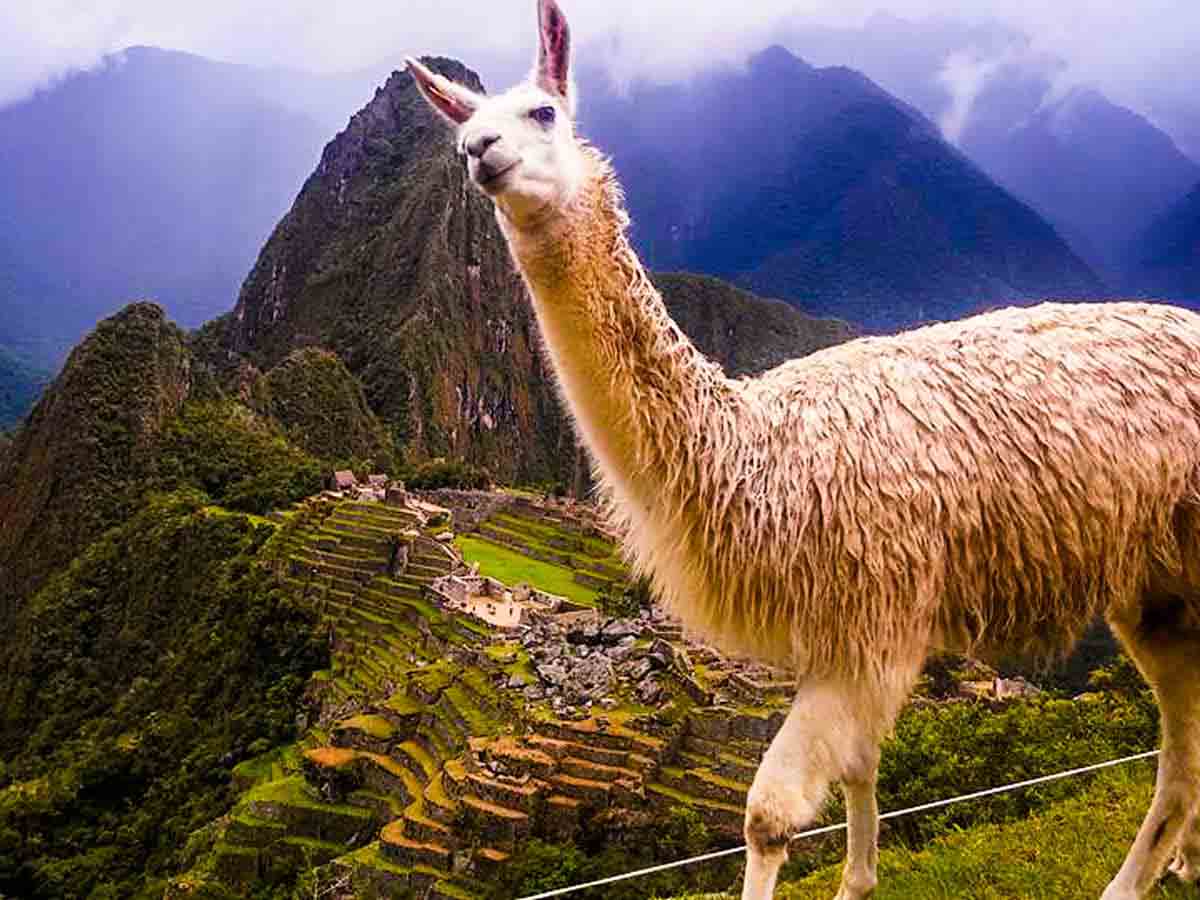
The archaeological complex is located at the top of the mountain, Machu Picchu (in Quechua means old mountain or important mountain) which gives the name to the citadel and the impressive landscape that we have all seen. In front of this, the incredible mountain of Wayna Picchu appears ("young mountain") in whose top and slopes some archaeological remains are located. Both summits limit with the mighty Urubamba River that runs towards the east, 400 meters below the citadel.
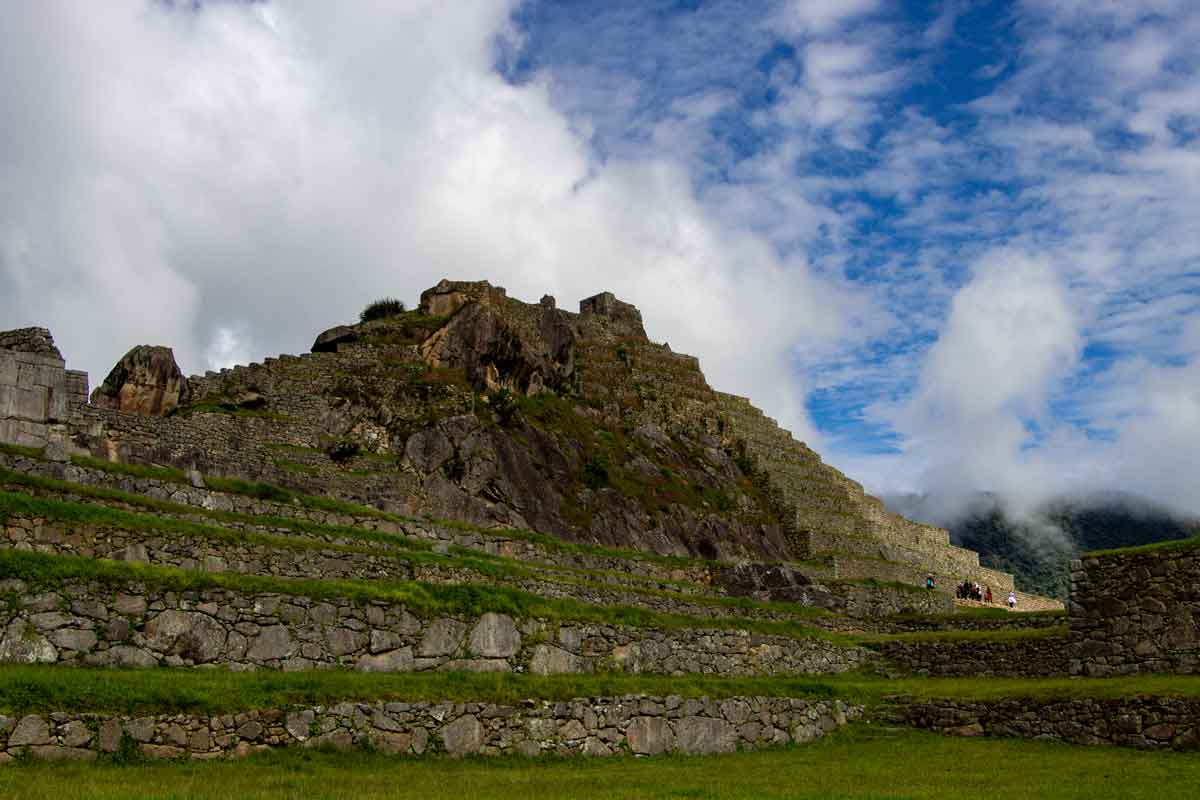
The natural home of the llama is South America. In the golden age of the Inca Empire, the llama was the most important livestock. Without it, human civilization in the high Andes probably would not have been possible. The llama gave the people everything they needed: wool, meat, and reliable, undemanding transportation. In the time of the Incas, there were different breeds of llamas.
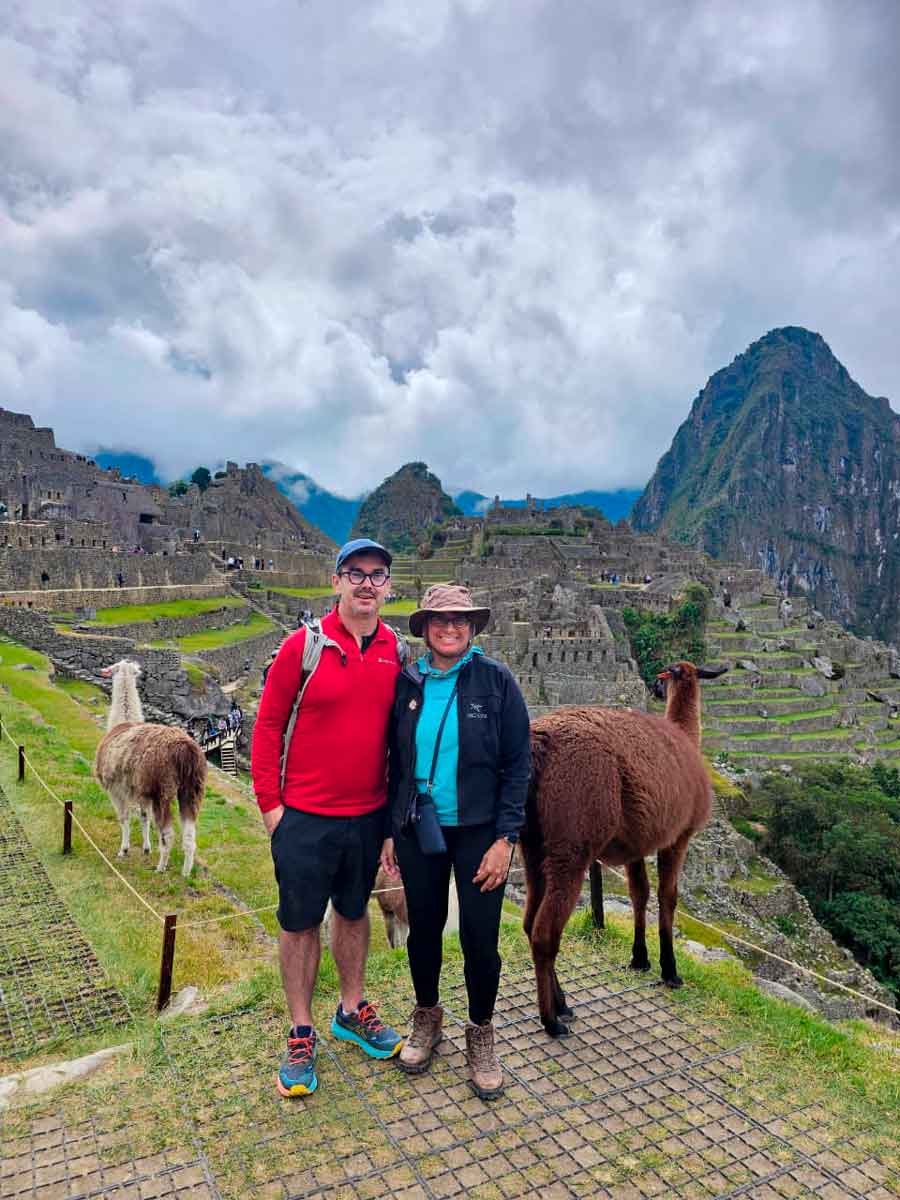
In recent years, one trending animal has followed the next. After foxes, unicorns, flamingos and owls, the llama now smiles at us from all social media channels. Cute, fluffy, sociable and calm, these animals are sure to win hearts while being extremely helpful, and taking a selfie with a llama is now a must on any visit to Machu Picchu.
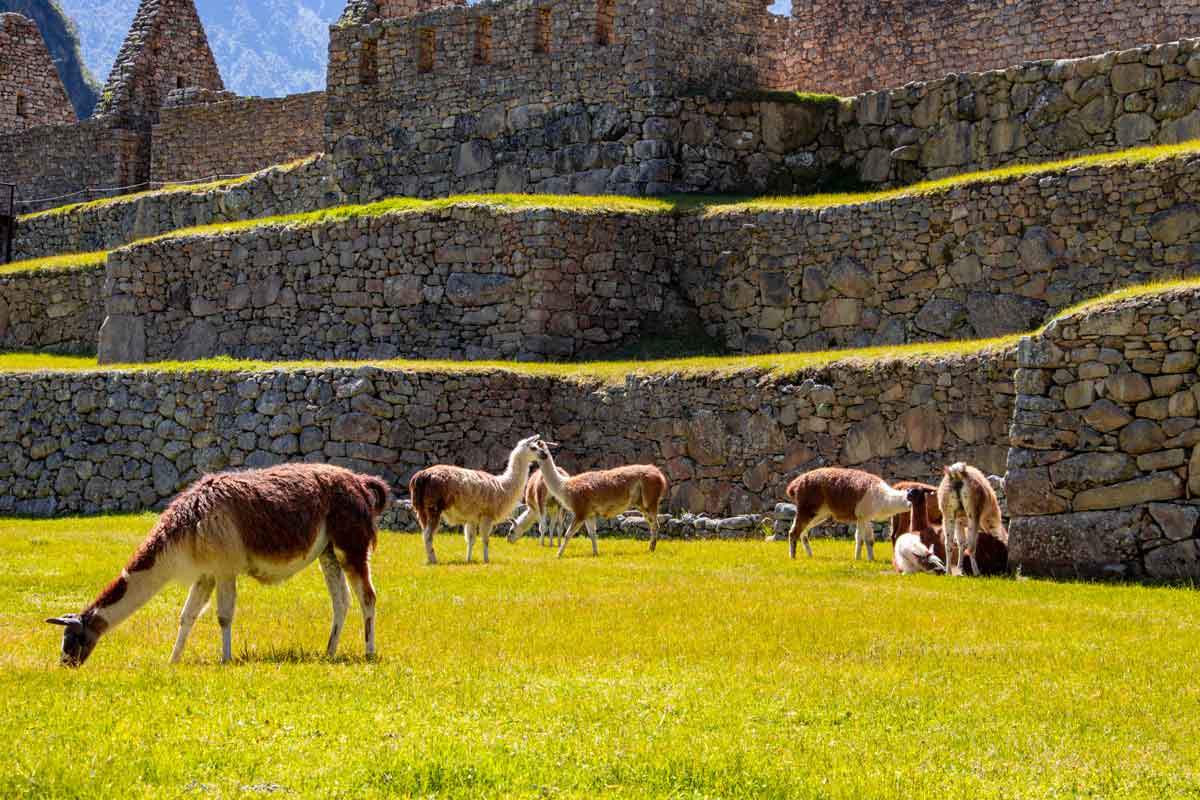
Every culture has something more sacred: the Incas did it with the llamas. They immortalized the animals in a hidden city 3,000 meters high in the Andes, not far from the famous Machu Picchu. Archaeologists discovered: The entire Platafforms complex to a constellation of LLama. "Choquequirao"
But one question worries travelers and those who stayed at home at the latest when looking at the photos: How can animal species be distinguished?
RELATED: WHAT'S THE DIFFERENCE BETWEEN A LLAMA AND AN ALPACA
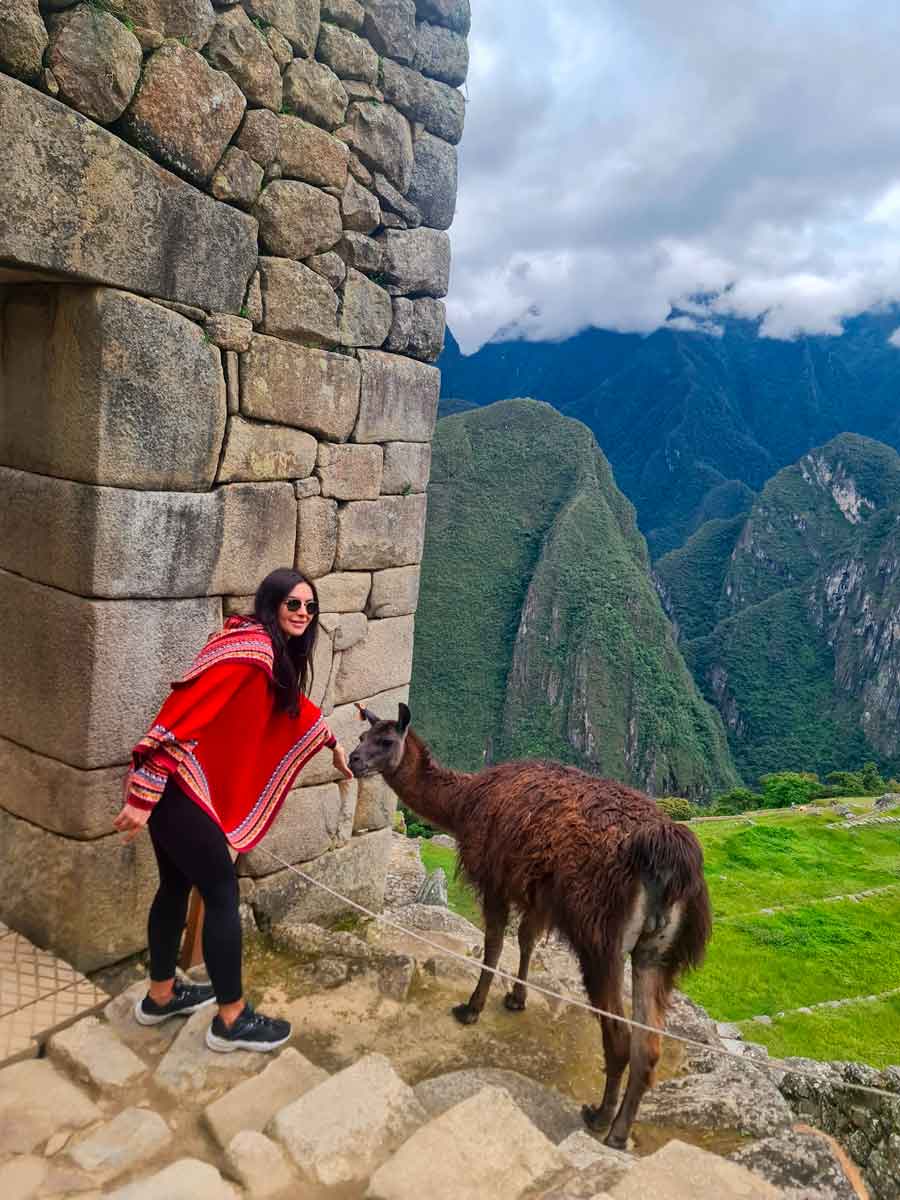
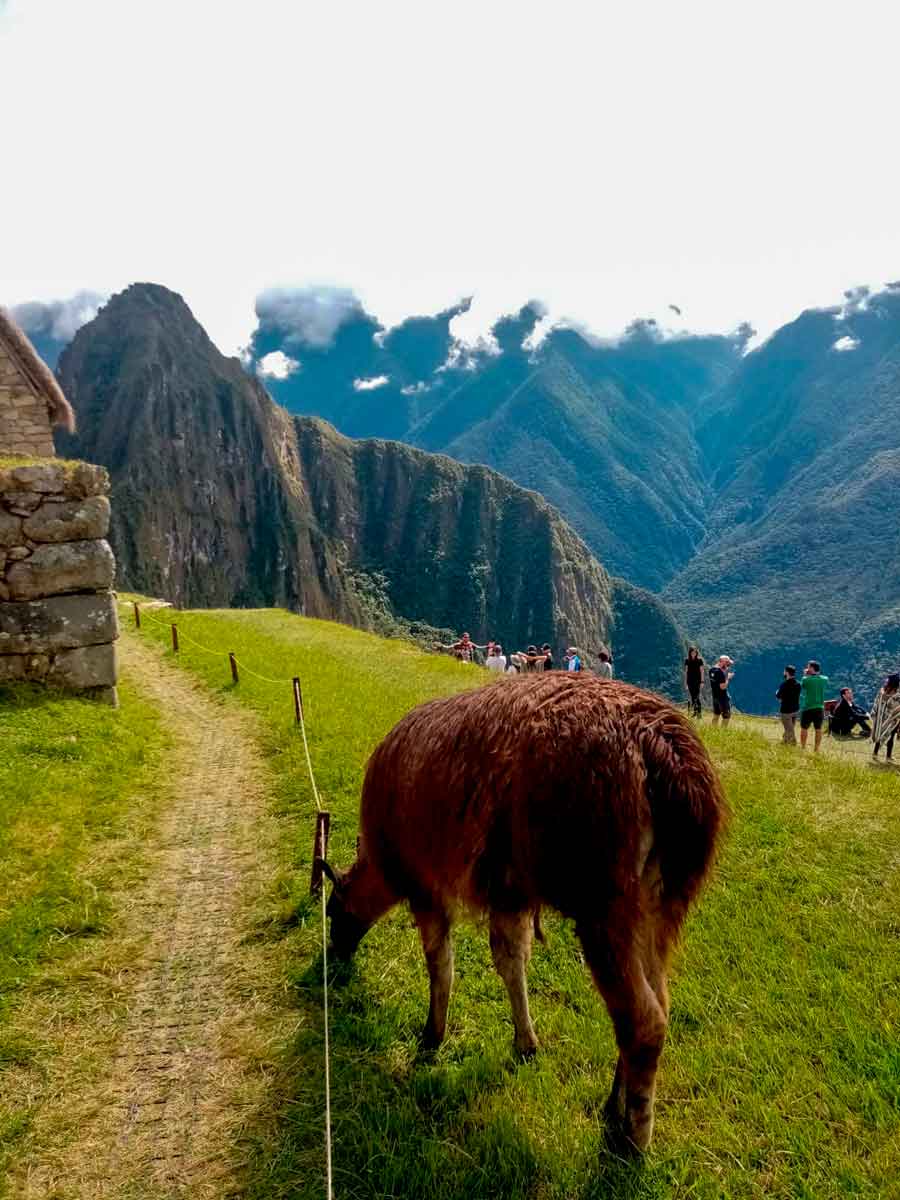
As you walk through the important Inca citadel of Machu Picchu, you will often see llamas exploring the archaeological site and calmly moving along its small streets. These iconic animals are often found near the citadel's exit, where they sometimes wait near the control area or rest on the agricultural terraces near the Llaqta zone and the main square.
Several groups of llamas roam freely throughout the citadel. Since 2015, they have been regularly seen in different areas, often in the morning near the upper terraces and later in the day around the Temple of the Three Windows. Llamas also help maintain the site naturally by grazing on the grasslands, which keeps the vegetation under control.
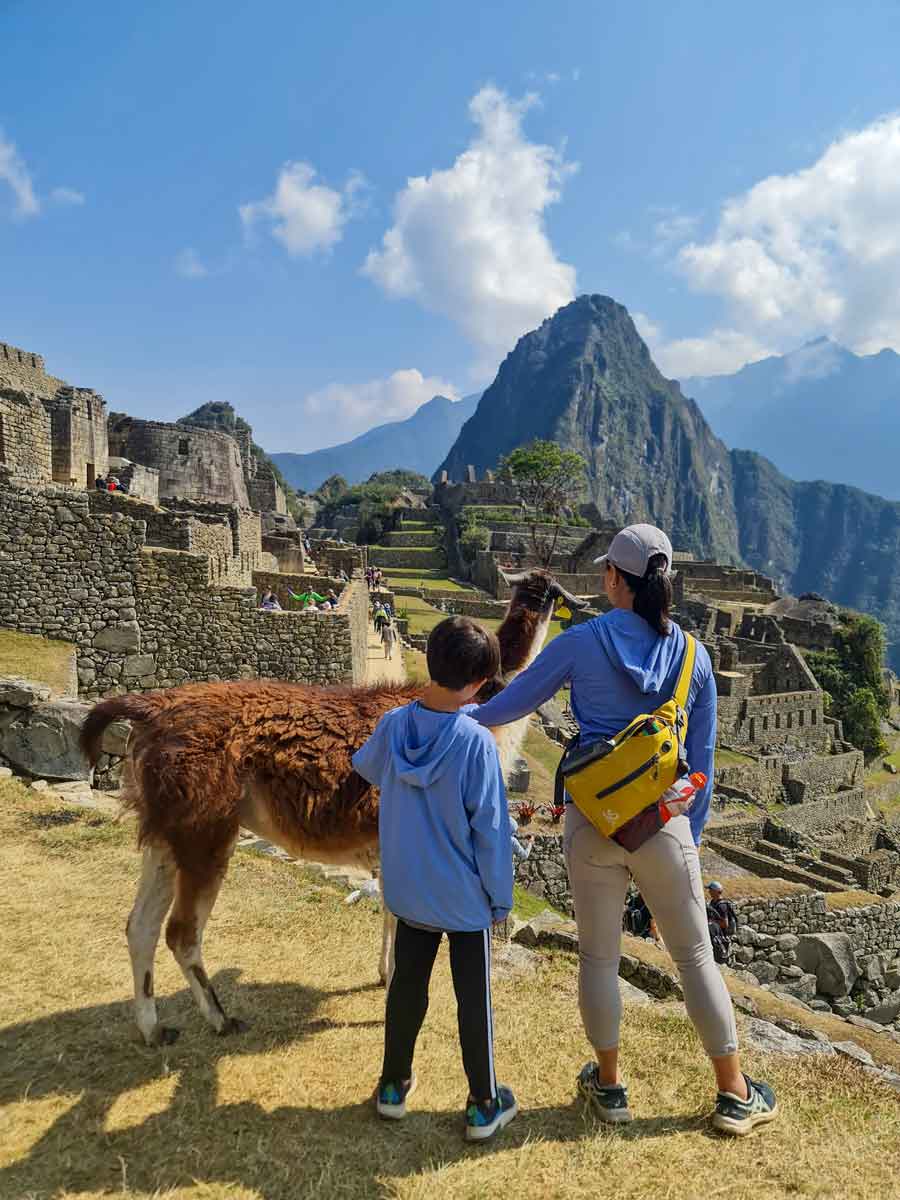 |  | 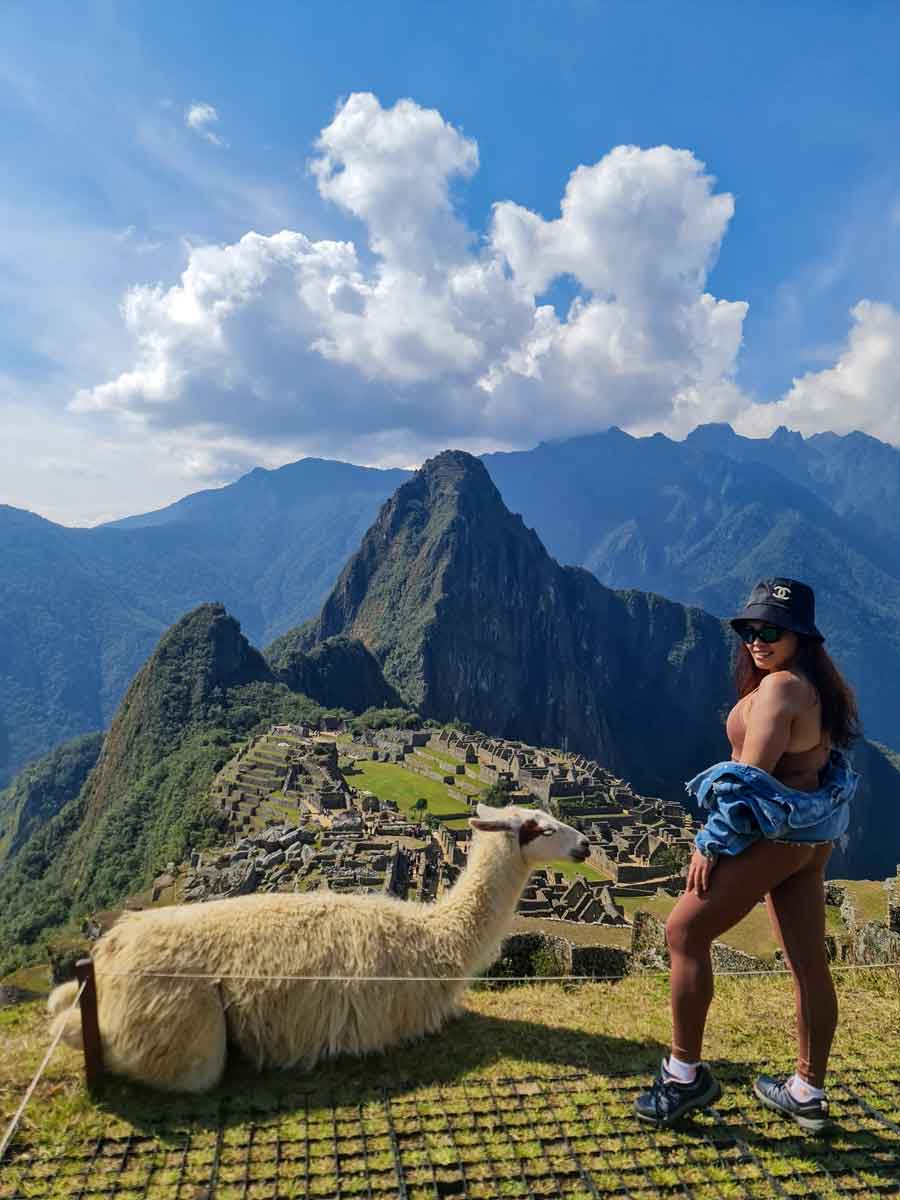 |
During your visit, you can observe them while exploring with your guide or walking through the circuits. Sometimes they will be very close and other times farther away, so keep your camera ready. You may capture an excellent photo or video to share on social media.
Llamas have become one of the most recognizable and beloved symbols of the Inca citadel. If you are planning to travel to Machu Picchu, be sure to take the time to observe these fascinating animals.
Since Hiram Bingham "Re-Discover" Machu Picchu in 1911. the site has captured the imagination of much of the world and is, perhaps, the single feature which people commonly identify with Peru.
Machu Picchu was not really The lost City of the Incas because most of the indian residents of the zone knew about the site when Bingham arrived to "Discover" it, nor was it the site of the Incas last refuge before the advance of the Spanish armies. In fact, the last Inca rulers probably left Machu Picchu once the spanish gained control of the upper Urubamba River.
Machu Picchu was a flourishing ceremonial and agricultural site, probably the gateway to the jungle marches of the Empire. The central buildings were made with the polished stoneworks of the Cusco Imperial style, though the site was probably occupied well before the Incas started their expansion. It was closely associated with the earth cult revolving around the Coca leaf, which was a privilege of the Inca Royal family and priests. Coca is still cosumed today by the Andean peasant. It takes the bite out of hunger and fatigue, but has more important relevance on social and magical levels.
The ruins staircases, terraces, temples, palaces, towers, fountains, the famous Intiwatana and the Museo de Sitio below the ruins require at least one day, some say two. The mountain overlooking the site, Huayna Picchu, has steps to the top for a superlative view of the whole ruins, but it is not made for those who get giddy, the walk up takes about one hour but the steps are dangerous after bad weather.
RELATED:MACHU PICCHU HISTORY
There are many ways to reach Machu Picchu, including hiking some of the most important routes featuring beautiful landscapes, Inca sites, and ancient trails that lead to the citadel. But one common question among travelers is: Where can you see llamas?
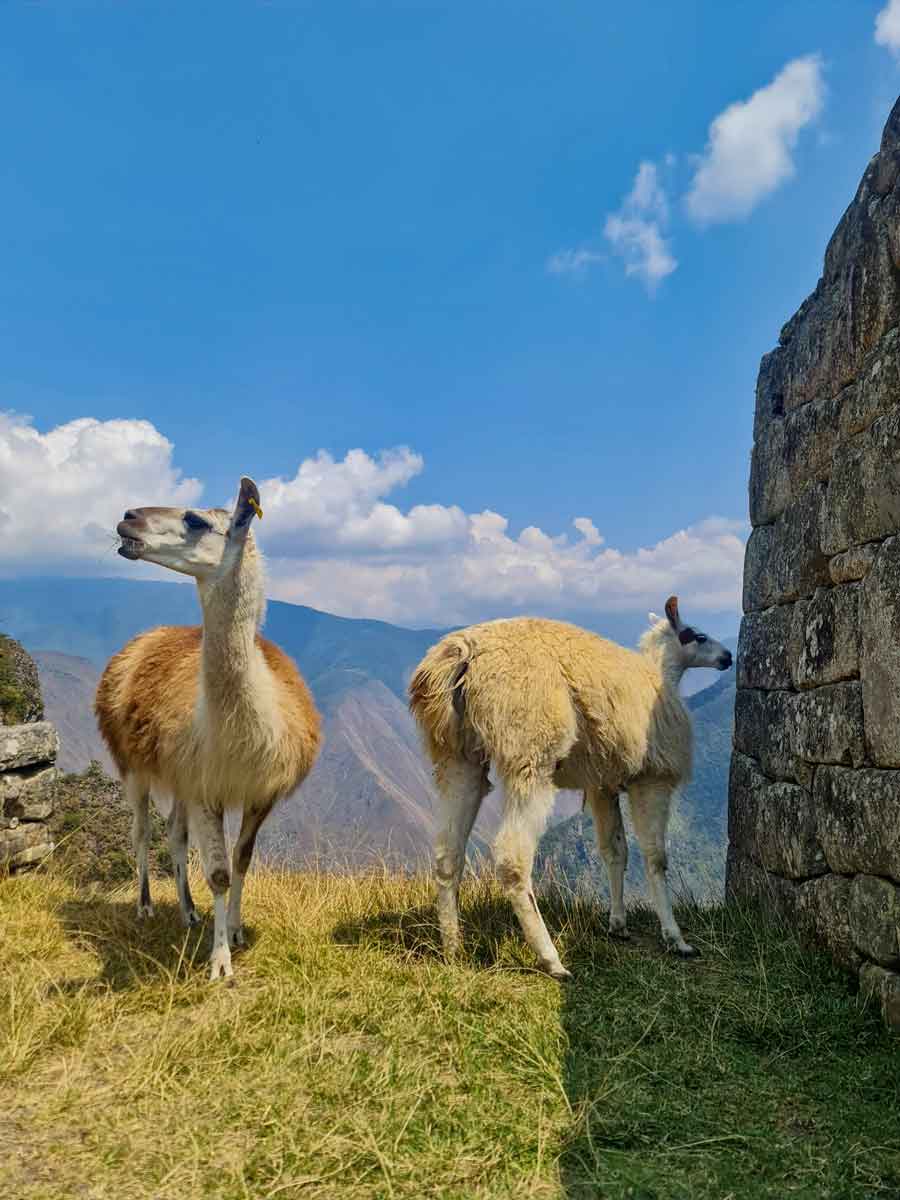
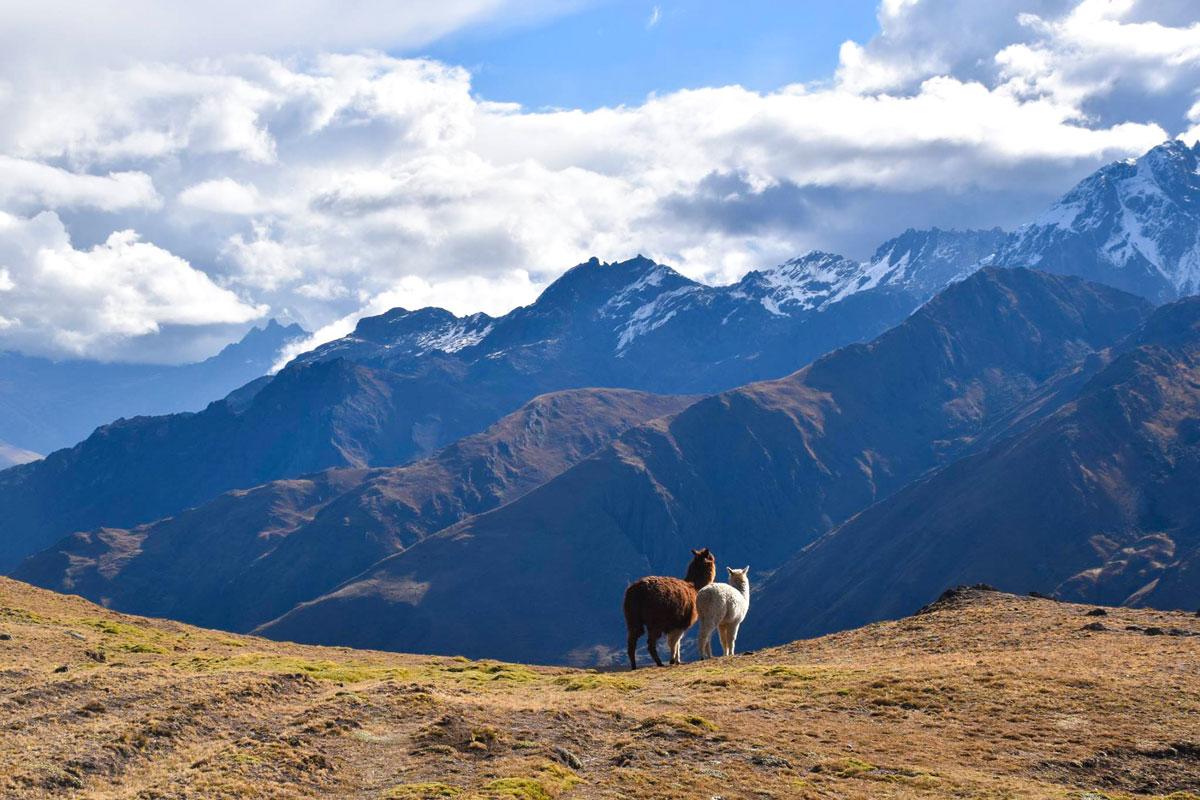
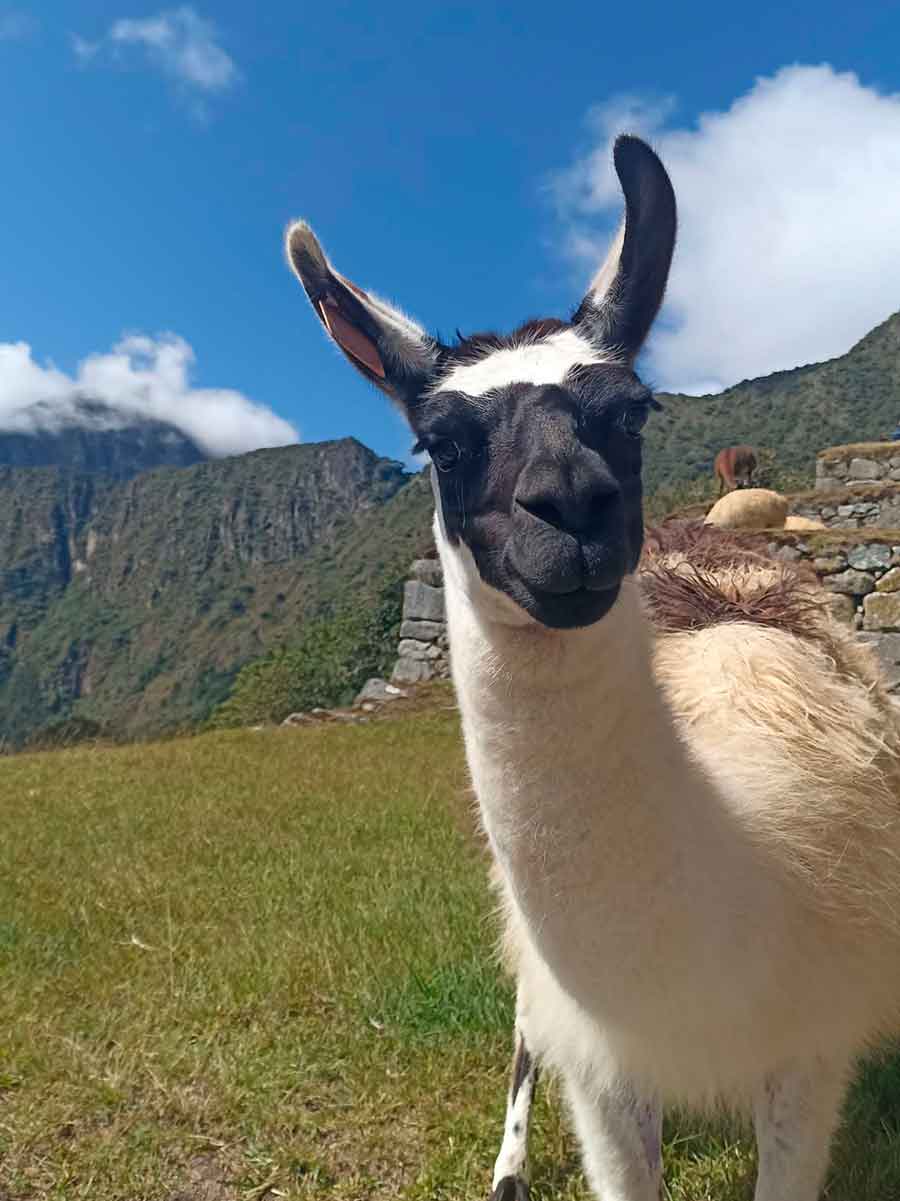
At Machu Picchu, llamas roam freely throughout the archaeological site. You may see them during a guided tour or while exploring on your own. These animals are emblematic of Andean culture. Visitors have the chance to take great photos of them in their natural environment every day.
 |  |  |
It's not only at Machu Picchu; throughout the Sacred Valley of the Incas, you can also see and take photos of llamas. In places such as Chinchero, Pisac, Ollantaytambo, and Moray, llamas often roam freely, and you can observe them during your visit.
If you are planning to travel to Peru, here are some of the best tours to see llamas.
The first and most popular option is traveling by train. The easiest way to reach Machu Picchu is to take an early morning train that crosses the Andean plateau and descends into the Urubamba Valley. You will usually arrive in Machu Picchu Pueblo before noon. A standard visit to the ruins takes about two hours, including time to walk through the site and enjoy the panoramic viewpoints above the citadel.
 | 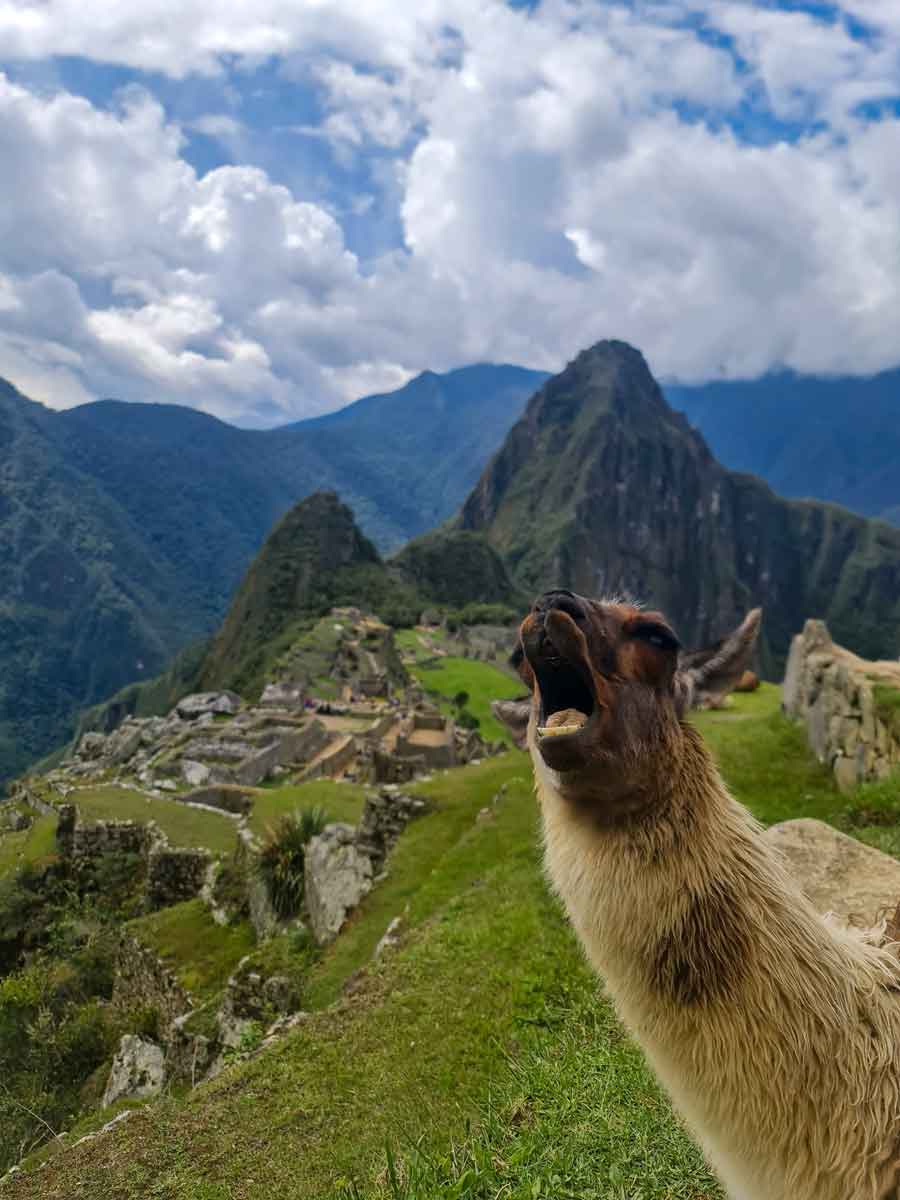 |  |
After riding a bus up the steep, zigzag road, your first view of the citadel is breathtaking. Machu Picchu isn't famous for its massive buildings — most structures are no more than two stories high — but for its perfect harmony with the mountain landscape. The site is beautifully proportioned to the contours of the ridge, and at times, it seems suspended in the mist like an apparition from the past.
Travelers who stay overnight at a hotel near Machu Picchu can enjoy the special atmosphere at night and at sunrise. Visits in the early morning and evening offer quieter moments and dramatic lighting over the ruins. Active visitors may enjoy climbing Huayna Picchu or hiking to Inti Punku (the Sun Gate), which provides outstanding panoramic views. These hikes each take about two hours and may be difficult to fit into a short day trip.
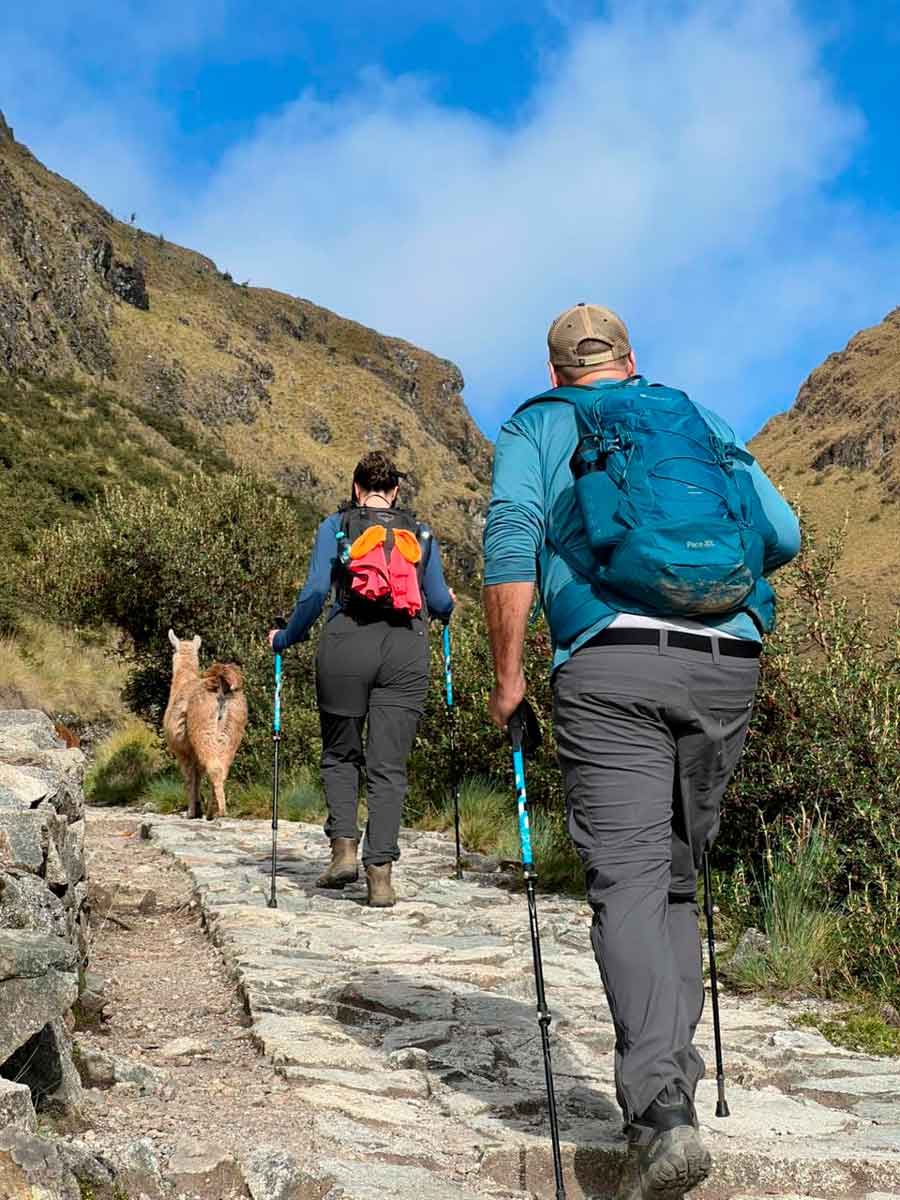
Another option is to take a trekking tour to Machu Picchu. On these routes, it is common to see llamas walking freely along the trails. On the Classic Inca Trail, you will often find llamas near archaeological sites and sections of the original path. On alternative routes, such as the Lares Trek, you can see llamas in their natural habitat and in local villages. The Salkantay Trek and the Inca Quarry Trek also offer opportunities to observe these animals, which are characteristic of the Peruvian Andes.
The hardest way to get to Machu Picchu, but probably the most rewarding, is to make the Inca Trail starting from Km 82 or km 88 of the railroad to Machu Picchu. It takes three to four days and should not be attempted by the unprepared or short-winded. The 4 days Inca trail passes through or near many Inca ruins which can rival Machu Picchu in some respects. The scenery is impressive. Live this amazing experience and make your Inca trail Book 2026 now!
The classic Inca route is famous for the variety of its topography and its ecosystems, but the varied selection of the Salkantay Trek is even more impressive.
It can be difficult to purchase Machu Picchu tickets through the Ministry of Culture's official booking system (tuboleto.cultura.pe). For this reason, we recommend buying your tickets through a trusted travel agency such as Boleto Peru or Machu Picchu Tickets. These agencies are recommended on platforms like TripAdvisor and TourRadar, and they are fully authorized to sell Machu Picchu entrance tickets.
Tickets for any circuit to Machu Picchu and Huayna Picchu are not sold at the access gate. Visitors are not allowed to enter Huayna Picchu without the corresponding ticket. Machu Picchu's maximum daily capacity is 4,600 visitors in the low season and 5,600 in the peak tourist season. Huayna Picchu has a daily limit of 200 visitors, divided into two groups according to their scheduled entry times. Machu Picchu Mountain allows 400 visitors per day, distributed across two time slots.
We recommend purchasing your 2026 Machu Picchu tickets in advance and checking availability online.
Maximum capacity of visitors per day:
On June 24, as part of the celebrations of Cusco is celebrated the "Inti Raymi 2026", in this emulates the most important celebration for the civilization of the Incas. During this day the Incas celebrated what we know today as the winter solstice, the day on which the Sun (the main god of the Inca civilization) reaches its greatest height. This ancestral festival begins in the Qoricancha or temple of sun and ends in the archaeological site of Sacsayhuaman. This celebration full of color, is one of the best things you can do during your trip to Machu Picchu, a city dedicated entirely to the Sun.
RELARED: THE INCA NAME FOR THEIR EMPIRE, TAHUANTINSUYU, MEANS WHAT?

 +51 84 217 551
 +51 997 434 941
 Av Tupac Amaru PP-10B, Santiago, Cusco, Peru
  info@incatrailmachu.com
 www.incatrailmachu.com


