
Four hours from Lima, where the dunes of the coastal desert fall directly into the Pacific, lies one of the most unique corners of Peru: Paracas. There is no jungle, no snowy mountains or Inca citadels here, but something different, colonies of sea lions, Humboldt penguins and thousands of guano birds living together with red sand beaches and winds that gave a whole pre-Columbian culture its name.
Paracas works like few destinations in Peru: it is easy to visit in a full day from Lima, but it is also the perfect starting point to continue the route to the south. Many travelers combine it with the Huacachina oasis, just over an hour away by car, or with a flight over the mysterious Nazca Lines, turning what seems like a simple day trip into one of the most complete parts of any itinerary through Peru.
In this guide we explain how to get to Paracas, what is the best time to visit it, what to expect from the boat tour to the Ballestas Islands, what to see inside the National Reserve and how to plan your route to Huacachina or Nazca without losing time between transfers.
Paracas is located in the province of Pisco, department of Ica, on the south coast of Peru. Despite feeling like a remote destination because of its desert landscape, it is surprisingly easy to reach from Lima, which makes it one of the most popular day trips (or one-night stops) in the country.
Paracas is about 270 kilometers south of Lima, a trip of about 4 hours on the Pan-American South highway. It is a road in good condition and without difficult sections, so the trip itself is comfortable, whether by bus, private transport or your own car. Most travelers leave Lima early in the morning to arrive in Paracas before noon and make the most of the rest of the day.
There are three main ways to get to Paracas from Lima:
Unlike other destinations in Peru where the rainy season completely rules the trip, Paracas is a desert destination that you can visit all year round, with dry weather and almost constant mild temperatures. Even so, there are differences between seasons that are worth knowing before planning your trip date.
The dates between June and September (dry season / southern winter) are seen as the best times to visit, thanks to calmer seas that make the boat tour to the Ballestas Islands easier and offer better visibility to see marine wildlife. These months also match the winter of the southern hemisphere, when Humboldt penguins are more active and visible in their colonies. It is also, within this season, when there is usually a higher chance of spotting humpback whales out at sea, especially towards the end of winter and early spring.
From December to March (summer) it offers sunnier and hotter days, ideal for those looking to enjoy the beaches and the coastal vibe of Paracas beyond the island tour. It is also high season, so it is a good idea to book lodging and tours a bit in advance, especially on long weekend dates or holidays.
At any time of the year, marine wildlife (sea lions and guano birds) is always present in the Ballestas Islands, so there is not really a "bad" season to visit Paracas; the choice depends more on whether you prefer good beach weather or the best conditions for the boat tour.
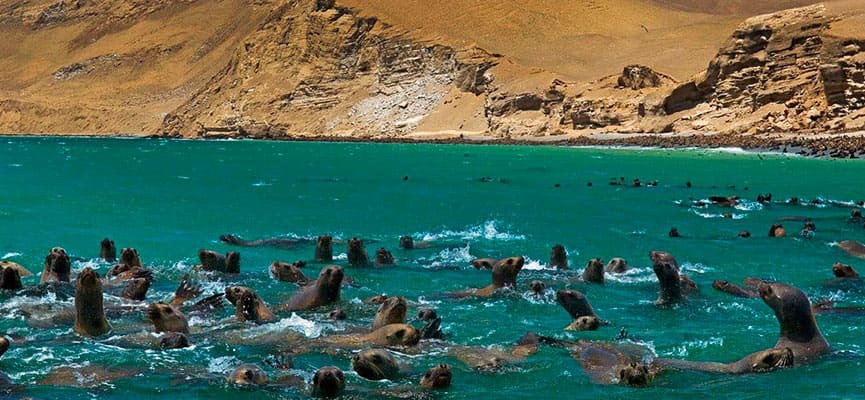
The tour to the Ballestas Islands is, without a doubt, the most popular activity in Paracas and the reason why most travelers include this destination in their trip. It is a boat ride of about 1.5 to 2 hours that goes around three rocky islands (known by many as the "Peruvian Galapagos") without getting off on them, since they are a protected area.
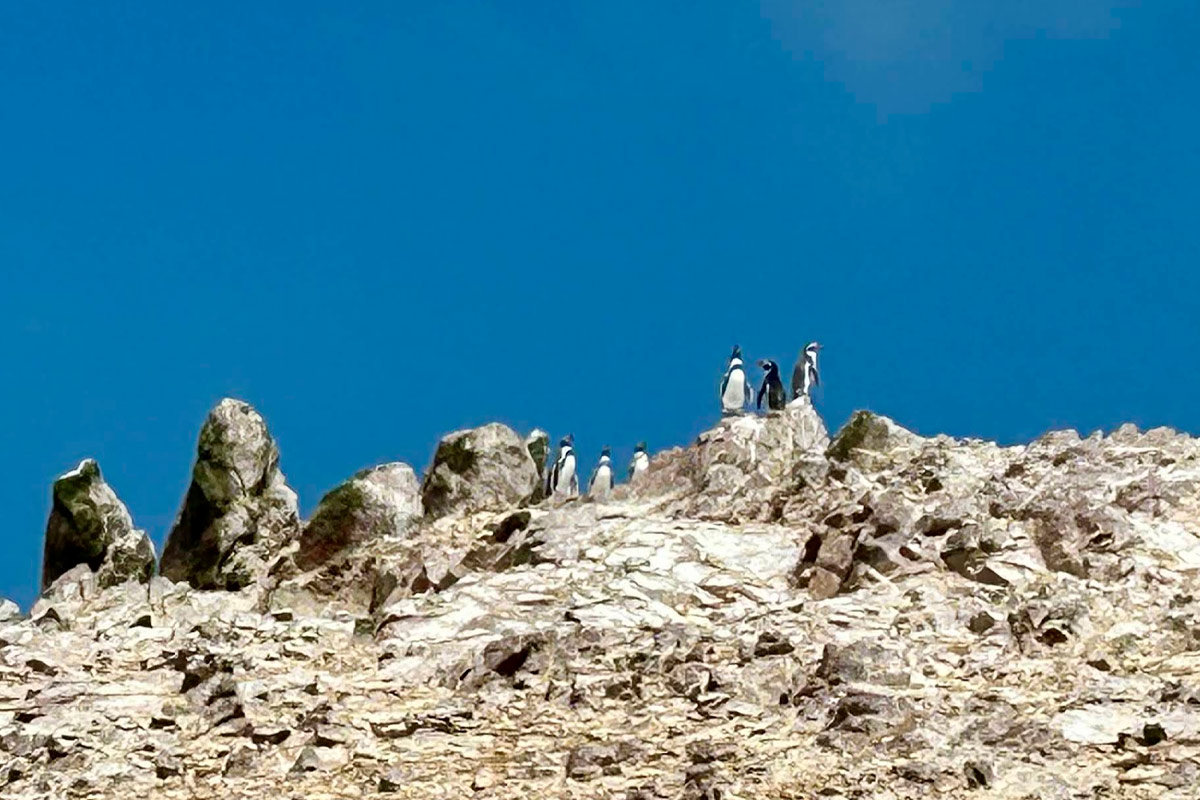
During the trip, it is possible to see up close large colonies of sea lions, Humboldt penguins, and thousands of guano birds (boobies, pelicans, cormorants), plus the famous Candelabra geoglyph, carved into the side of the Paracas peninsula and visible only from the sea. With some luck, you can also spot dolphins or sea turtles.
The boats only run in the morning, usually between 6:00 and 13:00, so it is key to book an early time: besides avoiding the wind that usually appears in the afternoon and makes the sea rough, morning tours usually have better light for photos and fewer crowds of boats.
The boat tour to the Ballestas Islands, leaving from the port of El Chaco in Paracas, costs between S/ 30 and S/ 45 per person, depending on the type of boat (faster boats or those with a roof usually have a slightly higher price). To this, you must add S/ 16 in required taxes, for the dock fee and the entrance to SERNANP. The full ride, including getting on and off, lasts about 2 hours.
There are different ways to book this tour depending on the type of trip you are planning:
It is recommended to book one day in advance, especially in high season (December–March) and during long holidays, since boat spots are limited by conservation rules. Booking through a trusted operator also ensures that safe distances with marine wildlife are respected, a strict rule inside the protected area.

Beyond the boat tour, the Paracas National Reserve deserves its own space in the itinerary. Created in 1975, it was the first protected natural area in Peru focused on marine-coastal ecosystems, and it covers 335,000 hectares, of which about two thirds correspond to the marine zone. Exploring it (whether on a tour, your own car, or bicycle/scooter) allows you to see a completely different side of Paracas: that of the desert that meets the ocean.
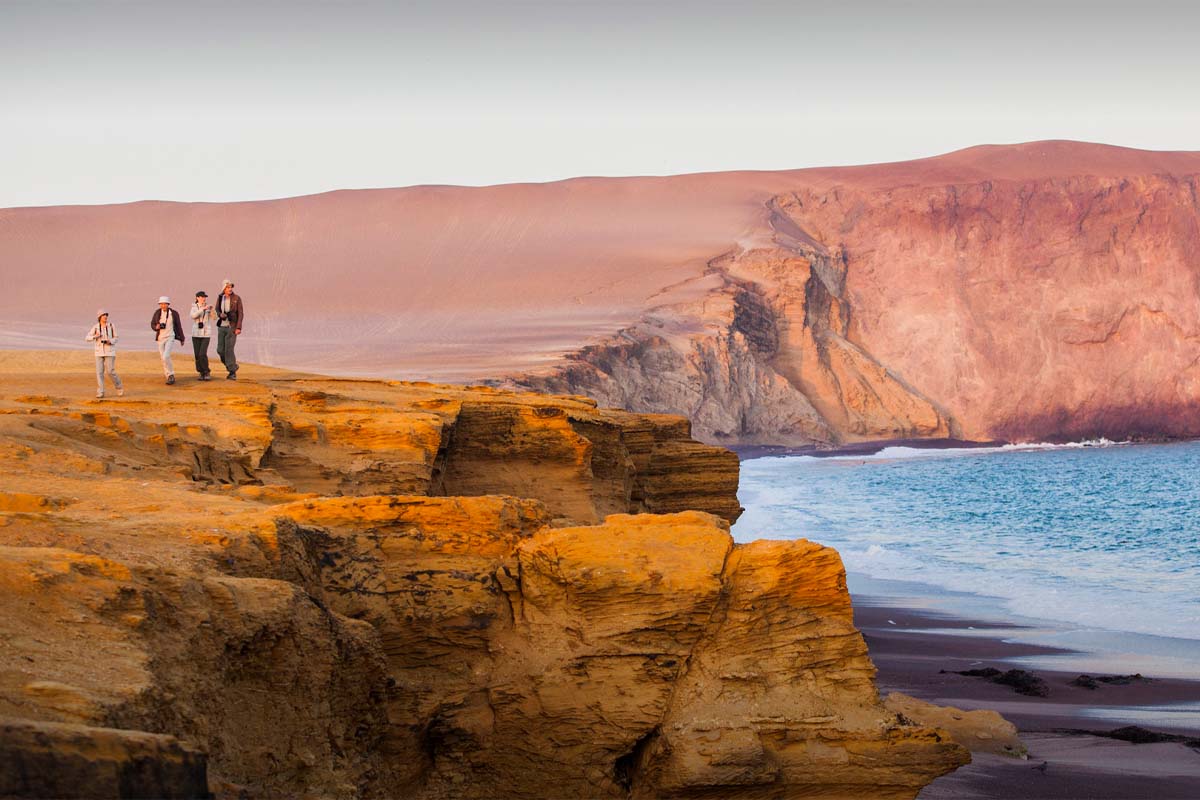
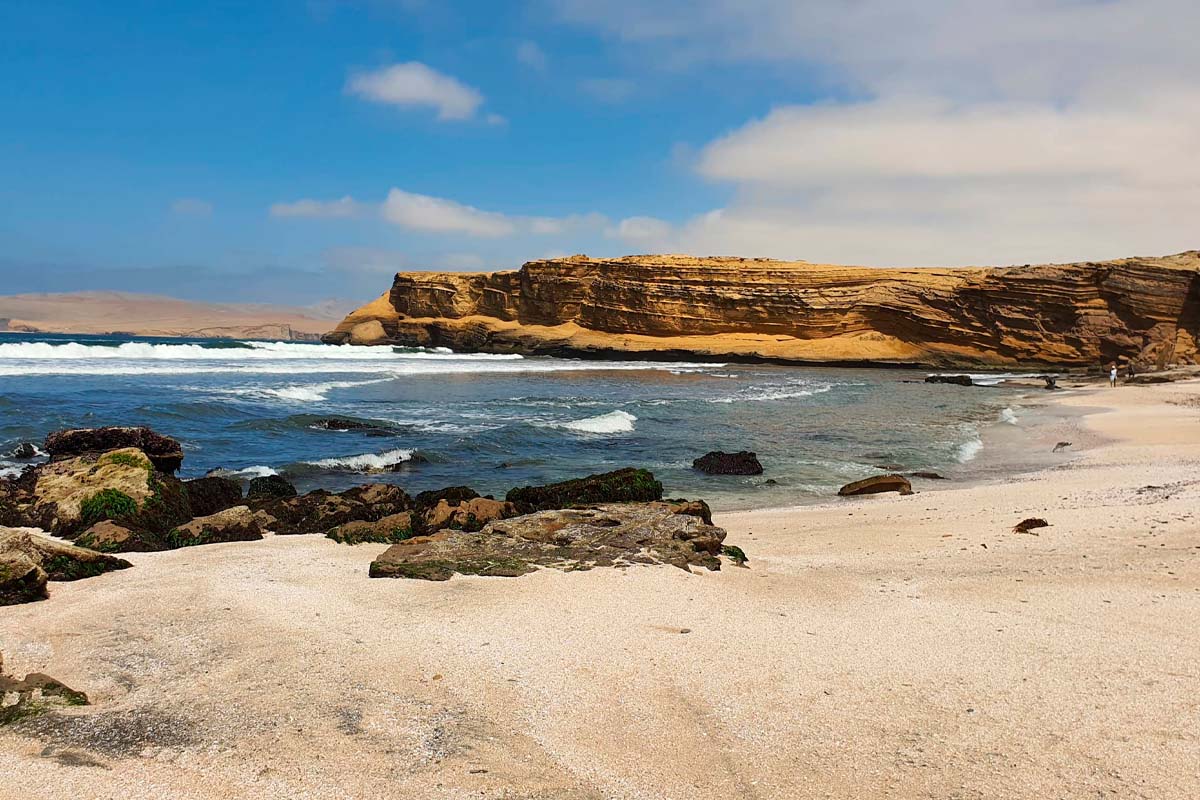
The tourist circuit inside the reserve connects several viewpoints on the coast, each with a different landscape. Red Beach stands out for its reddish sand, a result of the erosion of nearby volcanic rocks, and is one of the most photographed spots in Paracas. The Cathedral, a rock formation carved by the sea and the wind for centuries, offers one of the most dramatic views of the whole coast, although part of the original formation collapsed after an earthquake in 2007. Yumaque, with its fine sand and calmer waters, is usually the chosen stop to take a walk along the shore or simply look at the desert facing the sea.
Near the main entrance of the reserve is the Interpretation Center, with a square that shows iconography of the Paracas and Nazca cultures, as well as paths with informative totems that explain the geological and cultural history of the area. It is a good first stop before continuing to the viewpoints, since it helps to understand what you are seeing along the route. The Santo Domingo checkpoint, a little further ahead, serves a similar tourist orientation function.
The reserve protects a notable biodiversity for a desert environment: it houses around 1,500 species among resident and migratory birds, marine mammals, reptiles, and fish. Among the most representative species are sea lions, Humboldt penguins, and large colonies of guano birds that nest on the coastal cliffs. A large part of this wildlife depends directly on the Humboldt Current, which cools the waters off the Peruvian coast and makes them exceptionally rich in nutrients, supporting the entire food chain of the area.
Beyond the Ballestas Islands and the National Reserve, Paracas has a fairly varied offer of activities for a destination that many travelers only consider as a one-day stop.
Paracas can be visited as a full-day trip from Lima, but staying one night lets you live the experience more calmly and without the pressure of returning the same day.
In either of the two cases, the key to organizing the plan well is always the same: the boat tour goes first in the morning, and the National Reserve is explored after, since its hours (9:00–16:00) and the windier weather in the afternoon fit better in that order.
One of the great advantages of Paracas is its location: it is halfway between Lima and two other highly sought-after destinations in the south of the country. This allows you to continue the adventure without having to go back to Lima first.
The Huacachina oasis, famous for its giant dunes and sandboarding, is a little over an hour by car from Paracas. The most direct way is to take a taxi or private transport, which makes the trip without stops. It is also possible to take a bus from the Paracas terminal to the city of Ica and from there a short taxi to Huacachina, a cheaper option although with an extra step. Because it is close, it is common for travelers to combine both destinations in the same route: Ballestas Islands in the morning in Paracas, and an afternoon of dunes and sunset in Huacachina on the same day.
For those who want to go a step further, the Nazca Lines are a natural extension of this route. The scenic flights leave mainly from the Pisco airport, very close to Paracas, which allows you to organize the flight as an extra stop before or after continuing to Ica or Huacachina, without needing to travel to the city of Nazca. It is a good option for multi-day plans that seek to combine nature, desert, and the mysterious drawings in a single route through southern Peru.
After Paracas, the most natural route continues south, to the Huacachina oasis, where sandboarding and buggy rides through the dunes offer a perfect contrast with the Paracas coast. From there, many travelers add a flight over the Nazca Lines, one of the great archaeological mysteries of Peru, before continuing inland.
For those looking to combine this coastal route with the historical and mountain experience of the country, Cusco and the Inca Trail to Machu Picchu are the next great destination, completing a trip that goes from the desert and the sea to the Andes.
If you prefer that we organize this entire route for you, you can check our travel packages to Peru to find the option that best fits your itinerary.

 +51 84 217 551
 +51 997 434 941
 Av Tupac Amaru PP-10B, Santiago, Cusco, Peru
  info@incatrailmachu.com
 www.incatrailmachu.com


