
For those who visit the Inca citadel of Machu Picchu, the iconic image of the Inca city is always accompanied by the imposing presence of Huayna Picchu Mountain rising in the background. This peak not only serves as the most photographed backdrop of the archaeological site, but it also represents one of the most sought-after experiences for travelers who want an additional perspective and a complementary physical challenge to the main visit.
Climbing Huayna Picchu is an opportunity to explore the ingenious Inca construction from a high perspective and revealing the magnitude of the citadel. The summit offers panoramic views of the entire sanctuary, the Urubamba River canyon, and the surrounding peaks, providing a complete view of the environment in which the Incas built this wonder.
Are you considering adding this experience to your visit to Machu Picchu? This complete guide will provide all the necessary information: from how to get the tickets, the difficulty level, the schedules, the rules, and the crucial details to plan your climb up Huayna Picchu Mountain.
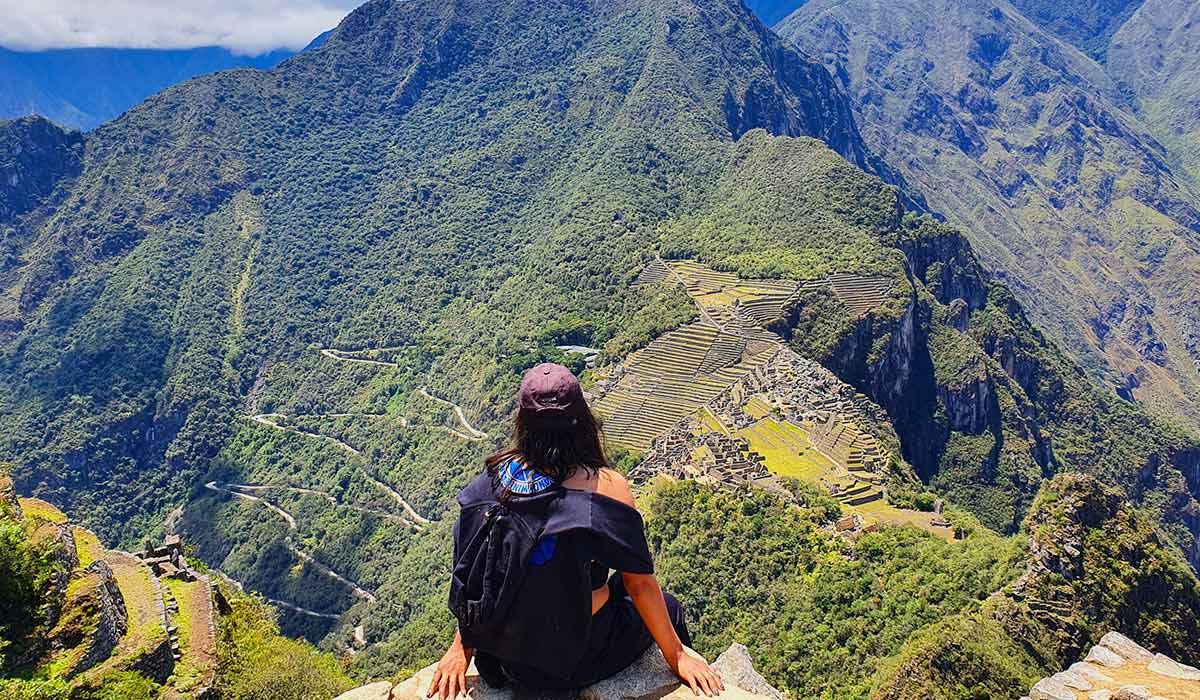
The entry system to Huayna Picchu Mountain is managed with a specific ticket and very limited spots. The official ticket is called Circuit 3A: Huayna Picchu Mountain.
The total availability for this mountain is limited to 350 spots per day. These 350 spots are divided into two main groups, which define the time window in which you must enter the checkpoint inside the citadel to begin the climb:
It is essential to select one of these groups at the time of purchase. To be able to meet these schedules, you must enter the citadel of Machu Picchu through the main gate early enough (at least one hour) to walk to the mountain's checkpoint, which is located in the northern sector of the citadel.
This is the most important point of the new regulation. The Circuit 3A: Huayna Picchu Mountain ticket gives you access to two things:
It is essential to understand that this ticket does NOT allow access to the upper part of Machu Picchu, meaning, the area of the Guardian's House and the upper terraces from where the classic postcard photo is taken. Circuit 3 is an exclusive tour of the lower area. If you want to get the classic photo (Circuit 1 or 2) and also climb Huayna Picchu, you will need to buy two separate entry tickets for different times.
The hike to Huayna Picchu is vertical and demanding, with narrow paths and uneven stone steps. The opportunities for incredible views of Machu Picchu from Huayna Picchu Mountain are endless. The equipment must prioritize safety, grip, and agility, allowing you to have your hands free at all times to keep your balance and use the safety cables in the most exposed sections. It is recommended to bring the following:
→ Hiking Footwear (Essential): This is the most important safety item. Footwear with an excellent grip rubber sole is required (boots or trekking shoes). The stone steps can be slippery all year, especially when they are wet.
→ Small Backpack (Daypack): The Machu Picchu rules prohibit entry with backpacks larger than 40x35x20 cm. A small backpack is needed where the essentials can fit, allowing you to move easily in the narrow passages.
→ Water in a Reusable Bottle: It is essential to stay hydrated. Single-use plastic bottles are not allowed.
→ Waterproof Clothing: The weather in Machu Picchu is unpredictable. Always bring a waterproof jacket or a rain poncho, even outside the rainy season (November to April).
→ Sun Protection and Repellent: The sun at high altitude is very strong, so a hat, sunglasses, and sunscreen are necessary. Insect repellent is also crucial due to the location in the jungle brow.
→ Camera and Battery: Bring your camera or phone with enough battery and memory space, preferably secured with a wrist strap.
→ Original Passport: It is mandatory to enter the Huayna Picchu checkpoint, where your ticket will be checked.
If you could not book a ticket for Huayna Picchu Mountain (which usually sells out 4 to 6 months in advance), the main climbing alternative with a combined ticket is Machu Picchu Mountain. This is the highest peak that gives the citadel its name and is located on the opposite side of Huayna Picchu.
The ticket for this route is Circuit 1A: Machu Picchu Mountain. This hike is considerably longer (approx. 3-4 hours round trip) and reaches a higher altitude (more than 3,000 masl), but the path is wider and less steep, so it is not considered as technically demanding or dizzying as Huayna Picchu. The reward is a more distant and wider panoramic view of the citadel and the entire Urubamba River canyon.
This ticket has a larger daily availability (generally 400 spots) and, although it also sells out, it is possible to find spaces 2 or 3 months in advance. However, during the high season (May to September), it is recommended to book all tickets as far in advance as possible.
If both mountain tickets (Huayna Picchu and Machu Picchu Mountain) are sold out, the best alternative to get a high panoramic view is Circuit 1 (Panoramic Route), which includes access to the Guardian's House area and the upper terraces from where the classic postcard photo is taken.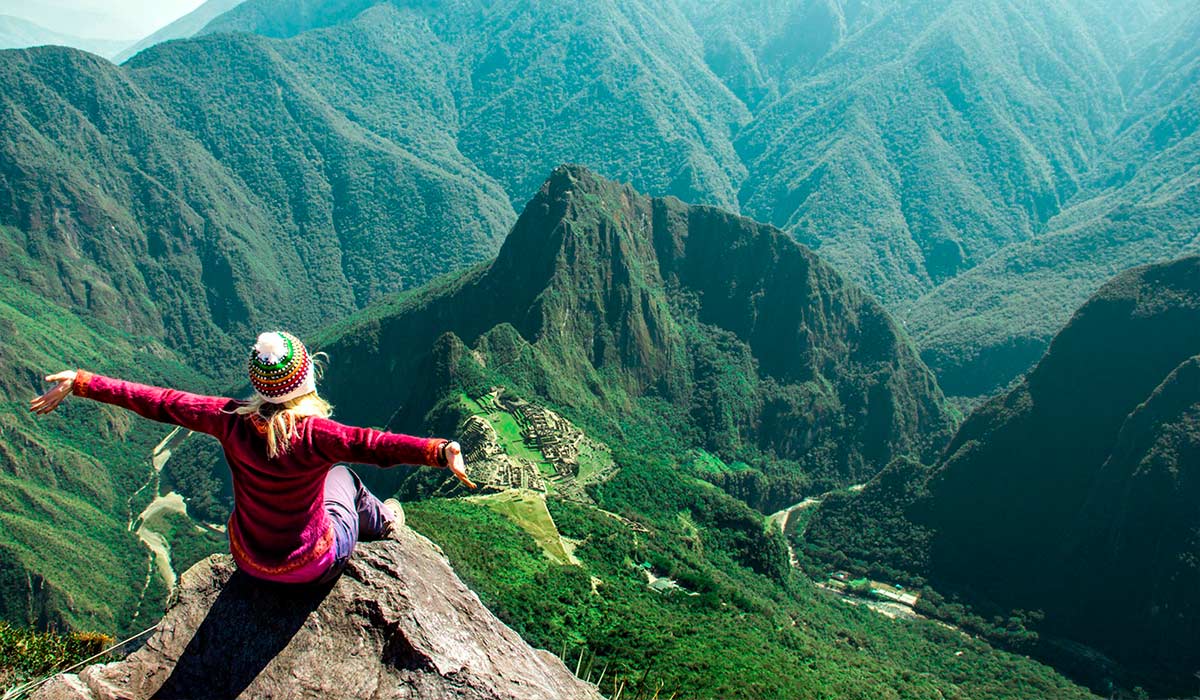
The Temple of the Moon is one of the most notable archaeological structures located on Huayna Picchu mountain. It is located on the north face of the mountain, built inside a natural cave. Its main feature is the high-quality Inca masonry, with finely carved and assembled stone blocks that fit perfectly into the cave rock, a level of detail comparable to that of the main temples of the citadel.
It is essential to inform visitors that, currently, the trail that leads to the Temple of the Moon is closed to the public by order of the Ministry of Culture. This detour, which corresponds to a longer circuit on the lower part of the mountain, is not open for visitors.
For the 2026 season, there is no official announcement about the reopening of this specific route. Therefore, travelers who buy the Circuit 3A: Huayna Picchu Mountain ticket must assume that their visit will be limited exclusively to the climb to the summit of the mountain and the later tour of the lower part of the citadel (Circuit 3), without including access to the Temple of the Moon.
The hike to Huayna Picchu Mountain is one of the most demanding experiences within the Sanctuary of Machu Picchu. Below, the route is detailed.
The trail begins at a checkpoint located in the northern sector of the citadel. The ascent is almost immediate and consists of a constant climb up Inca stone steps, which are often narrow and very steep. It is estimated that there are about 750 steps to the top.
Several sections of the path are exposed and run alongside vertical cliffs. For greater safety, these stretches are equipped with ropes and steel cables fixed to the rock. Near the summit, visitors must pass through a narrow rock tunnel before reaching the top. During the rainy season (November to April), the stones can become slippery, which requires extra caution.
The summit is a small space with several Inca platforms and terraces that worked as lookout posts. From this point, you get the most famous and vertical panoramic view of the citadel of Machu Picchu and the Urubamba River canyon that surrounds it.
The descent is done on the same path as the ascent, requiring considerable care when going down the steep steps.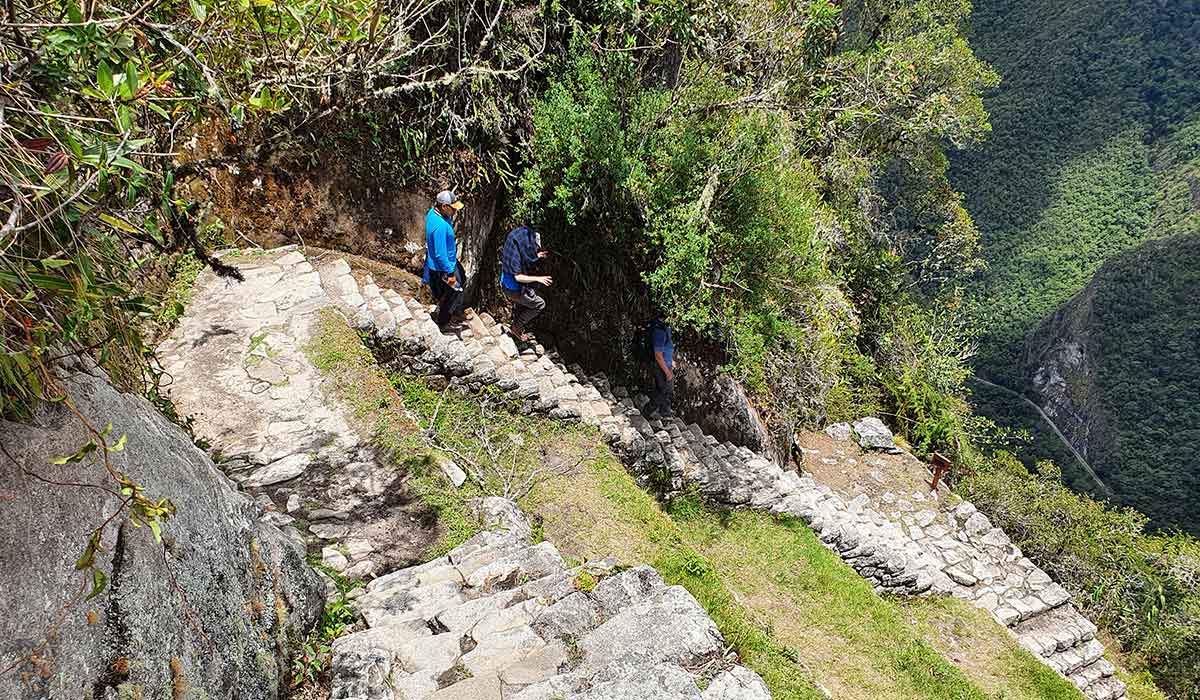
During your visit to Machu Picchu, you can choose between a variety of tours. These range from a full-day excursion to Inca Trail through the Sacred Valley of the Incas or Machu Picchu tours from Cusco. The multi-day tours can be combined with climbing of the Huayna Picchu mountain or the Rainbow Mountain, a trek through the Andes villages with living traditions. If the classic trail is sold out, the best hiking option is the short Inca Trail, this trail is part of the Inca path. There are also alternative treks to Machu Picchu, such as Salkantay Trek, Lares trek, Inca Quarry or Huchuyqosqo Trek. There are no limits to your thirst for adventure to Machu Picchu!

 +51 84 217 551
 +51 997 434 941
 Av Tupac Amaru PP-10B, Santiago, Cusco, Peru
  info@incatrailmachu.com
 www.incatrailmachu.com


