
Although there are thousands of kilometers of "Inca Trails" spread across the whole territory, world interest focuses on the 4 day Classic Inca Trail, which starts at kilometer 82 of the railway and ends at the Machu Picchu citadel. This route is considered the jewel of Peru treks, as it combines diverse ecosystems with ancient Inca buildings.
Taking this Peruvian Highland trek is following a pilgrimage route originally designed to access the sacred llaqta of Pachacútec. Along its 35 km, the path travels through the Cusichaca river valley, climbs to the Warmihuañusca Pass and descends through the Pacaymayo ravine, allowing you to explore archaeological sites like Sayacmarca, Phuyupatamarca and Winayhuayna.
A key factor for the success of this adventure is the weather factor, since, during the journey, you will pass through different altitude levels, from 2,400 m to 4,200 m at the highest point. This directly influences the climate of the Inca Trail, which changes drastically depending on the elevation and the season.
Climate differences according to the route
It is essential to understand that the weather does not only depend on the time of year, but also on the specific route you decide to take. Conditions change significantly between the two main options:
- 4 day Inca Trail: This expedition starts in Piscacucho (2,800 m) and reaches its critical point at the Warmiwañusca pass (4,200 m). Due to this big difference in altitude, you will cross different ecological zones in a single day. Prepare for extreme weather changes: from intense cold and biting winds in the high areas, to a much warmer and more humid climate when descending towards the jungle brow.
- 2 day Inca Trail: Starting in Chachabamba (2,250 m) and having its highest point at Intipunku (2,750 m), this route stays in a lower elevation zone. Generally, the climate here is mostly warm. During the dry season, the sun is intense, while in the rainy season the environment is usually cloudy with more persistent rain due to its closeness to the cloud forest.
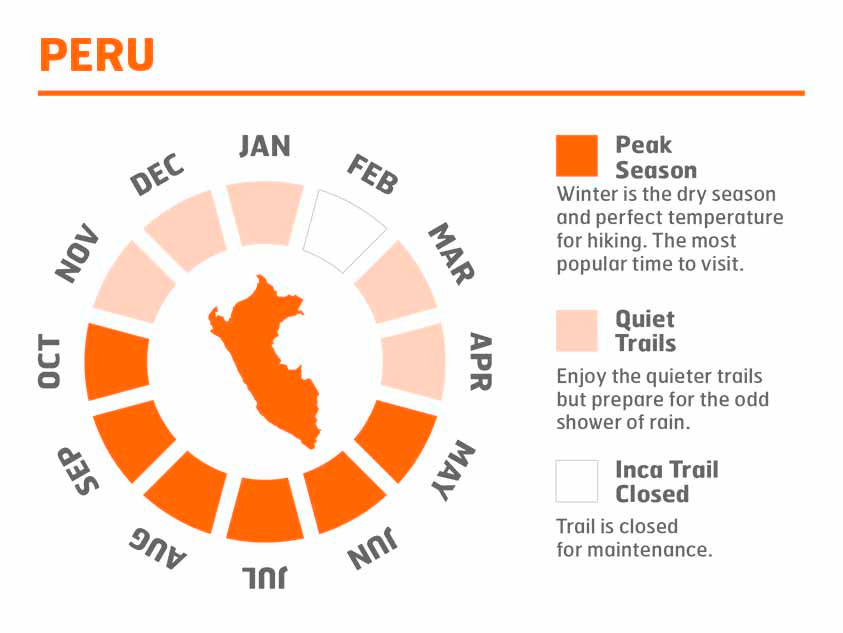
Important note: Regardless of the route, it is impossible to book the Inca Trail during the month of February. The Ministry of Culture closes access during this period to perform maintenance, conservation, and improvement work on the path.
The weather on the Inca Trail month by month
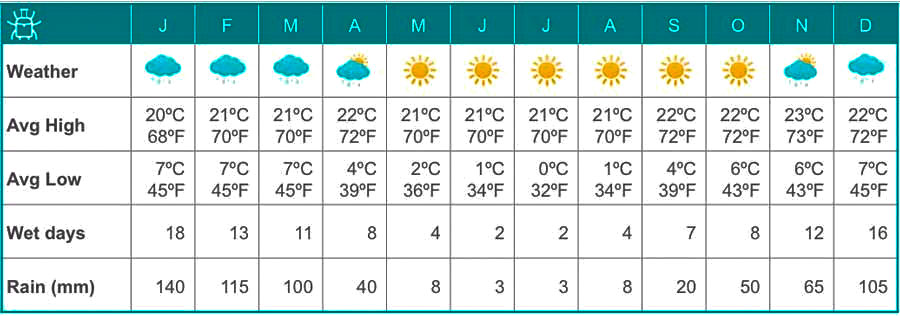
The weather in the Andes mountains is highly variable due to geography and altitude. For effective planning, it is necessary to distinguish between the rainy season and the dry season, as both affect walking speed and the necessary gear; therefore, knowing their cycles will allow you to stay one step ahead. Here we detail what to expect at each stage of the year:
The transition and green trails (January - April)
- January and March: Rainfall is constant, mainly during the afternoon and night. Also, humidity levels are high, which can make the original stone steps slippery; what's more, the risk of mist is high, which reduces the visibility of the archaeological sites.
- April: This is one of the favorite months for photographers. The rainy season gradually leaves, leaving the air clean and the days warm. Rains are sporadic and the landscape is at its best after the watering of the previous months.
Travel suggestion: If you hike the trail in April, prepare to see an explosion of wild orchids along the jungle brow; it is their peak blooming time.
The Golden Season: Clear skies (May - September)
- May - September: These are the months of greatest atmospheric stability. The chance of rain is minimal, guaranteeing 100% visibility of the landscapes and snowy peaks. Without a doubt, the best time for trekking through the Peruvian highlands.
→ Day: Cool and sunny, ideal for walking without getting overheated.
→ Night: Prepare for intense cold. In high campsites like Ayapata, temperatures can drop below 0°C.
Note: During these months, solar radiation is very high in the heights. The use of broad-spectrum sunscreen is mandatory, even if you feel the cold wind.
The return of the clouds (October - December)
- October and November (Transition and Humidity): The weather becomes warmer but with the return of sporadic rains. Cloudiness begins to increase gradually toward the end of November.
- December (Start of Rains): Mostly cloudy days with intermittent rainfall. Night temperatures are less extreme than in the winter months (June/July), but waterproof gear becomes essential.
Summary of Temperatures and Conditions
| Months | Predominant Climate | Visibility | Rain Level |
| Jan - Mar | Humid / Mild | Moderate | High |
| Apr - May | Fresh / Spring-like | High | Low |
| Jun - Aug | Dry / Cold (night) | Excellent | Almost zero |
| Sep - Oct | Mild / Dry | High | Moderate |
| Nov - Dec | Rainy / Warm | Variable | Increasing |
Expert Tip: Regardless of the month you choose, the weather in the mountains is changing. The golden rule is to dress in layers (a breathable base, a warm layer, and a good quality waterproof jacket).
Inca Trail weather by month |
| Parameter | Max. Temperature (°C) | Max. Temperature (°C) | Sunny days/ day | Rainy days/ month |
| January | 19 | 9 | 5 | 18 |
| February | 20 | 10 | 4 | 13 |
| March | 21 | 8 | 6 | 11 |
| April | 21 | 6 | 7 | 8 |
| May | 21 | 3 | 7 | 3 |
| June | 21 | 2 | 8 | 2 |
| July | 21 | 1 | 8 | 2 |
| August | 21 | 3 | 7 | 2 |
| September | 21 | 5 | 6 | 7 |
| October | 21 | 6 | 6 | 8 |
| November | 21 | 7 | 6 | 12 |
| December | 21 | 8 | 5 | 16 |
The current weather in the Inca Trail Peru can also be found at: Inca Trail weather by month
RELATED:MACHU PICCHU WEATHER BY MONTH
Best Month For Inca Trail: Overview
January
Rainy season
Up to 160 mm of precipitation | February
Rainy season
Up to 133 mm of precipitation | March
End of the rainy season
up to 108 mm of precipitation
|
April Best travel time
Optimal climate to the Inca Trail | May
Best travel time
Optimal climate
to the Inca Trail
| June
Best travel time
Optimal climate
to the Inca Trail
|
July
Best travel time
Optimal climate
to the Inca Trail
| August
Best travel time
Optimal climate
to the Inca trail | September
Best travel time
Optimal climate
to the Inca Trail |
October
Good travel time
mostly optimal climate
to the Inca Trail
| November
Beginning of the rainy season
increasingly wetter
| December
Rainy season
up to 120 mm of precipitation
|
What is the best time to go to the Inca Trail?
The choice of date depends directly on the balance the traveler seeks between weather stability, number of people, and the condition of the ground. In the Historical Sanctuary, there are two clearly defined climate periods:
Dry Season (April to October)
It is considered the best time to hike the Inca Trail. During these months, the chance of rain is minimal, which guarantees firm paths and optimal visibility of the archaeological complexes and the Andean geography.
- Advantages: Easy travel on mountain passes and dry campsites. Mornings are sunny, which is good for landscape photography.
- Disadvantages: It is the season with the highest demand. Permits run out well in advance and archaeological sites have a higher concentration of visitors.
- Climate: Warm days with temperatures up to 19 °C, but with a sharp temperature drop at night, reaching 0 °C or less in high areas.
Rainy Season (November to March)
Although the trail remains open (except in February), the rainfall makes access and logistics at the campsites difficult.
- Advantages: Fewer tourists and landscapes with much denser and greener vegetation. It is a more solitary and mystical experience.
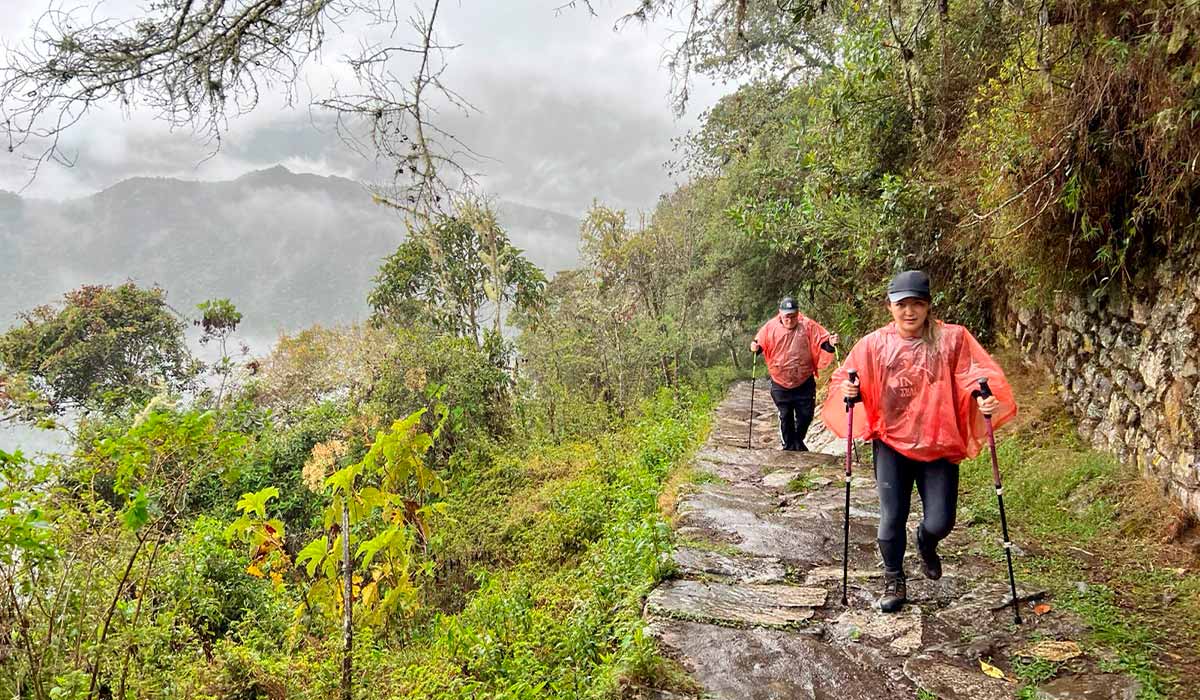
- Disadvantages: The paths can become slippery and the mist can completely cover the view of Machu Picchu when arriving at the Inti Punku. The relative humidity of the air rises up to 91%.
- Climate: Milder temperatures at night, but with rainfall ranging between 1,571 and 2,381 millimeters per year, which requires high-quality waterproof gear.
How to Choose the Best Inca Trail Tours
If the Inca Trail is sold out, don´t worry, we recommend you take the alternative treks to Machu Picchu or you can take the Machu Picchu tours by train, in these services are included the Machu Picchu tickets early.

Best Tours in Peru
Peru offers fascinating experiences that reveal natural landscapes, historical monuments, and living cultures, captivating those who seek adventure and discovery in every corner of its territory. Get to know the most outstanding tours:
Other trips in Peru
If you want to visit Machu Picchu, we recommend you to book your Machu Picchu Entrance Tickets in advance, so you will enjoy your Vacation in Machu Picchu without any problem.

 +51 84 217 551
 +51 997 434 941
 Av Tupac Amaru PP-10B, Santiago, Cusco, Peru
  info@incatrailmachu.com
 www.incatrailmachu.com


