
The Manu National Park is a paradise blessed with one of the greatest biodiversities on the planet, home to native communities that keep their ancient traditions and live in harmony with nature. This extraordinary destination, located in the Peruvian Amazon, combines impressive landscapes and exotic wildlife, which makes it an ideal choice for travelers looking for nature, wildlife photography, and experiential tourism during their visit to Cusco.
Its territory forms one of the largest biological protection zones on the planet. Wanted in the past by rubber gatherers and respected by the indigenous people who live inside it, the Manu National Park is a huge natural laboratory for researchers and a sanctuary for those looking to uncover the mysteries of the jungle.
Before you go: most tours to Manu start from Cusco and last between 4 and 9 days, depending on how deep into the reserve you want to explore. Access to most of the park requires entering with an authorized tour operator; independent access to the Reserved zones is not allowed.
Later on, you will find everything you need to plan your visit with confidence: the story of how this territory was protected and why it is important; a general description of its extraordinary biodiversity, from the canopy of the cloud forest to the Amazonian oxbow lakes; the weather patterns that shape each season and determine the best time to go; practical information about the visit, including access zones, allowed activities, and what to expect from a guided tour; and a series of recommendations to make the most of your time in one of the most remote and rewarding places on the planet.
The Manu National Park was created in 1973 and covers 1,716,295 hectares, a number that refers only to the national park. The Manu Biosphere Reserve, which also includes nearby communal reserves, spreads over more than 2.2 million hectares in total.
The park protects an exceptional diversity of ecosystems, from puna grasslands above 4,000 meters to wet lowlands of the Amazon. Likewise, this place is divided into three zones: the Core Zone, an untouched territory closed to the public; the Reserved Zone, a buffer area open to controlled tourism and scientific research; and the Cultural Zone, public lands where stable human communities live.
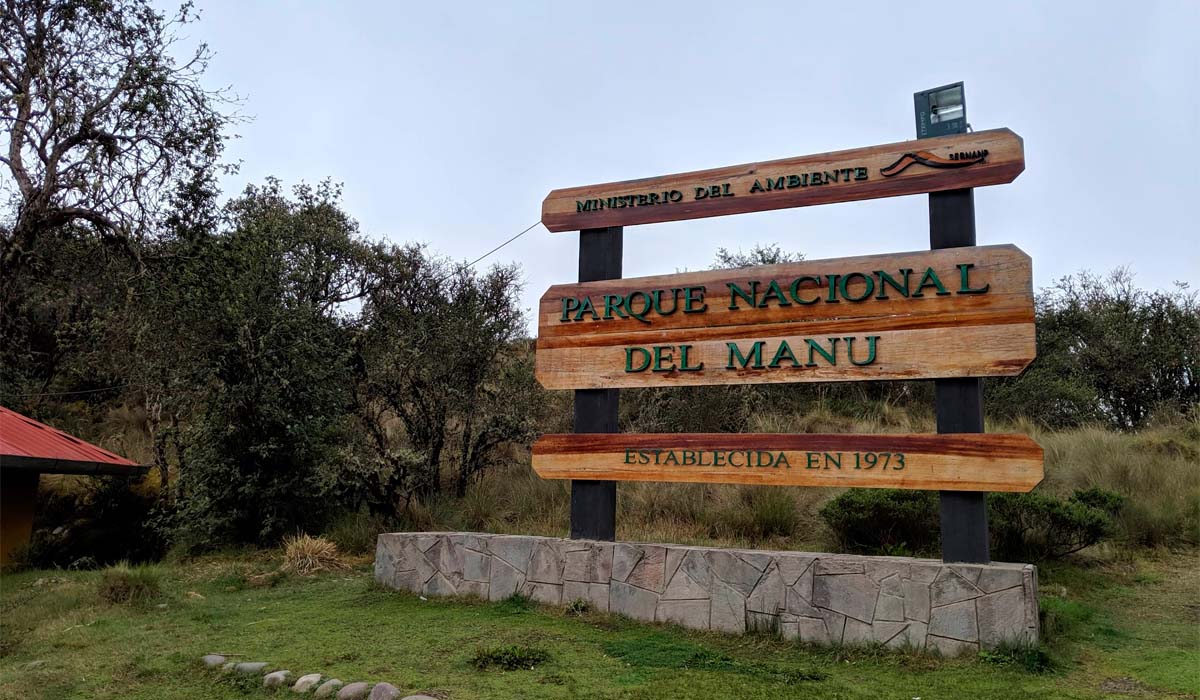
The Manu National Park is located in the provinces of Paucartambo (Cusco) and Manu (Madre de Dios), covering an area of 1,716,295.22 hectares. Its creation answers a double purpose: to protect a representative sample of the biological megadiversity of southeastern Peru (from the lowland jungle to the Andes) and to promote tourism that is compatible with the ecological and cultural criteria of the territory.
The park also seeks to facilitate scientific research, environmental education, and the preservation of archaeological heritage, contributing to the recognition of cultural diversity and the self-determination of the indigenous peoples who live within its borders.
Its vast extension covers different ecosystems: freezing punas above 4,000 meters, wooded mountains crossed by gorges and valleys, high mountain cloud forests, and, in the lowest part, the Amazon plain. This altitude gradient (from 350 to 4,200 meters above sea level) is exactly what makes Manu one of the most biologically complex territories on the planet. A large hydrographic system connects all these ecosystems, guaranteeing the presence of habitats with very little human intervention.
The Manu National Park borders the Territorial Reserve of the Kugapakori and Nahua ethnic groups, the Megantoni National Sanctuary, and the Amarakaeri Communal Reserve.
Since 1977, the Manu National Park holds the category of Biosphere Reserve, an honor given by UNESCO to recognize its role as the core zone of a much larger conservation area. Ten years later, in 1987, it was declared a Natural World Heritage Site, one of the highest honors that exists in conservation.
Furthermore, UNESCO listed it under two natural criteria: criteria (ix), for being an outstanding example of ongoing ecological and evolutionary processes in tropical forests, and criteria (x), for sheltering one of the most important habitats in the world for the conservation of biodiversity. In practice, this means that Manu not only protects species, but it also preserves the processes that create them.
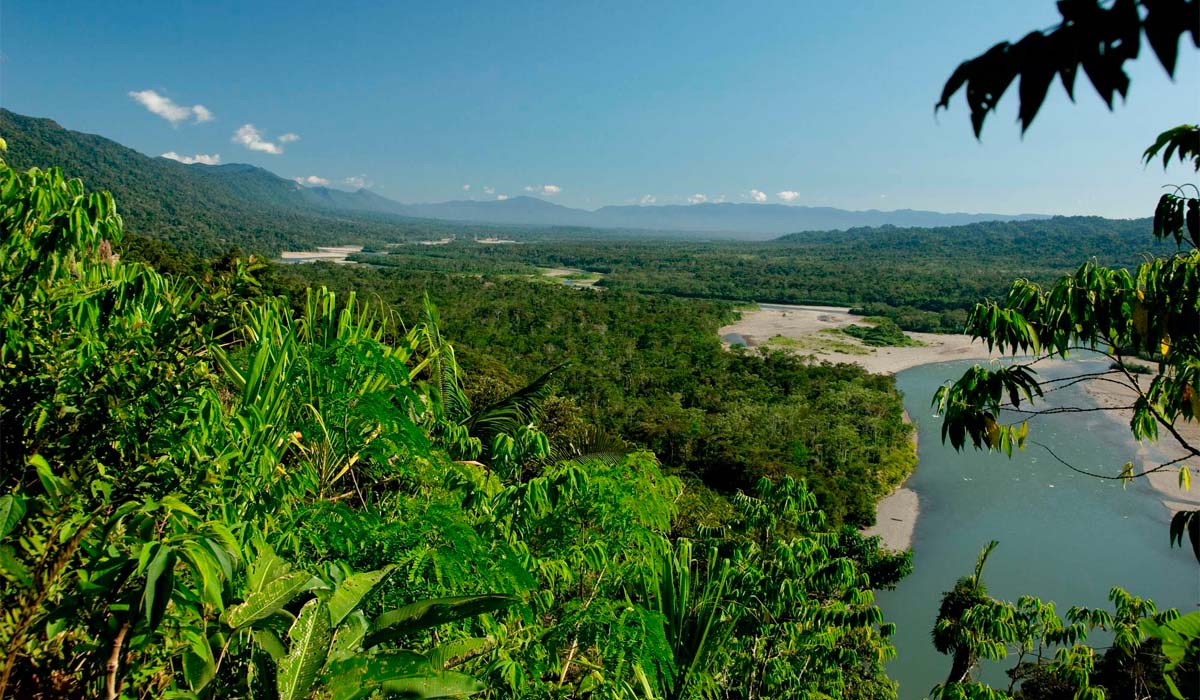
A large part of the Manu National Park is, first of all, indigenous territory. The Yora, Mashco-Piro, Matsiguenka, Harakmbut, Wachipaeri, and Yine people live among the forests and rivers of these jungles, with very different levels of contact with the outside world.
Specifically, the native communities of Tayakome and Yomibato, officially recognized inside the protected area and located in the upper part of the Manu River, keep a controlled connection with tourism: within the Cultural Zone, some guided tours allow a respectful approach to these communities, under strict rules set by the communities themselves and by SERNANP.
On the other hand, in the northwest part of the park, next to and inside the Core Zone, there is an unknown number of populations in voluntary isolation, including part of the Mashco-Piro people. These groups have chosen not to make contact with the outside world and their land is absolutely untouchable: access is forbidden and any unauthorized attempt to get close is both a risk for visitors and a real threat for these communities, which lack immunity to common diseases. Their existence is, in itself, one of the most powerful reasons why Manu deserves the protection it has.
Finally, all this cultural wealth (communities you can visit, people in initial contact, and groups in isolation) lives together with an archaeological heritage yet to be fully discovered, which makes Manu a territory as complex for science as for the traveler who arrives ready to understand it. In the following sections, the biodiversity that supports all this takes the main stage.
The Manu National Park is home to one of the thickest wildlife concentrations on the planet. Around 160 species of mammals, more than 1,000 species of birds, about 140 species of amphibians, 50 of snakes, 40 of lizards, 6 of turtles, 3 of caimans, and 210 of fish have been recorded. These numbers, in many groups, represent between 10% and 15% of the known world total. Among the biodiversity that we can find in the Manu Park, we have:
Among the large mammals are:
|
|
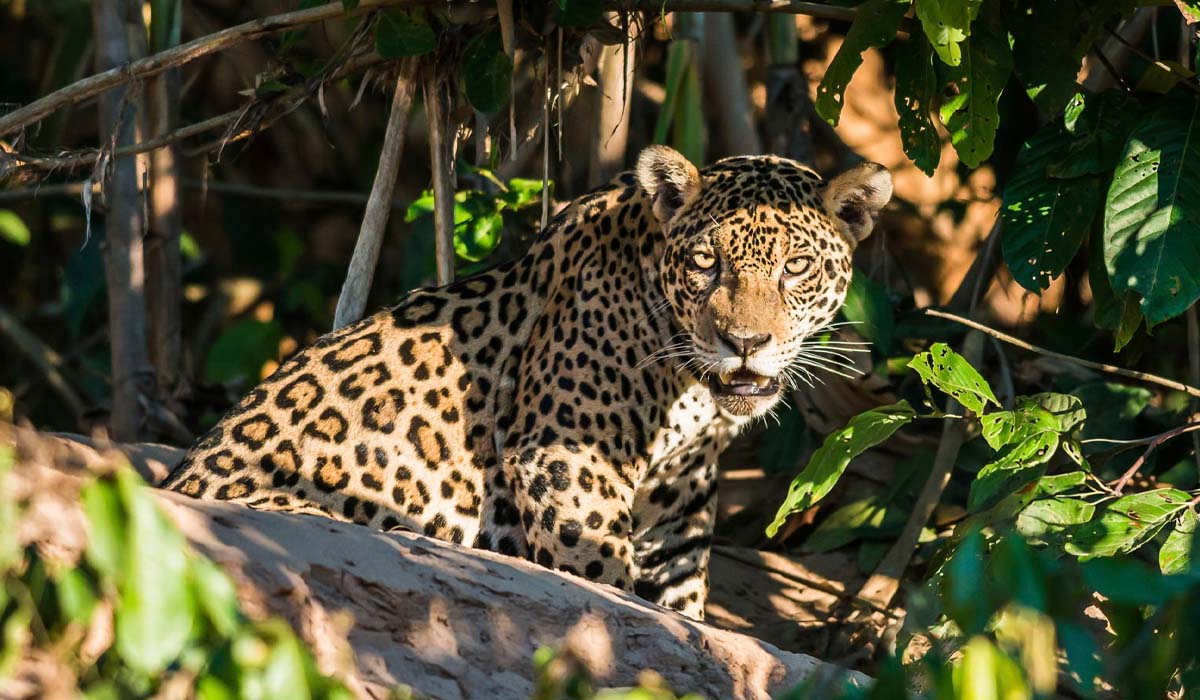
For the traveler, the most wanted sightings are those of the jaguar (visible especially on the shores of the Manu River at sunrise, although it always requires patience and luck), the river wolf in the cochas or calm water lagoons, and the spectacled bear (Tremarctos ornatus) in the mountain forest areas. The chances of a sighting improve a lot with specialized guides and stays of at least four or five days.
The Manu National Park holds the world record for the highest diversity of birds in a national park, with more than 1,000 documented species according to the Guinness World Records, a number that beats the total number of species recorded in the United States and Canada combined. In 1982, researchers Ted Parker and Scott Robinson set the record at the Cocha Cashu biological station of 331 species seen in a single day, a record that is still today a world reference in the field of bird watching.
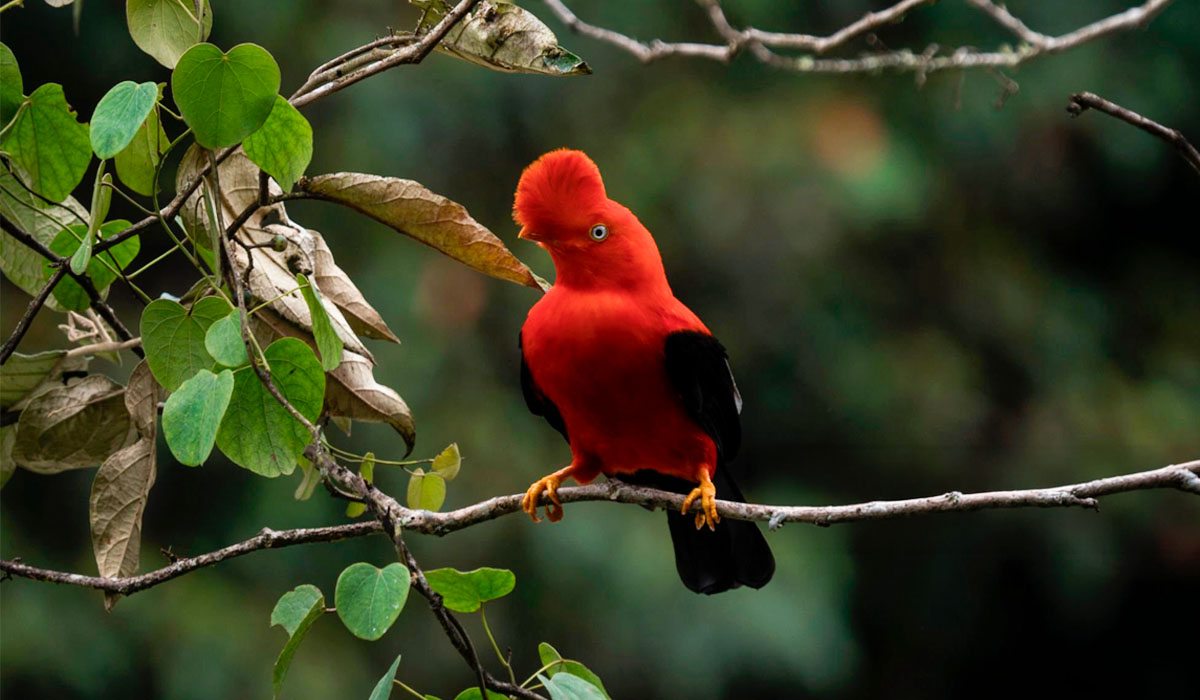
Among the most iconic species for visitors are the Andean cock-of-the-rock (Rupicola peruviana), the national bird of Peru, visible in the leks of the cloud forest; the macaws and parrots that go in large numbers to the clay licks of the Amazon plain; and the harpy eagle (Harpia harpyja), one of the largest birds of prey in the world, which finds in Manu one of its last stable shelters.
The number of insects in the Manu is so high that it is hard to count exactly: it is estimated that in a single hectare of jungle, more than 40,000 individual specimens of different species can be found, most of them beetles. As for documented groups, more than 1,300 species of butterflies have been recorded (double that of the whole United States), 136 of dragonflies, at least 300 of ants (with more than 40 species found in a single tree), and more than 650 of beetles.
Likewise, the flora is equally exceptional: records identify at least 162 families, 1,191 genera, and 4,385 plant species, with up to 250 different tree varieties in a single hectare. The palm swamps, dominated by the aguaje (Mauritia flexuosa) and huasai (Euterpe precatoria) palms, make up one of the most typical ecosystems of the permanently flooded areas. Among the most representative forest species, the following stand out:
Consequently, all this biodiversity is not static: the Manu is, above all, a living system where ecological and evolutionary processes keep developing practically without human interference. That is exactly what makes it a natural laboratory with no equal, and a destination that, for those who arrive prepared to observe, gives back much more than it promises.
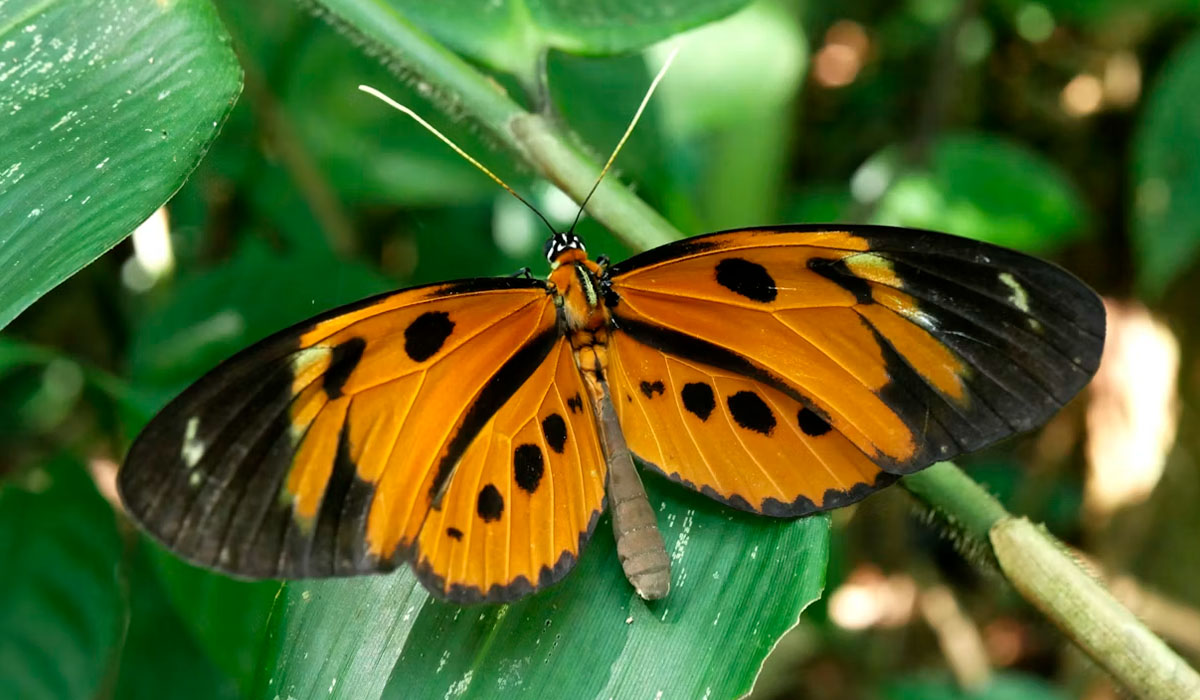
The Manu National Park combines two very different weather worlds: the cold Andean puna and the warm and humid low jungle. This is key because the access road normally goes through the Andean zone first, above 3,500 m, before going down to the tropical jungle. In a few hours, the traveler goes from a dry mountain cold (with temperatures that can get close to 8 °C on annual average) to a humid tropical heat, with average temperatures of 25.6 °C in the Peruvian Amazon.
Therefore, it is worth clarifying that, due to the very high humidity, those 25°C feel considerably hotter than the number suggests, so it is a good idea to dress in layers: something warm for the high part and light, breathable clothes for the jungle.
The general recommendation is to travel between May and October, during the dry season. Not only is there less rain and the roads are in better condition, but it is also the best time for wildlife watching: between June and August, animals gather at the colpas (clay licks) and on the riverbanks, which greatly increases the chances of seeing macaws, monkeys, tapirs and other species.
Finally, as for the rains, rainfall varies depending on the area of the park: between 1,500 and 2,000 mm per year in the southern sector (the highest), from 3,000 to 3,500 mm in the central sector, and more than 8,000 mm in the northwest, the rainiest area of the park.
| Dry season (May–October) | Rainy season (November–April) | |
|---|---|---|
| Weather | Clearer days, less rain | Frequent and intense rain, high humidity |
| Wildlife viewing | Optimal, especially June–August (clay licks and riverbanks) | More difficult, animals scattered in the thick forest |
| Roads and access | Better condition, lower risk of blockages | Roads can become difficult or impassable |
| Rivers | Lower levels, more predictable navigation | High rivers, navigation can get complicated |
| Recommendation | Ideal for most travelers | Only recommended for those who seek fewer tourists and do not prioritize wildlife viewing |
The Manu National Park is made up of different management zones, and it is important for the traveler to know which ones are open to tourism and which ones are not. As mentioned before, the Reserved Zone is the one that allows controlled tourism and is where all the tourist activity of the park is focused. The Core Zone, on the other hand, is untouchable: it is reserved only for scientific research and the protection of isolated native people, and does not allow visitors.
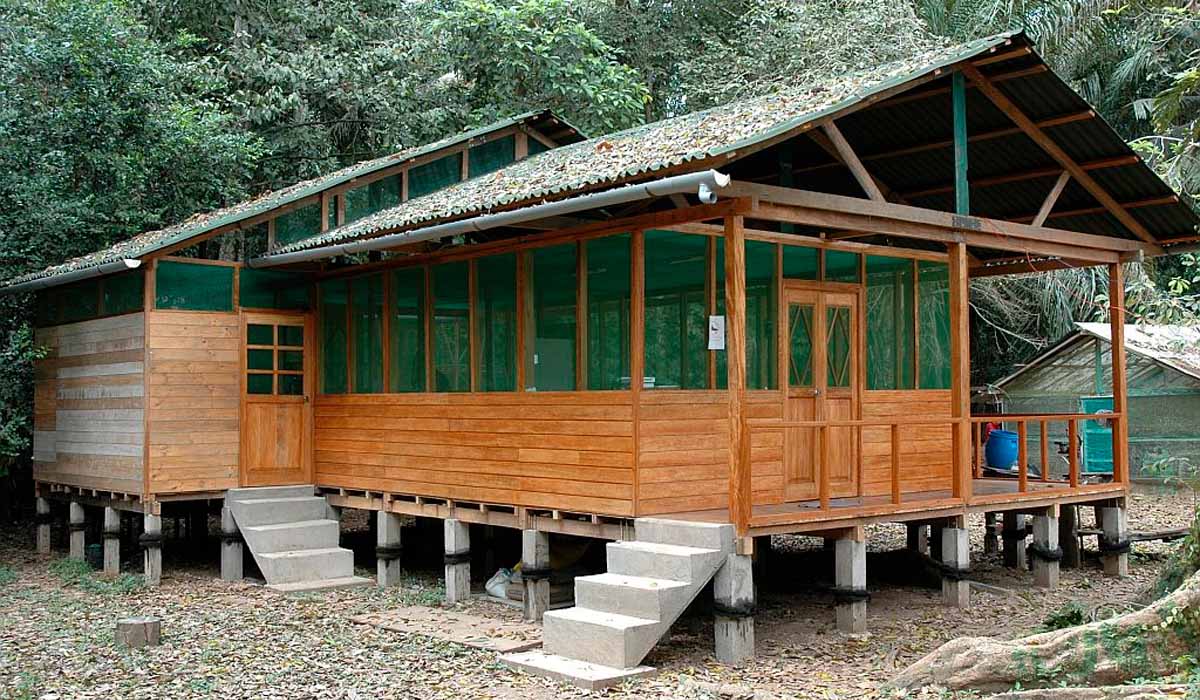
Inside the Reserved Zone, in the lower basin of the Manu River, five visiting areas have been set up where the greatest variety of plants and animals is gathered:
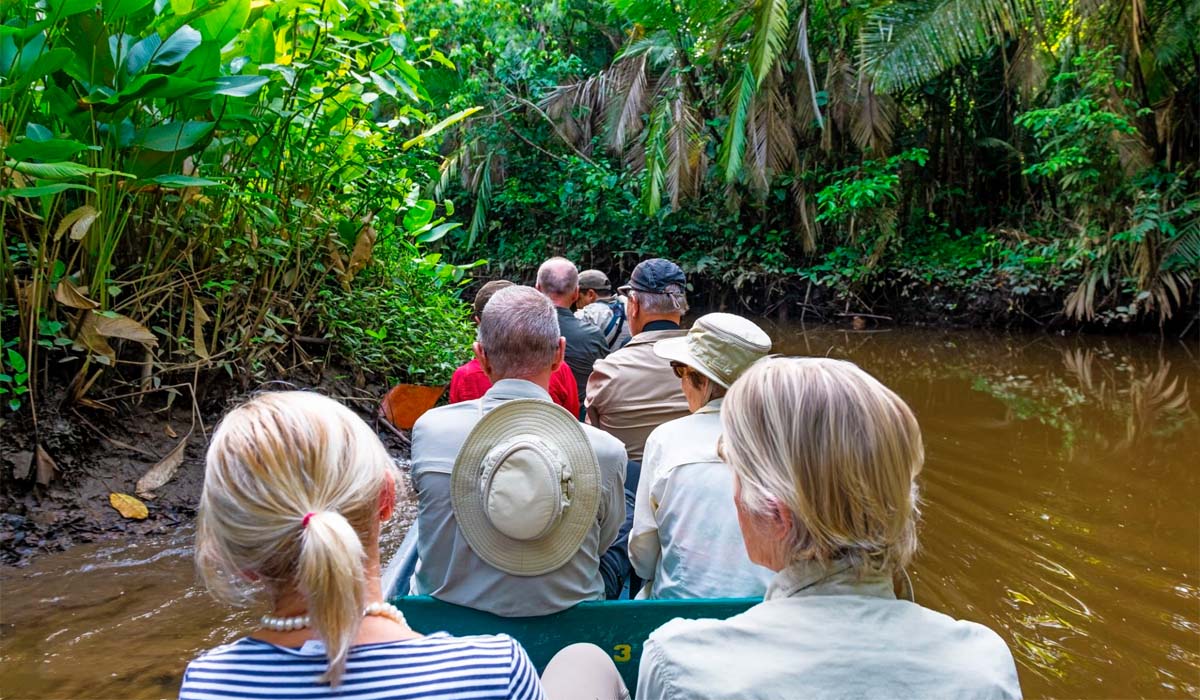
The colpas are natural mineral clay licks that make up one of the most unique wildlife shows in Peru. Dozens (sometimes hundreds) of macaws, parrots, and parakeets arrive every morning at these clay walls to eat minerals that cancel out the toxins from the seeds that are part of their diet. Besides the birds, several mammal species (like peccaries, deer, and tapirs) also go to the colpas for the same reason, which makes them one of the best spots in the park to watch wildlife gathered in a single place.
On the other hand, the aguajales (swamps dominated by the aguaje palm tree) are another key spot for wildlife gathering, especially macaws that feed on its fruits, besides supporting a remarkable variety of other species.
Finally, the forests on both shores of the Manu River complete the experience: besides a lush vegetation, in the horseshoe-shaped lagoons it is possible to observe species that have disappeared from other ecosystems in the region, such as the river wolf and the black caiman.
From Cusco, the most common way to arrive is by land, in a trip of about 8 to 10 hours that crosses the town of Paucartambo and goes through the Andean puna before going down into the jungle. It is in this part where the weather contrast mentioned before happens: you leave the high altitude cold to arrive, hours later, to the humid heat of the low jungle.
As an alternative, there is the option of a charter flight, which greatly cuts down the travel time, although it usually has a higher cost and depends on the availability of the operators.
The usual arrival point is Boca Manu, from where you continue by boat on the river to the different lodges and visiting areas inside the Reserved Zone, according to the booked plan. To enter the park it is necessary to have the right permits, which in practice are handled by the agency or tour operator as part of the tour, since independent access without permission is not allowed.
In the extreme south of the park, at more than 3,600 meters of altitude, is one of the most unique natural shows in Peru: the Tres Cruces viewpoint. From here, especially between May and August with a clear sky, it is possible to witness the double sunrise phenomenon.
This optical phenomenon happens due to the combination of the altitude of the viewpoint and the layers of fog and humidity that rise from the Amazon plain. When the sun begins to rise behind the jungle horizon, its light bends when passing through these layers of fog at different densities and temperatures. The result is a visual illusion: the sun seems to "double", appearing first as a soft glow and then, minutes later, as a second solar disk that rises over the first one, before merging into a single sunrise.
Added to this is the geographical detail of the viewpoint: being a transition point between the Andes and the Amazon, it offers two opposite views from the same place: the mountainous area to the south and the impenetrable cloud forest to the north.
Tres Cruces is usually offered as an independent two day trip from Cusco, different from the complete Manu tour, although it shares part of the same access route (via Paucartambo). Some agencies include it as an optional extra within longer trips to Manu, given that the route passes through the same area; however, if your main goal is to see the double sunrise, the most common thing is to book it as a specific two-day trip, without needing to do the full Peru jungle tour.

A frequent stop on the route to Paucartambo, on the way to the Manu park, is the Ninamarca archaeological complex, where pre-Inca chullpas are kept: stone funeral towers built by local cultures before the Inca expansion in the region.
Unlike the better-known chullpas of the high plateau (like the ones in Sillustani, near Puno), the ones in Ninamarca are much less visited, which allows you to walk through them peacefully and without the typical crowds of other archaeological sites in southern Peru. They are a good example of Andean funeral traditions prior to the arrival of the Incas.
Most agencies in Cusco offer two day tours to Tres Cruces and Manu that start early, with private transport to Paucartambo. On the way, you visit the Ninamarca chullpas before reaching the town, where it is possible to see the Virgin of Carmen temple and the traditional dances museum. The trip to the Tres Cruces viewpoint is done during the early morning, with a short walk to the observation point, just in time to witness the double sunrise.
Manu is one of the best options to get to know the Peruvian Amazon, but many travelers take advantage of their time in Cusco to combine it with other must-see destinations in southern Peru. If you have enough time in your itinerary, this region offers the chance to join jungle, mountain, and Inca history in a single trip.
For those looking for a complete experience, there are packages designed specifically to combine the Manu jungle with other key destinations in Cusco, like the Amazon to Machu Picchu Tour (10 days), which integrates the Amazon experience of Manu with a visit to Machu Picchu, or the Peru Jungle Tour, meant for those who prioritize immersion in the jungle. There is also the Amazon and Inca Trail option, which combines Manu with the classic trekking to the Inca citadel.
After several days in the Manu jungle, many travelers complete their tour through Peru with the Inca Trail to Machu Picchu, since the arrival point from Manu is exactly Cusco, the same starting point for the trekking. It is an itinerary that naturally combines two of the most contrasting ecosystems in the country: the low Amazon jungle and the Andean highlands.
The most popular route is the Classic Inca Trail, which can be booked in different trekking variations, although it is important to book well in advance, since the daily limit is restricted. If the Inca Trail is sold out, there are alternative routes that, while not following the same historical path, offer equally spectacular landscapes.
For those who prefer an experience without trekking, the option to reach Machu Picchu by train is just as popular, crossing the Sacred Valley and its subtropical landscape. This trip can also be combined with extra visits to the Rainbow Mountain or the Sacred Valley of the Incas.
Remember: given that a trip combining Manu with Machu Picchu or the Inca Trail involves several days and sections with limited spots, it is a good idea to plan and book well in advance to ensure availability in both destinations.

 +51 84 217 551
 +51 997 434 941
 Av Tupac Amaru PP-10B, Santiago, Cusco, Peru
  info@incatrailmachu.com
 www.incatrailmachu.com


