
It's hard to see through the mist over Machu Picchu in the morning. Fifteen minutes later, the clouds clear and you can see the llamas grazing on the terraces. In the background, you can see the outline of Huayna Picchu, which makes the scene look like a postcard. But for many people, the real magic is not just in the destination, but in the physical effort of getting there on foot and overcoming the challenges of the Andes mountains.
As the fog clears, the quiet is replaced by wonder as the first hikers appear. Some people come from Cusco on a tour of Machu Picchu, or on different routes. Others, after trekking for days, enter through the Sun Gate, which marks the end of the famous Inca Trail. Every day, 4,500 tourists come to visit the citadel, which has many stories of achievement and adventure.
Since the 1970s, there have been more ways to visit the Inca City. Today, people going on holiday have to choose between a traditional route or a trip to the mountains. In this article, we look closely at the differences, advantages and challenges of: Salkantay Trek vs Inca Trail.
Comparison Chart: Which is better, the Salkantay Trek or the Inca Trail?
| | Inca Trail | Salkantay Trek |
| Duration: | 4 days / 3 nights. | 5 days / 4 nights. |
| Total Route: | 43 km - 26.72 miles | 65 km - 40.4 miles. |
| Starting point: | Km 82 of the Cusco - Machu Picchu railway line, in the town of Huayllabamba, 1 hour and a half from Cusco. | Village of Challacancha which is 3 hours and a half from Cusco. Before, you must pass through the town of Mollepata. |
| Itinerary: | 1st day: Cusco - Huayllabamba
2nd day: Huayllabamba - Pacaymayo
3rd day: Pacaymayo - Wiñaywayna
4th day: Wiñaywayna - Machu Picchu | 1st day: Cusco - Challacancha
2nd day: Soraypampa - Challway
3rd day: Challway - Sahuayaco Beach
4th day: Llactapata - Aguas Calientes
5th day: Aguas Calientes - Machu Picchu |
| Degree of difficulty: | Moderate | Moderate/High |
Find out everything you need to know about the Salkantay Trek.
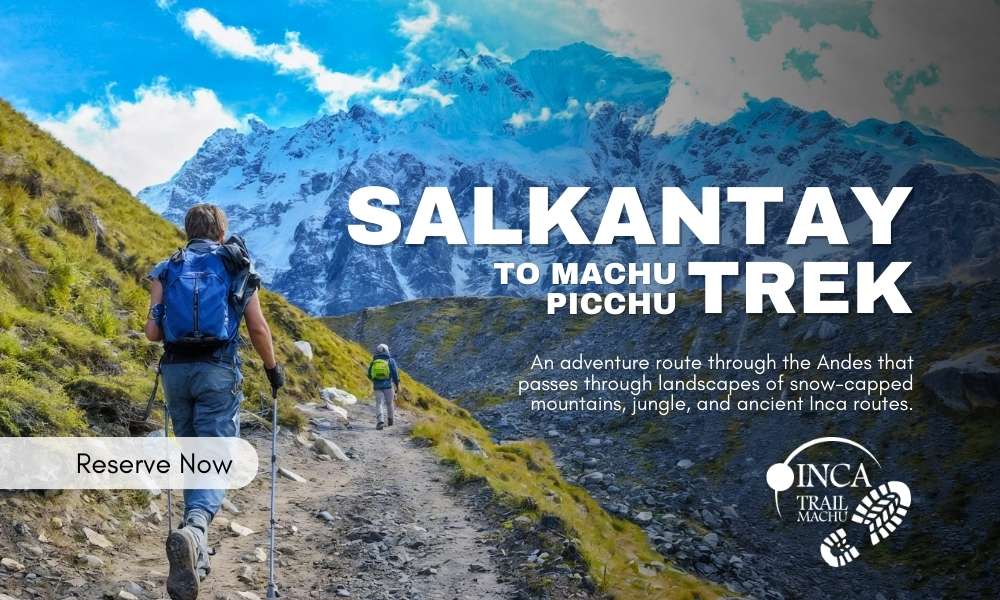
The Salkantay Trek is one of the best adventure trips to Machu Picchu. This five-day trip follows a different route to the usual one, going around the Salkantay snowy peak, one of the most sacred and beautiful mountains in the Cusco region. Other routes don't offer what this one does: a real immersion experience in Andean geography. You will start in the dry high plains and finish in the thick high jungle.
What makes this hike special is that you experience climate and ecological change in less than two days. After crossing the glacial pass at 4,630 metres, the trail quickly descends towards tropical valleys where there are orchids and crystal-clear streams everywhere. It is a route designed for those who enjoy watching starry skies and the feeling of conquering one of the most challenging mountain passes in southern Peru.
The good things about the Salkantay Trek
If you are planning your trip to Machu Picchu from Cusco and haven't yet decided, here are some reasons why Salkantay is the best choice.
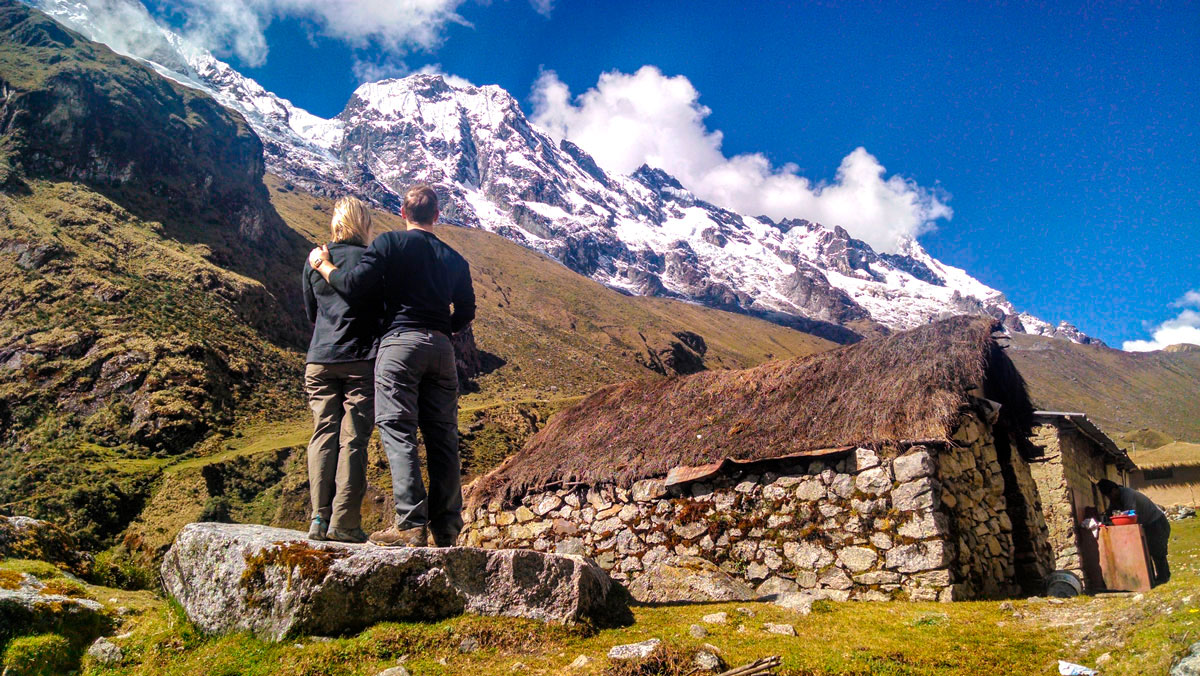
- Unmatched Landscape: The Salkantay peak is famous for its natural beauty, which many guides think is better than the Inca Trail. You will have a real chance to see mammals in their natural habitat, such as foxes, deer, chinchillas and, with luck, the hard-to-see spectacled bear. The route goes from huge glaciers to green valleys with coffee farms. This makes a really interesting difference that changes every hour.
- Less Traffic: The Inca Trail is world-famous, but the Salkantay Trek is a much more private experience. There are about 72% fewer people using it, so there are only about 50 people on average every day, compared to the 180 who travel the traditional path. This means you can take photos without crowds and really connect with nature.
- Availability and Flexibility: Salkantay is much more flexible than the Inca Trail because it doesn't have the same strict state permit restrictions. The Inca Trail sell out six months in advance. There are departures almost every day of the week until 2026, so you can plan your trip even if you only have a few weeks to prepare, especially if you join a departure group.
Here are some of the things that people don't like about Salkantay:
- Prestige: Unlike the old Inca Trail, you do not enter Machu Picchu through the Inti Punku or Sun Gate. You can spend the night in the town of Machu Picchu, and then take the bus to the citadel the next day. However, during your visit to Machu Picchu, you can walk to the door of the sun in half an hour.
- Difficulty: When you compare the Salkantay Trek and the Inca Trail, the Salkantay hike is almost twice as long as the Inca Trail (82 kilometres compared to 42 kilometres) and it goes much higher (4637 metres instead of 4200 metres). This means that it is more difficult to walk and it is colder there too.
- Facilities: There are not many facilities for camping equipment along the Salkantay Route, so most tourist groups build their own toilet facilities. There are no showers, but you can bathe in the streams if you are willing to face the cold.
- History: The hike to Salkantay also follows historical routes, but the only ruins you can see are the Inca citadel of Machu Picchu.
The Inca Trail: The Traditional Route
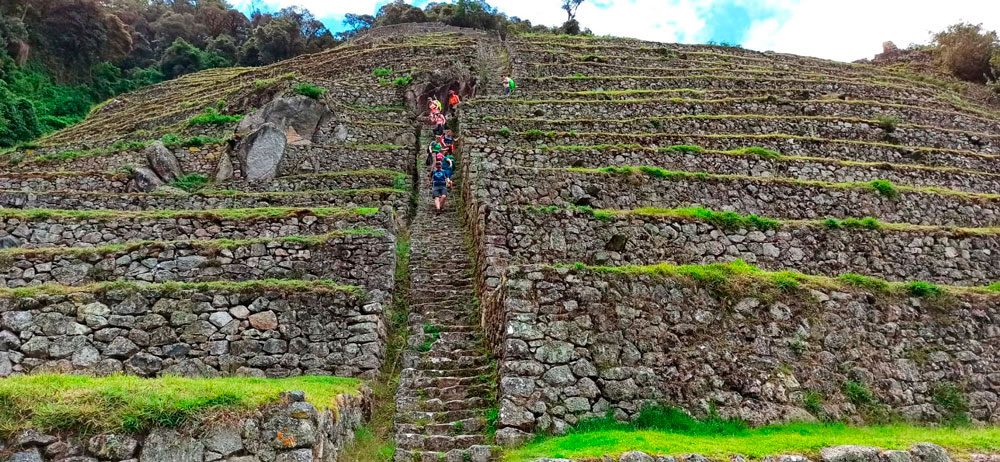
The Inca Trail is a route that includes long stretches and ancient constructions dating back to the time of the Tahuantinsuyo. This 42-kilometre path is the best-preserved section of the road network that connected the entire empire, and walking it means following the exact steps the Incas took more than five hundred years ago. On the way, you'll see special places where ancient things have been found, like Sayacmarca and Wiñay Wayna, which you can't get to any other way.
What makes this hike special is its path. It's a route that requires respect and preparation, but it gives you an amazing feeling of travelling through stone tunnels and ancient stairs, with snowy mountains and lots of plants around, including orchids.
The good things about the Inca Trail
Many people choose to travel from Cusco to Machu Picchu, and with good reason.
- Prestige and exclusivity: It is the most famous hike in Peru and is considered to be one of the best hikes in the world. It is the only way to enter the citadel of Machu Picchu on foot. After crossing the jungle, hikers arrive at the Inti Punku (Sun Gate), where they can see the ruins for the first time before going down to them.
- Archaeological and Scenic Richness: The Inca Trail is different from other routes because it has many archaeological sites that can only be reached on this path. Some examples are Runkurakay, Sayacmarca, and Wiñay Wayna. The landscape is always changing, from snowy mountains to the mysterious cloud forest. You can walk on the original stairs and even go through a stone tunnel that was carved by the Incas.
- Accessible Difficulty: It is considered a moderate hike. If you spend enough time getting used to the altitude in Cusco, it's a great route for both young hikers and older adults in good physical condition, as the path is very clear.
- Facilities and Comfort: The campsite is a regulated route, so there are designated areas for toilets that are cleaned regularly. For many people, having this basic infrastructure is a big advantage. It means you can enjoy the environment more without having to deal with the difficulties of a completely wild route.
Note: The rules for the Inca Trail are strict to protect the historical site. You must use trekking poles with rubber tips so that you do not damage the original stone paving, which is more than 500 years old.
The good things about the Inca Trail
- Prestige: The Inca Trail is a famous hike in Peru and one of the best treks in the world. It is the only trek that takes you directly to the citadel of Machu Picchu. The hikers come out of the jungle at Sun Gate, or "Inti Punku", where you can see the whole of Machu Picchu. From there, hikers go down to the citadel.
- Landscape: The Inca Trail has beautiful landscapes, ranging from snowy mountains to lush jungles. You will see a variety of small historic ruins as you go. You can walk on the original Inca steps and pass through an Inca stone tunnel.
- Difficulty: The Inca Trail is a moderately difficult hike. You will have time to get used to the height in Cusco, so it is suitable for both young and old hikers.
- Facilities: You'll find toilets that are cleaned every two days along the trail. Some people like this about the hike, but those who like to camp in the wild might prefer the Salkantay route.
Here are some of the downsides to the Inca Trail:
- Traffic: The Inca Trail is a very popular route. They limit the number of people entering to keep the crowds under control, but the larger the group, the less likely you are to see mammals like foxes, deer and chinchillas.
- Availability / Flexibility: To travel the Inca Trail, you must go with an authorised operator, who will buy your Inca Trail permits in advance. Only 500 permits are available each day, and 300 of these are for guides, porters and cooks. You can get income throughout most of the year, but you have to buy it at least one or two weeks in advance to make sure you get the date you want.
Salkantay Trek vs Inca Trail: Which one should you choose?
The final choice depends on what you want to do in the mountains of Cusco. Both of these trips will change your life, but they will make you feel different things.
- The Inca Trail is a good choice if you want to do one of the following: Your priority is history and archaeological mystery. If you want to feel the weight of centuries under your boots, explore exclusive ruins, and experience the exciting entrance to Machu Picchu through the Sun Gate at dawn, this is your route. You will need to plan at least six months in advance to get your tickets, but the trip is worth the wait.
- Choose the Salkantay Trek if: You love wild nature and you are looking for a high-mountain challenge. This is the best choice if you have more money to spend, if you didn't plan your trip very early, or if you just don't like crowds. The Salkantay Trek is perfect for those who want to get away from everyday life and experience the vast glaciers and dense jungle, with landscapes that look like they are from an exploration movie.
To put it simply, the Inca Trail is a journey into the past of the empire, while the Salkantay is a journey into the heart of Andean geography. Whatever you choose, reaching the citadel after days of effort will be one of the best memories of your time in Peru.
Note: If you want to climb Huayna Picchu mountain, you must coordinate this with your agency, no matter which route you choose. The places for this extra peak sell out as fast as those for the Inca Trail itself.

 +51 84 217 551
 +51 997 434 941
 Av Tupac Amaru PP-10B, Santiago, Cusco, Peru
  info@incatrailmachu.com
 www.incatrailmachu.com


