
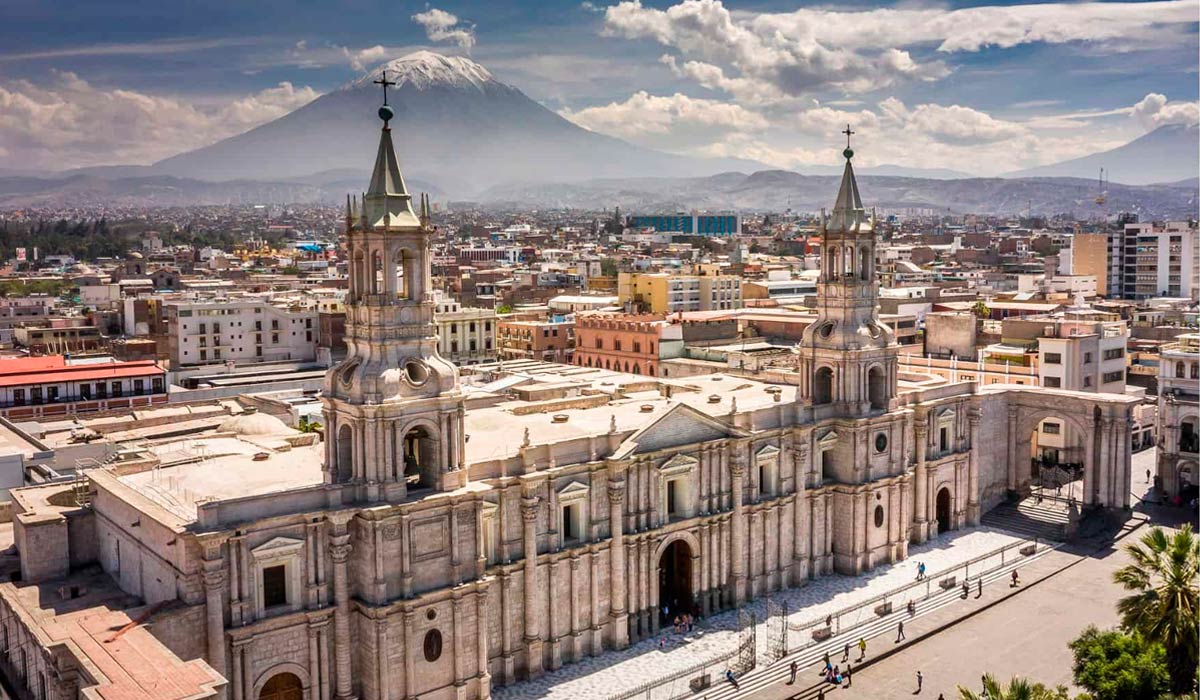
Arequipa, known as the "White City", is one of the most representative destinations of the southern highlands and part of the Peru Highlights. Due to its geographical location, at 2,335 meters above sea level and surrounded by the Andes Mountains, the climate of the city is dry and sunny during almost the whole year. However, the temperature changes between day and night are sharp, which requires proper planning.
The climate is a deciding factor when scheduling high mountain excursions or visits to natural attractions in the Arequipa region. Activities such as climbing the Misti volcano or trekking in the Colca Canyon depend directly on seasonal conditions to guarantee safety and visibility. Therefore, having accurate weather information is essential to ensure a good travel experience.
This guide will provide you with data about the seasons of the region: the dry season and the rainy season. We will analyze the average temperatures and the most recommended months for outdoor activities, allowing you to choose the ideal time for your visit.
Compared to other regions of the southern highlands, the climate of Arequipa is one of the most stable and pleasant in the country. Thanks to its location, the city enjoys a mild and dry climate, with very low relative humidity; because of this, Arequipa is famous for having more than 300 days of sun per year, which makes it easy to do tourist activities without interruptions.
However, due to the altitude and the closeness to the desert, the region has a high thermal range; that is, there is a big difference between the day and night temperatures. Although the sun is constant, the air can be cold, especially in shaded areas or in the late afternoon.
The annual cycle in Arequipa is divided mainly into two seasons:
The dry season in Arequipa is the longest and most stable of the year. From April to November, the region is known for relatively low humidity and an almost total absence of rain. During this period, visibility is perfect, with clear skies that allow you to see the volcanic mountain range with maximum clarity, which makes it easier to take landscape photos and navigate mountain routes.
Although daytime temperatures are constant and pleasant (ranging between 22°C and 25°C), the lack of clouds causes the heat to escape quickly at sunset. As a result, the nights in the dry season are usually the coldest of the year, especially between June and August, when temperatures can drop to 5°C or 7°C in the city, and go below 0°C in higher altitude areas like the Colca Canyon.
This is the ideal time for technical expeditions and adventure sports, as the weather risk is minimal:
The rainy season in the Arequipa region lasts from December to March. During this period, cloudiness increases and the relative humidity rises slightly compared to the extreme dryness of the rest of the year. Although the rainfall is usually not as intense as in the Amazon jungle or in cities like Cusco, intermittent storms can happen, generally during the afternoons and nights.
Despite the rain, the climate in the White City stays mild. Temperatures fluctuate between an average minimum of 10°C and a maximum of 20°C. Unlike other highland destinations, like Puno and Lake Titicaca, temperatures in Arequipa do not usually reach extremes below zero in the urban area during these months.
If your visit to the region happens during these months, it is essential to adjust the planning of your activities:

Arequipa enjoys exceptional weather that minimizes extremes, but it has specific variations throughout the year that travelers should consider.
| Month | Jan | Feb | Mar | Apr | May | Jun | Jul | Aug | Sep | Oct | Nov | Dec |
| Maximum daily temperature (°C) | 20 °C | 20 °C | 20 °C | 21 °C | 21 °C | 20 °C | 20 °C | 20 °C | 21 °C | 21 °C | 21 °C | 21 °C |
| Minimum daily temperature (°C) | 10 °C | 10 °C | 10 °C | 9 °C | 8 °C | 7 °C | 7 °C | 7 °C | 8 °C | 8 °C | 8 °C | 9 °C |
| Total precipitation (mm) | 20 | 40 | 0 | 0 | 0 | 0 | 0 | 0 | 0 | 0 | 0 | 0 |

Arequipa, with its architectural beauty and rich history, is a destination that many love. Knowing the climate of Arequipa will allow you to enjoy your visit to the fullest, whether you prefer the warmth of the sun or the freshness of the Andean air. If you are thinking of visiting this gem of southern Peru, prepare yourself for an unforgettable experience!
Peru offers fascinating experiences that reveal natural landscapes, historical monuments, and living cultures, captivating those who seek adventure and discovery in every corner of its territory. Get to know the most outstanding tours:
Other trips in Peru
If you want to visit Machu Picchu, we recommend you to book your Machu Picchu Entrance Tickets in advance, so you will enjoy your Vacation in Machu Picchu without any problem.

 +51 84 217 551
 +51 997 434 941
 Av Tupac Amaru PP-10B, Santiago, Cusco, Peru
  info@incatrailmachu.com
 www.incatrailmachu.com


